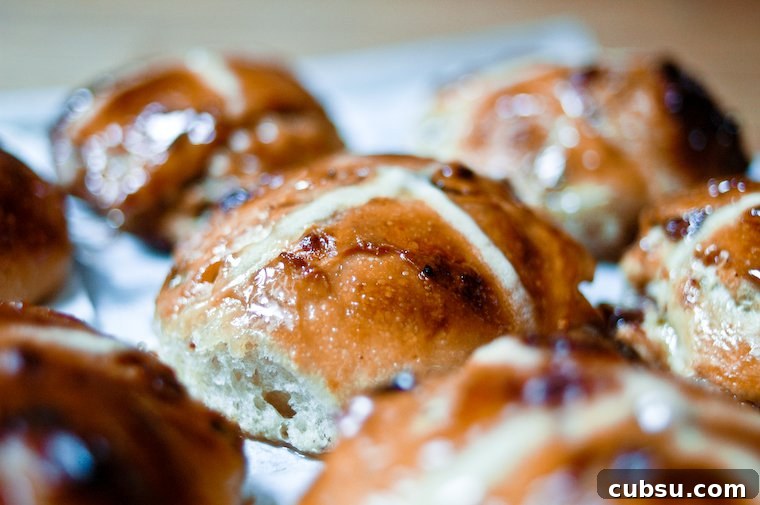
To celebrate Easter this weekend I made hot cross buns, the brioche-like spiced loaves traditionally eaten in Britain on Good Friday. I’ve made them before, but this time I adapted the method from baker Dan Lepard, especially his overnight cold fermentation, and converted the recipe to use my sourdough starter. The recipe below gives options for both using a starter and using commercial yeast.
I also wanted to clear out the fridge before a trip, so I replaced the butter and part of the milk with 125 grams of crème fraîche. Several French brioche recipes call for crème fraîche; here it adds a subtle tang and a softer, airier crumb. I reduced the amount of added sweetener in the dough because I planned a fairly sweet filling.
The classic hot cross bun is studded with raisins or currants, and sometimes candied citrus peel, but I had an entirely different picture in my mind: this year, I wanted to make them with white chocolate, pistachios, and dates.
Instead of the usual currants or candied peel, I filled these buns with white chocolate, pistachios, and dates. The combination of white chocolate and pistachio is inspired by small brioches I’ve seen at Eric Kayser’s bakery; diced date paste added a complementary caramel-like chew. I’m not usually fond of plain white chocolate on its own, but used here it caramelizes at the edges during baking and gives little nuggets of sweet, lightly toasted flavor throughout the bun.
On a previous attempt I struggled with the cross that gives the buns their name. Some bakers use icing or marzipan, but I prefer a toaster-proof cross made from a flour-and-water paste. This time I thinned the paste to a smooth, spreadable consistency and piped it with a paper cornet. The crosses adhered to the buns and remained decorative without making the tops hard.
After baking I brushed the buns with a simple sugar glaze, which adds shine, a sticky finish, and a touch of sweetness. We ate one fresh from the oven and loved it. Traditionally hot cross buns are split, toasted, and spread with butter or jam; these are sweet enough that jam felt unnecessary to me, and I even skipped the butter, but try them however you prefer.
Although hot cross buns are most often associated with Easter, historical restrictions on when they could be sold are long repealed, so enjoy this recipe any time of year. You can also adapt the cross into another decoration for other occasions.
* For background on the history of hot cross buns, see the Food Timeline collection of excerpts.