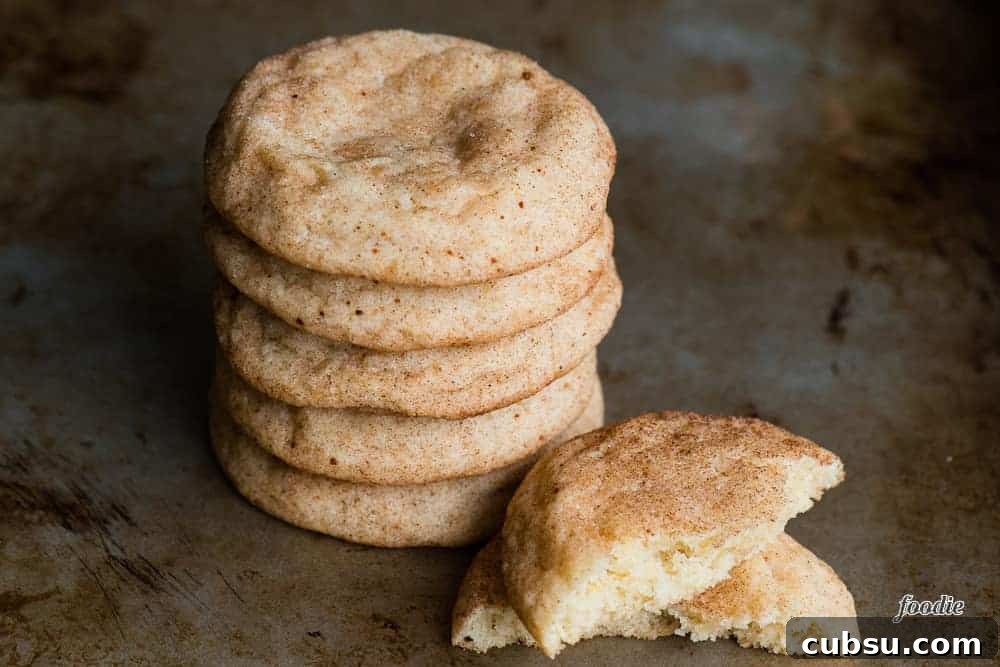
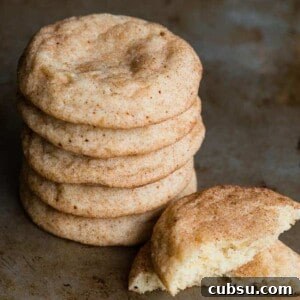
Snickerdoodle Cookies are ultra-soft cookies bursting with cinnamon and sugar—comforting, classic, and impossible to eat just one.
This reliable recipe produces tender, melt-in-your-mouth snickerdoodles with the perfect cinnamon bite. Follow the steps below for consistently soft cookies that are ideal for sharing or enjoying at home.
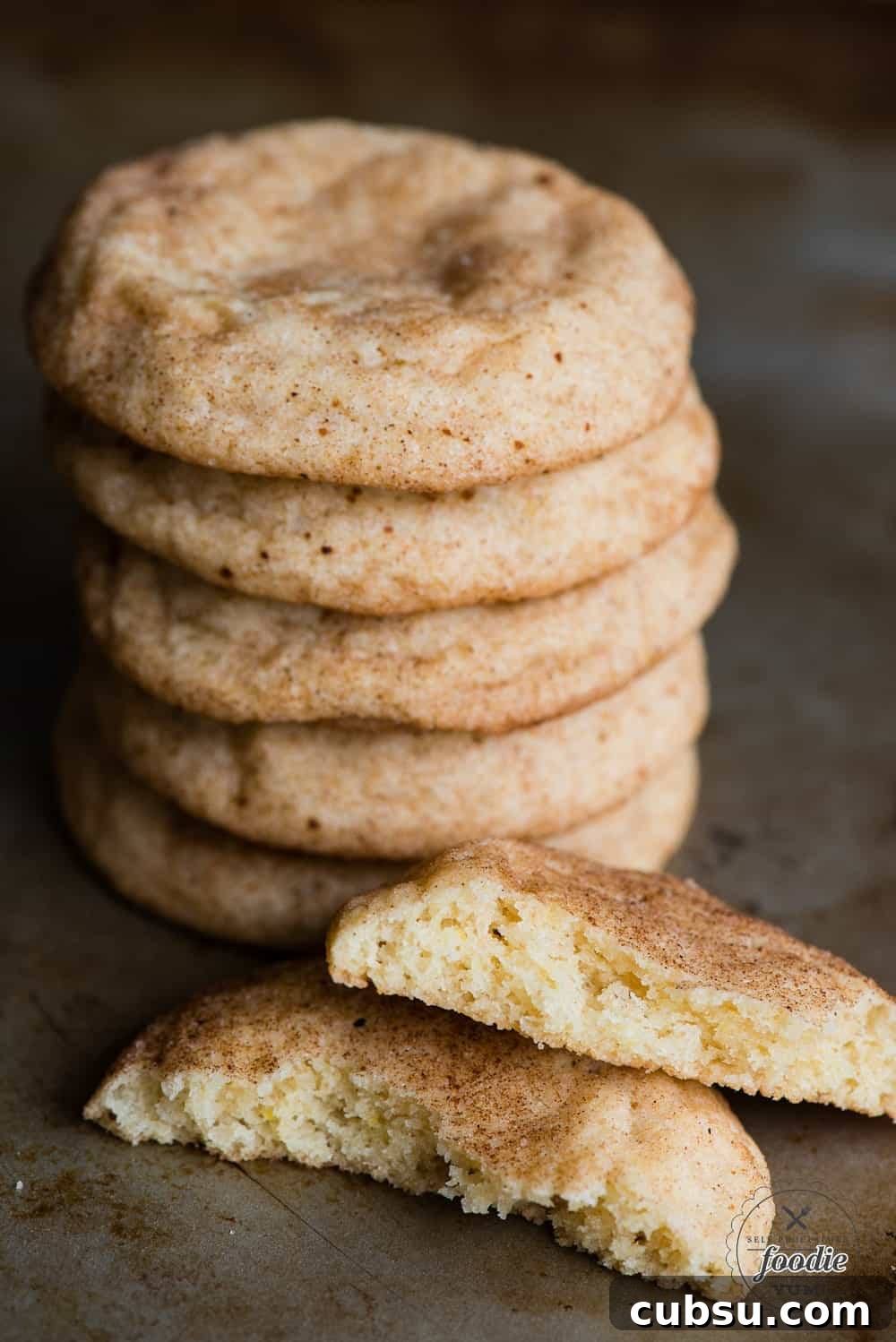
Snickerdoodle Cookies rank among the most beloved cookie varieties. They’re simple, nostalgic, and deliver a warm cinnamon flavor that keeps people coming back for more.
These snickerdoodles are intentionally soft rather than crisp. Small technique details—like how you cream the butter and sugar, how you handle the dough, and a short bake time—make all the difference. Bake a batch for an event, gift them, or stash a few in an airtight container for a treat all week.
Did you know…
Snickerdoodles resemble sugar cookies but have a few key differences. They’re always rolled in a cinnamon-sugar coating that defines their flavor, and their texture is typically lighter and airier than standard sugar cookies. Another signature trait: cream of tartar is used as part of the leavening, which contributes to that unique snickerdoodle bite and tang.
So where did they originate?
The exact origin of snickerdoodles is unclear. One theory traces them to Germany, linking the name to the German word schneckennudeln—“schnecke” meaning “snail”—possibly referencing a cinnamon pinwheel resembling a snail. Another theory places snickerdoodles in early New England or colonial America, where simple spiced cookies were common. Regardless of origin, they’ve become a staple in American cookie baking.
How to make snickerdoodle cookies:
- Cream the butter and sugar well using a stand mixer with a paddle attachment or an electric mixer. Incorporating air at this stage helps keep the cookies light—mix until smooth but avoid over-mixing.
- Shape the dough into evenly sized balls. A medium cookie scoop ensures consistent cookies.
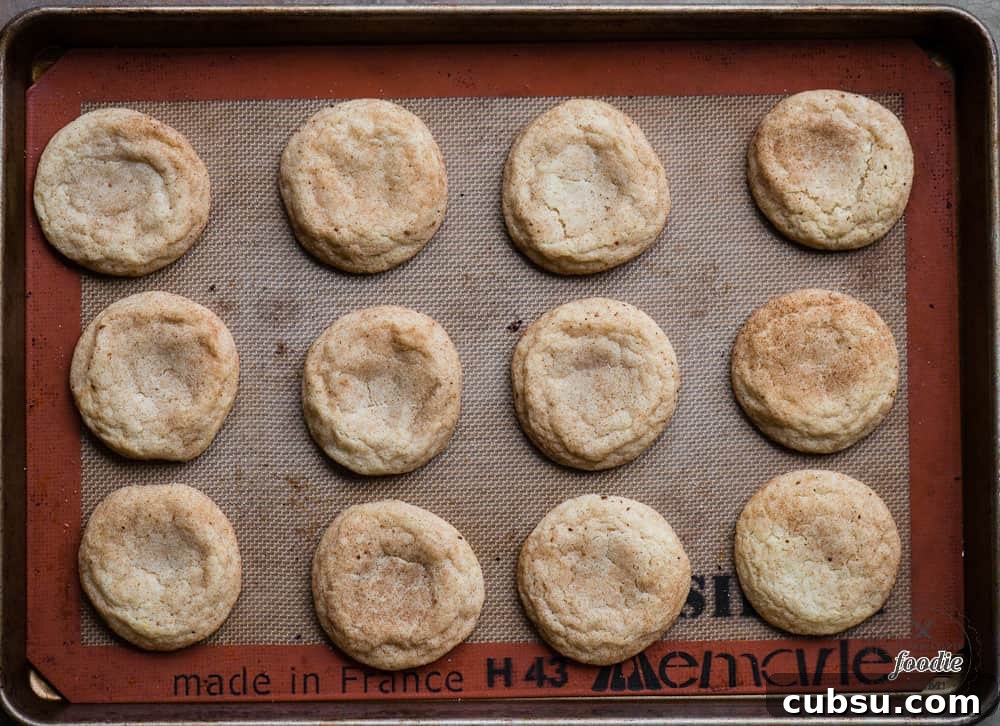
- Roll each dough ball in a cinnamon-sugar mixture before placing them on a parchment-lined or Silpat-lined baking sheet about 2 inches apart.
- Bake briefly—this recipe bakes 8 minutes at a high temperature. The centers may look slightly underbaked; allow cookies to rest on the sheet for about 5 minutes so they finish gently. That resting period is essential for soft, tender cookies rather than over-browned, crisp ones.
No cream of tartar on hand?
If you don’t have cream of tartar, you can substitute lemon juice. The recipe calls for 2 teaspoons of cream of tartar; swapping one teaspoon of cream of tartar and one teaspoon of fresh lemon juice works well without leaving a noticeable lemon flavor.
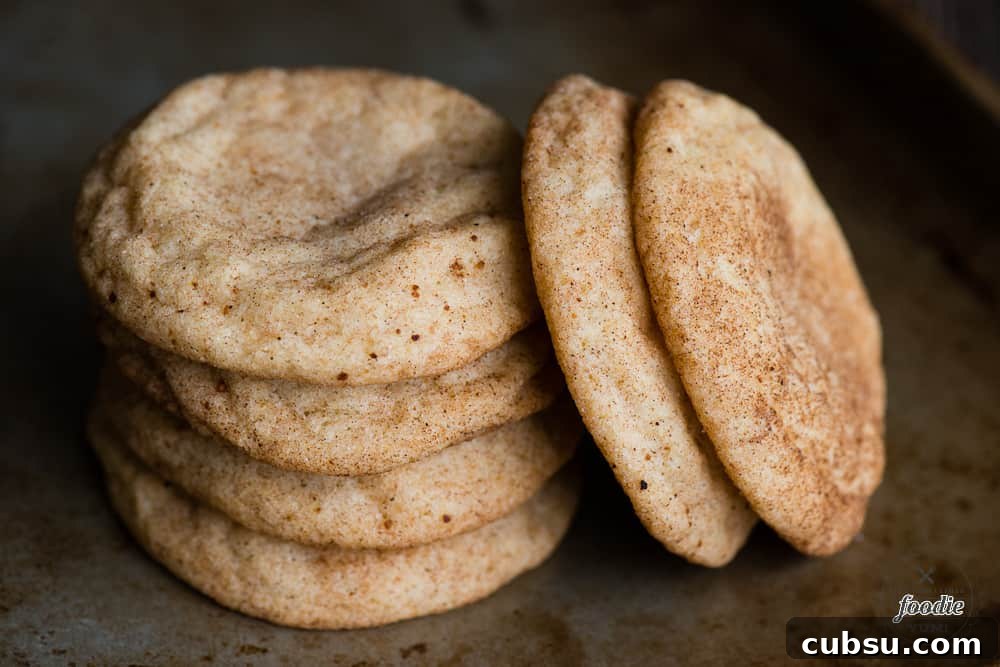
Snickerdoodle Cookies
Ingredients
- 1 cup butter, softened
- 1 1/2 cups granulated sugar
- 2 eggs, slightly beaten
- 2 teaspoons pure vanilla extract
- 2 3/4 cups all-purpose flour
- 2 teaspoons cream of tartar
- 1 teaspoon baking soda
- 1/4 teaspoon salt
- 4 tablespoons granulated sugar (for coating)
- 4 teaspoons pumpkin pie spice or cinnamon (for coating)
Instructions
- Preheat the oven to 400°F (200°C). Line a baking sheet with parchment paper or a Silpat.
- Cream 1 cup softened butter and 1 1/2 cups granulated sugar in a stand mixer until smooth. Add 2 slightly beaten eggs and 2 teaspoons vanilla and mix until combined.
- In a separate bowl, whisk together 2 3/4 cups all-purpose flour, 2 teaspoons cream of tartar, 1 teaspoon baking soda, and 1/4 teaspoon salt. With the mixer on low, add the dry ingredients to the wet mixture and stir just until combined, scraping the bowl as needed.
- Combine 4 tablespoons granulated sugar with 4 teaspoons pumpkin pie spice (or cinnamon) in a bag or shallow bowl. Use a medium cookie scoop to form dough balls, then roll each ball in the sugar-spice mixture. Place on the prepared baking sheet about 2 inches apart.
- Bake for 8 minutes. The cookies may appear slightly underbaked in the center—let them cool on the baking sheet for 5 minutes so they finish gently and remain soft, then transfer to a cooling rack.
- Store cooled cookies in an airtight container to maintain softness.
Notes
Nutrition
Nutrition information is an estimate and should be used as a guideline only.