This is a sponsored post written by me on behalf of Albertsons. All opinions are 100% mine.
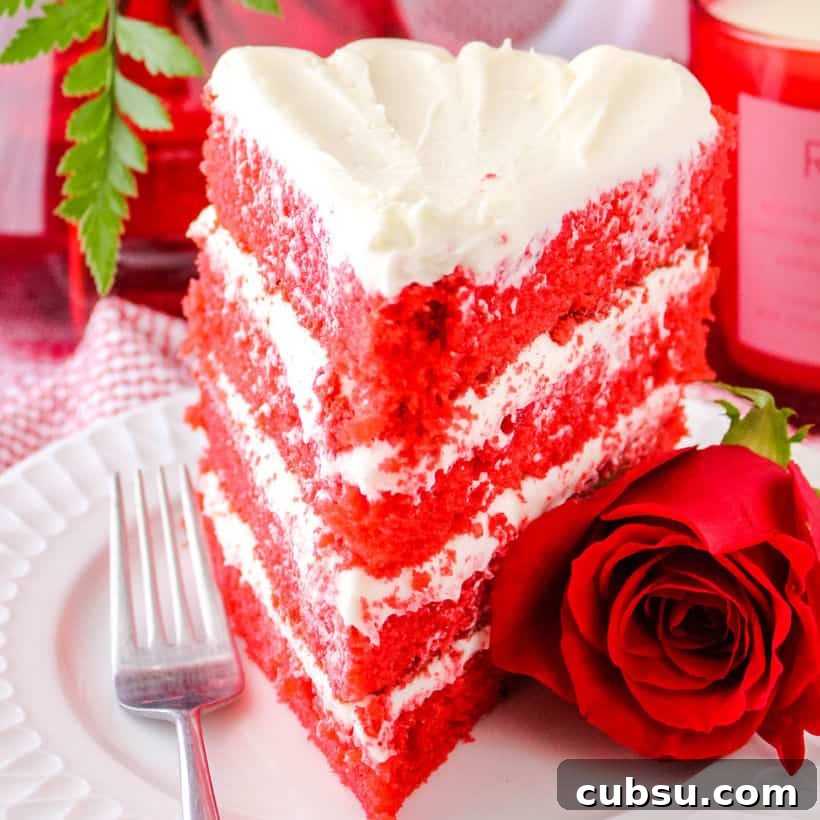
Nothing says “I love you” like a homemade cake. Red velvet cake is a Southern favorite—tender, moist, slightly tangy with a hint of chocolate—and it’s a delicious way to finish any meal.
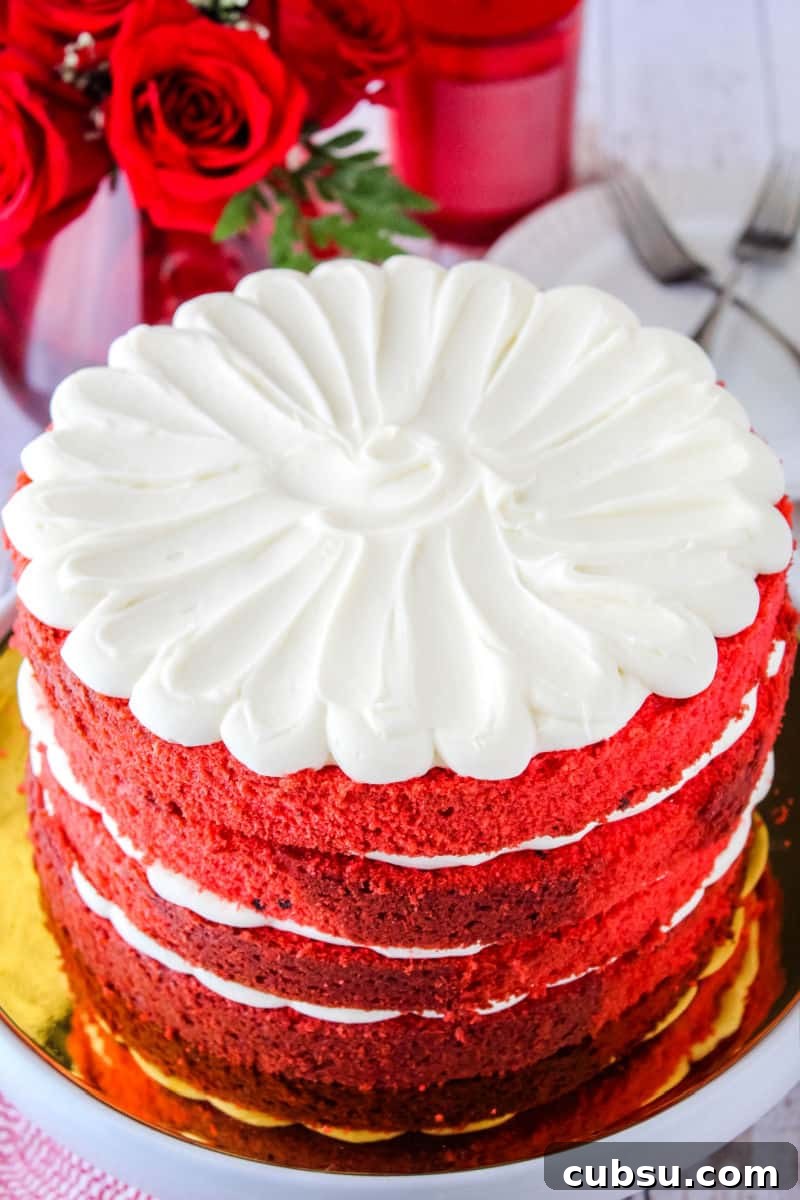
Red velvet cake evokes dessert dreams: soft crumb, moist texture, tang from buttermilk and vinegar, and just enough cocoa to whisper chocolate. For me it’s nostalgic—my Southern grandmother baked things like this, and the combination of cake and cream cheese frosting always felt decadent. If you haven’t made one yet, put this on your baking list.
February means Valentine’s Day displays everywhere, but I’m not big on obligatory gifts. I prefer surprises any day: a bouquet on a random Tuesday is infinitely better to me than something given just because it’s February 14th. Still, small gestures matter. When I was little, I’d ride my bike to the nearby shopping center to pick up flowers, a candy bar, and a balloon for my mom when she had a long shift. She’d come home to a quiet surprise on the counter. That memory is my favorite kind of Valentine’s Day.
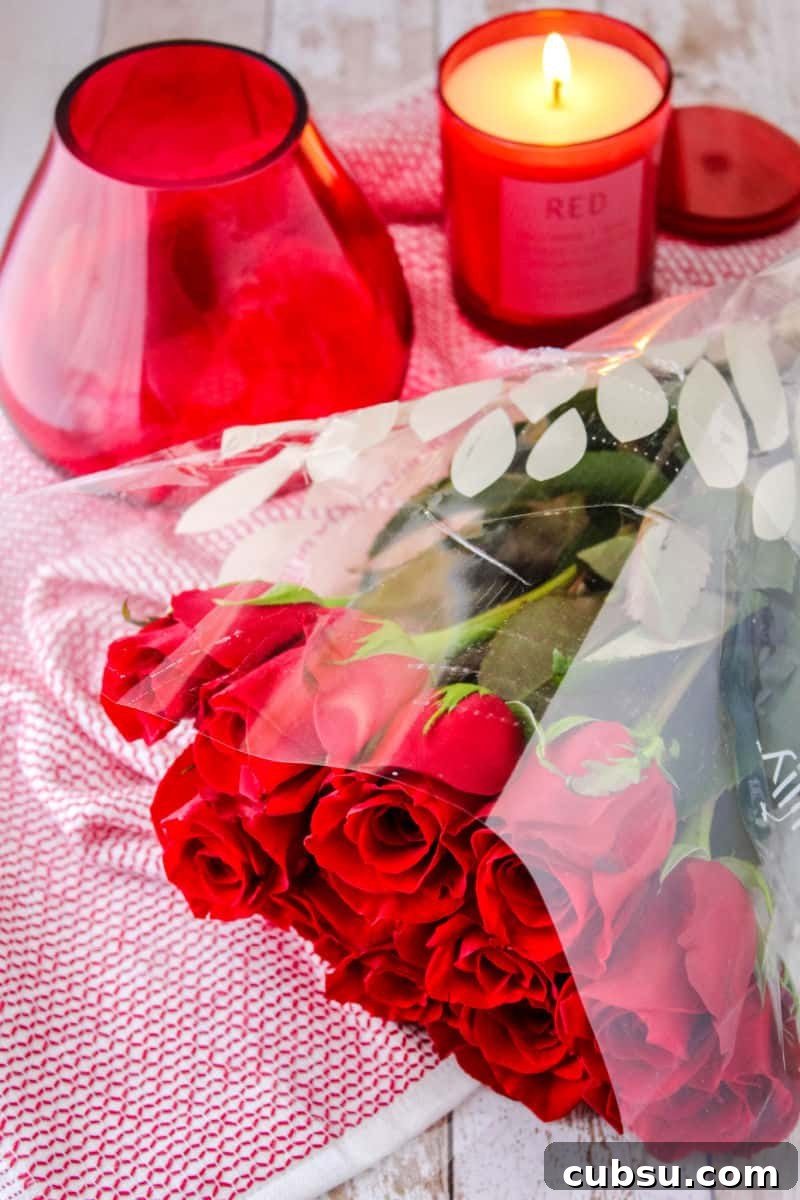
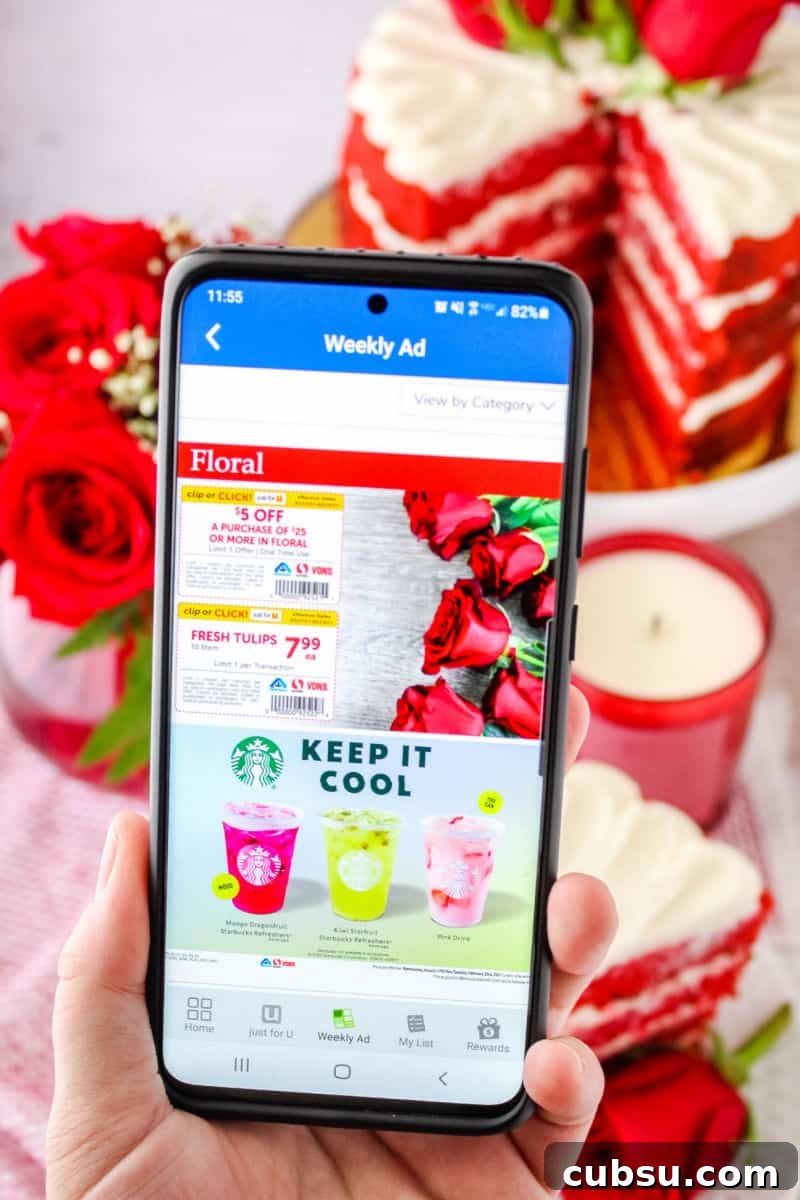
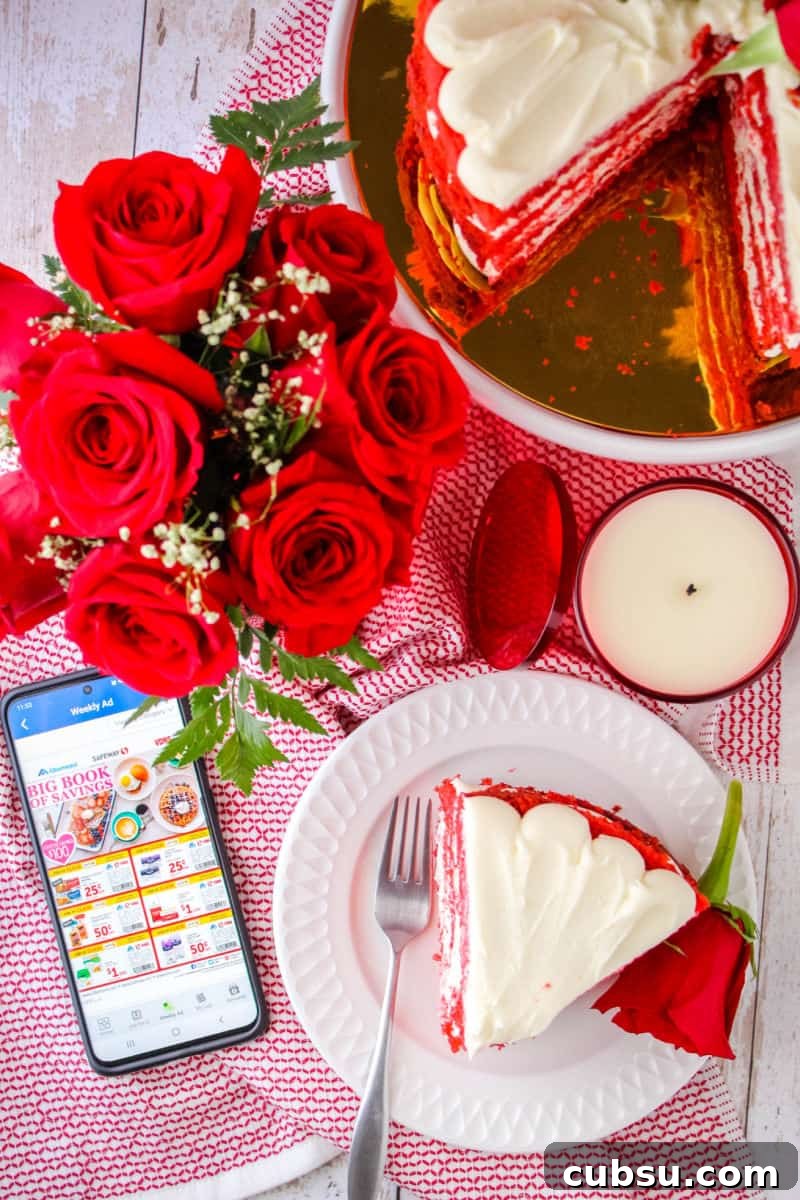
My husband knows I don’t fuss over the holiday, but he always picks a card that makes me smile. This year I’m returning the favor with a red velvet cake—one of his favorites alongside angel food cake. I stopped by our local Safeway to gather ingredients and couldn’t resist a bouquet of debi lilly™ roses in red, pink, and orange. I also picked up a teardrop vase that matched the mood—short, simple, and red.
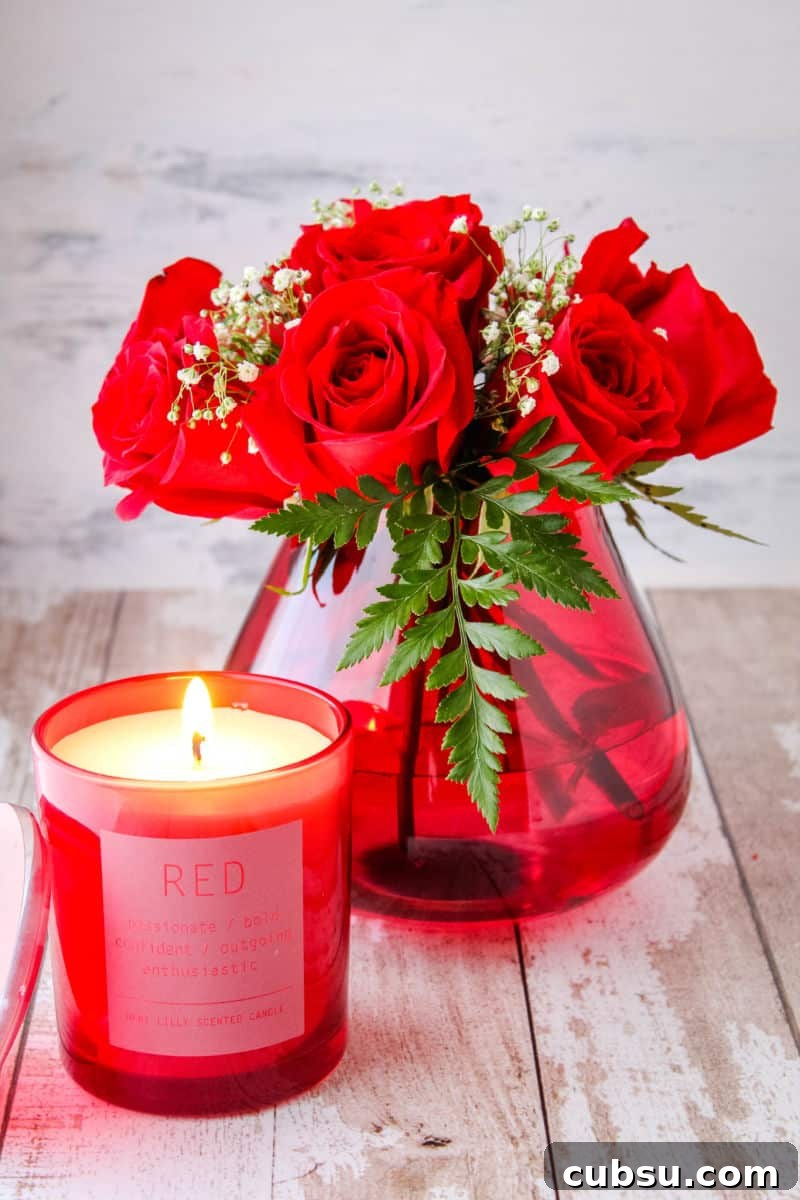
The florist added baby’s breath and leatherleaf to finish the bouquet—don’t hesitate to ask for extras if you want fuller stems. Back home, I arranged the flowers using tips I picked up from Debi Lilly; a few simple cuts and a thoughtful arrangement bring life to the table. Debi lilly™ bouquets make great centerpieces for celebrations like Galentine’s, birthdays, or a cozy family date night.
What is red velvet cake?
Red velvet cake is a classic American dessert often associated with the South. The cake uses typical baking staples—butter, sugar, eggs, flour, and baking soda—along with buttermilk, vinegar, and a touch of cocoa powder for its signature flavor. Historically, the cake’s reddish-brown tone sometimes came from the natural reaction of cocoa and acidic ingredients, though modern recipes often include food coloring for a brighter red.
The best frostings for red velvet are cream cheese (my preference), ermine icing (traditional), or a smooth buttercream. Any of these will complement the cake’s tangy, slightly chocolatey profile for a truly indulgent result.
Is red velvet cake chocolate?
Only mildly. Red velvet uses a modest amount of cocoa powder, so it carries a hint of chocolate rather than the full intensity of a chocolate cake. The buttermilk and vinegar add tang that sets it apart from typical chocolate cakes.
Key ingredients and tips
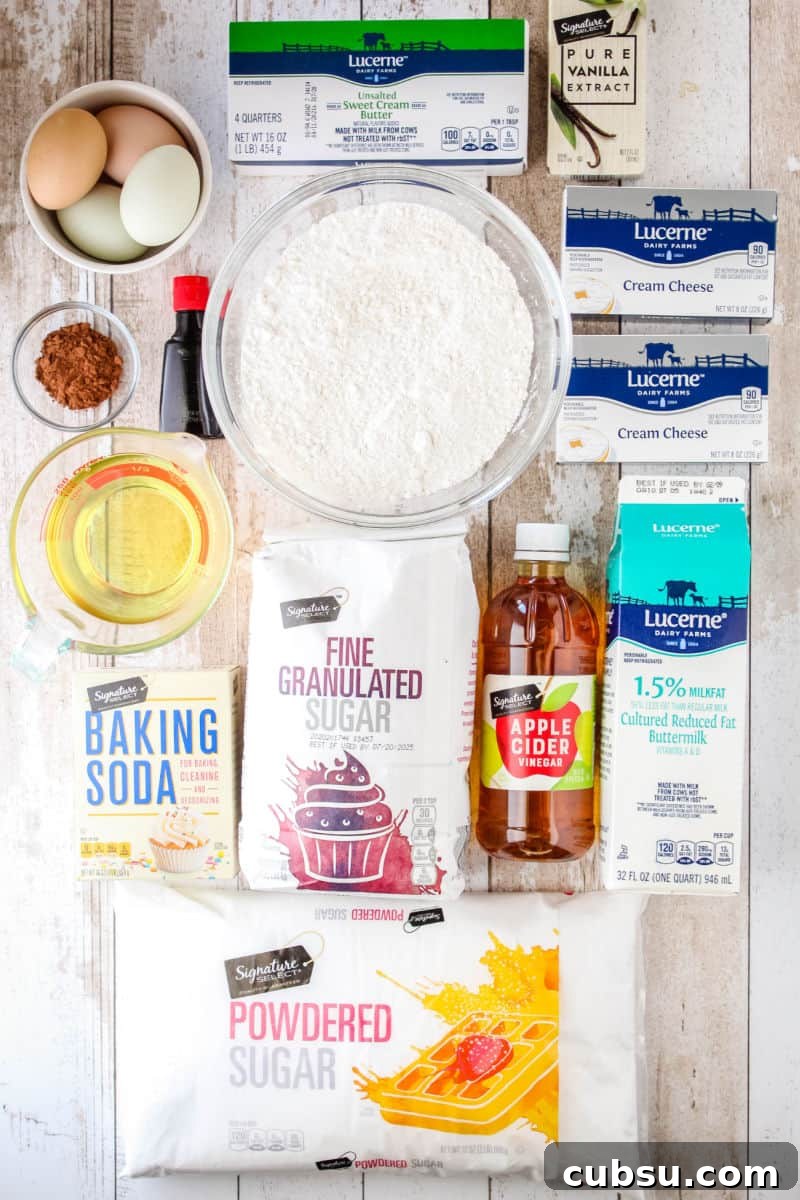
Yes, boxed mixes work—but homemade batter gives far more flavor, and scratch cream cheese frosting is worth the extra few minutes. A few ingredient notes:
– Cake flour: Makes a softer, more tender crumb. You can substitute all-purpose flour or use a mix of AP flour and cornstarch to mimic cake flour if needed.
– Cocoa powder: Dutch-processed cocoa is common and easy to find; it pairs well with added food coloring.
– Buttermilk: Essential for tang and texture. No buttermilk? Stir 1 tablespoon lemon juice or vinegar into 1 cup of 2% or whole milk and let it sit for 5 minutes.
– Food coloring: Liquid or gel works; gel is more concentrated so use less. Measure carefully if you want a vibrant red—about 2 tablespoons of liquid coloring is common in many recipes.
How to bake and assemble
- Preheat oven to 350°F. Grease and line two 8-inch or 9-inch round cake pans with parchment; grease the paper.
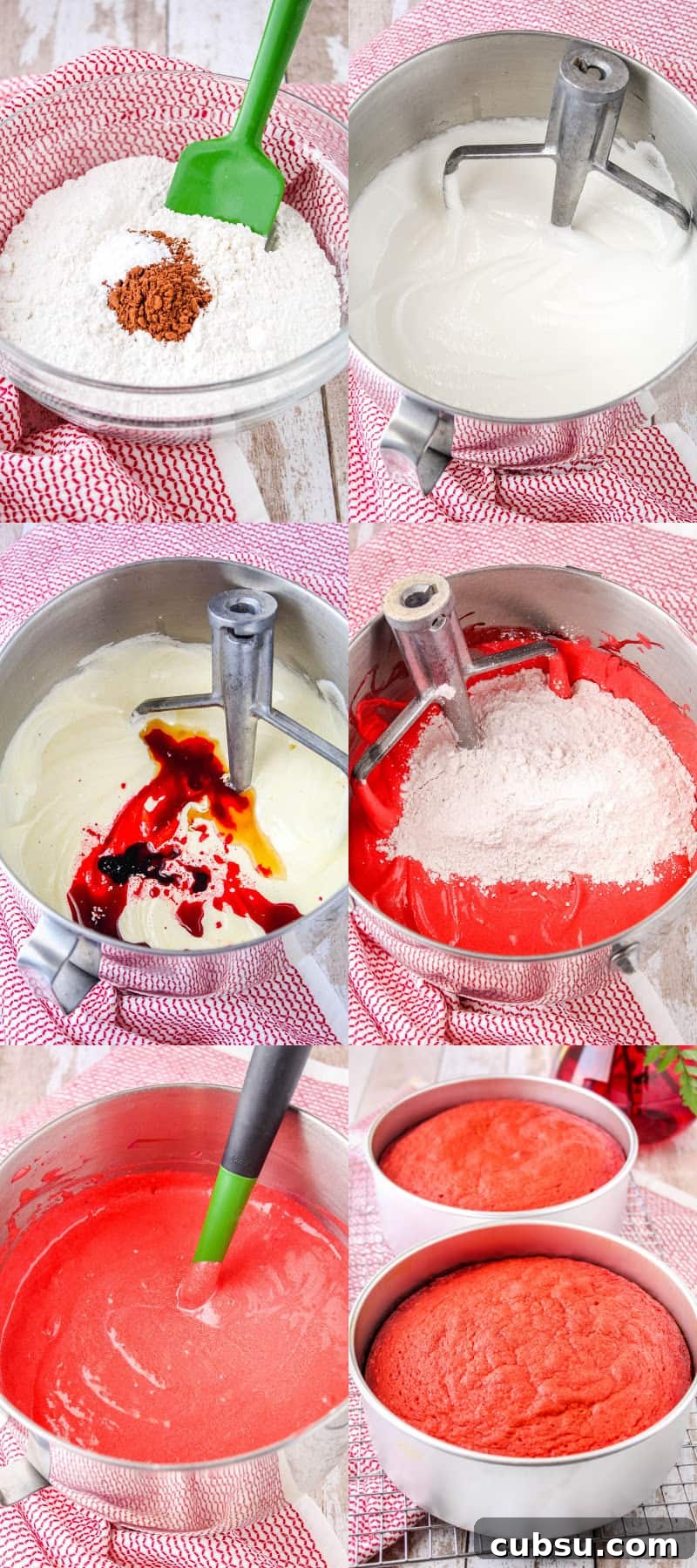
- Whisk the dry ingredients—cake flour (or substitute), cocoa powder, and baking soda—together and set aside.
- Cream butter, oil, and sugar until pale and fluffy, about 4–5 minutes on medium-low speed.
- Add eggs one at a time, then mix in food coloring, vinegar, and vanilla until the batter is evenly colored.
- Alternate adding the dry mix and buttermilk, beginning and ending with the dry ingredients. Mix until just combined and your batter is light and airy.
- Divide batter between prepared pans, smooth the tops, and bake 40–50 minutes or until a toothpick comes out clean.
- Cool in the pans 15 minutes, then transfer to a wire rack to cool completely before frosting.
Cream cheese frosting
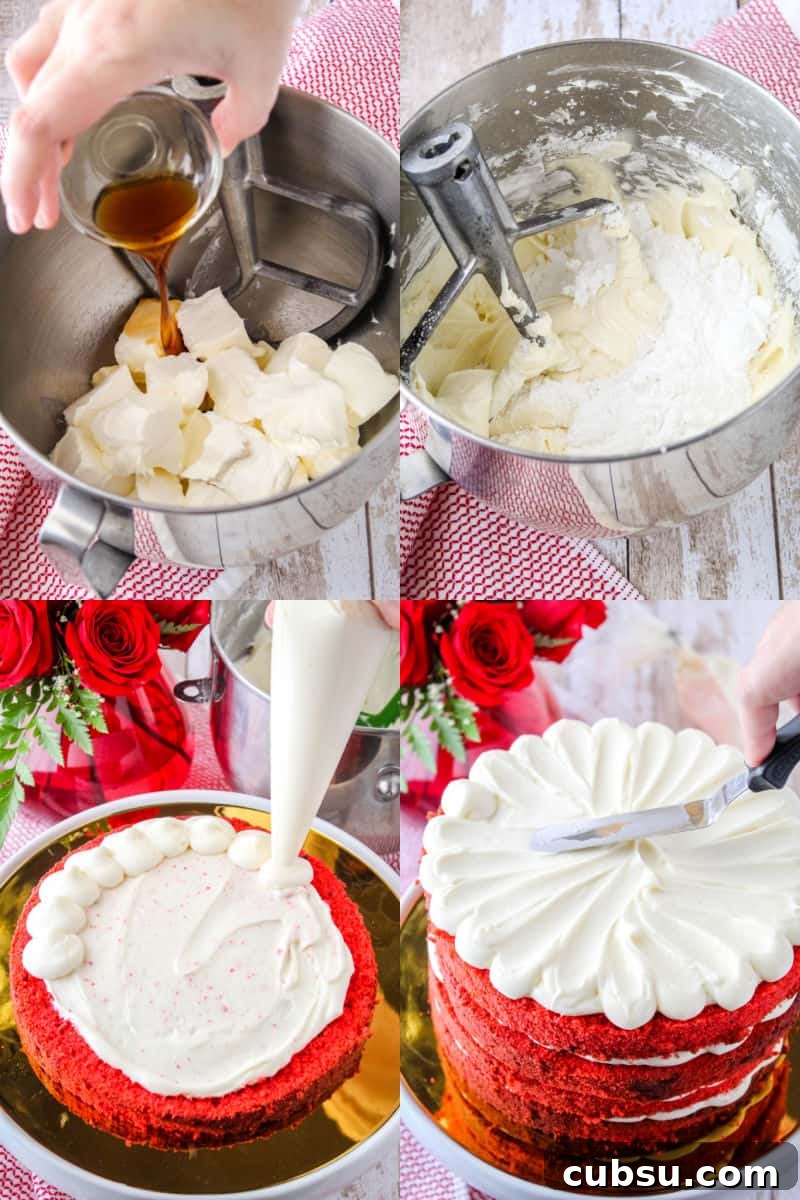
- Beat room-temperature butter, cream cheese, and vanilla until smooth, about 3 minutes.
- Add powdered sugar 1 cup at a time until you reach the desired sweetness and thickness—usually 5–6 cups total depending on humidity. Beat until light and fluffy, about 5 minutes.
Decorating basics
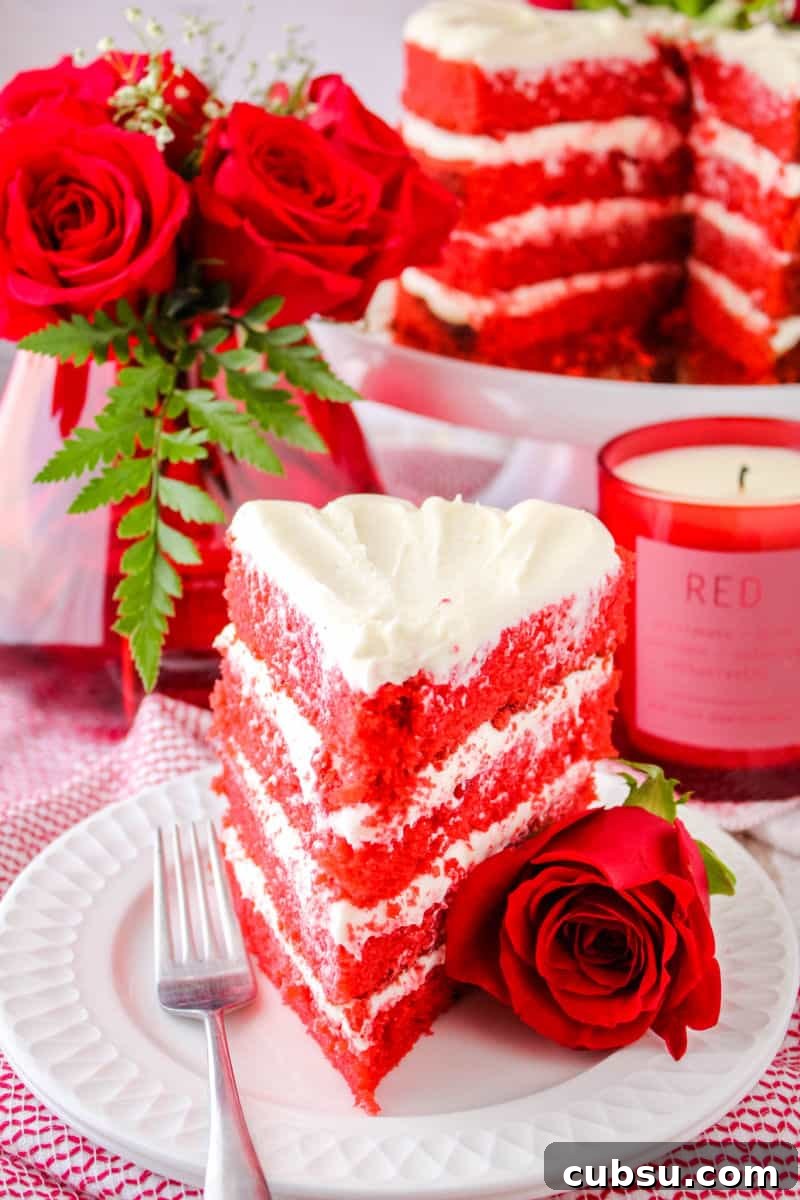
- Level cooled cakes with a serrated knife or cake leveler and cut each into two layers for a total of four layers.
- Place the first layer on a cake stand, spread frosting to the edges, and repeat until stacked. Pipe small dollops around the edges to help control how the filling spreads.
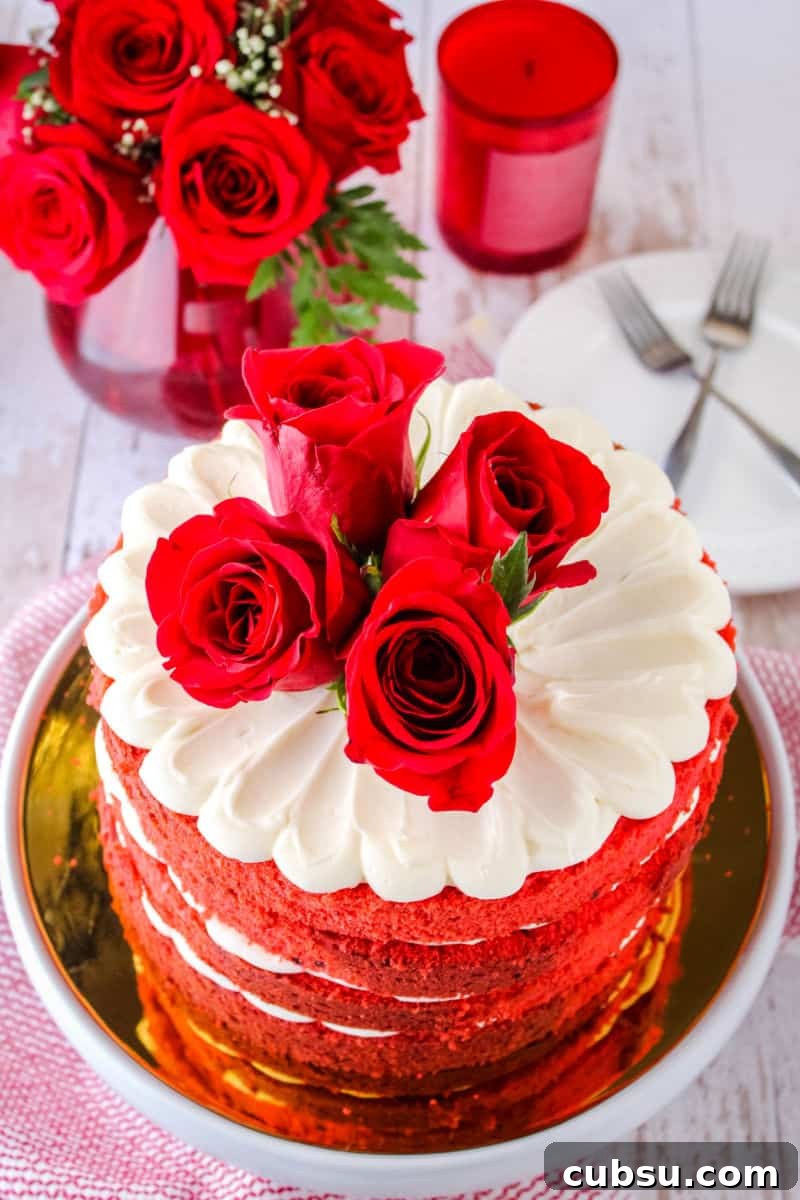
- For a “naked” look, scrape away some exterior frosting so the cake shows through. Smooth with an offset spatula for a clean finish.
- If using fresh roses, wrap stems in plastic, foil, or floral tape before inserting them into the cake to keep the dessert safe.
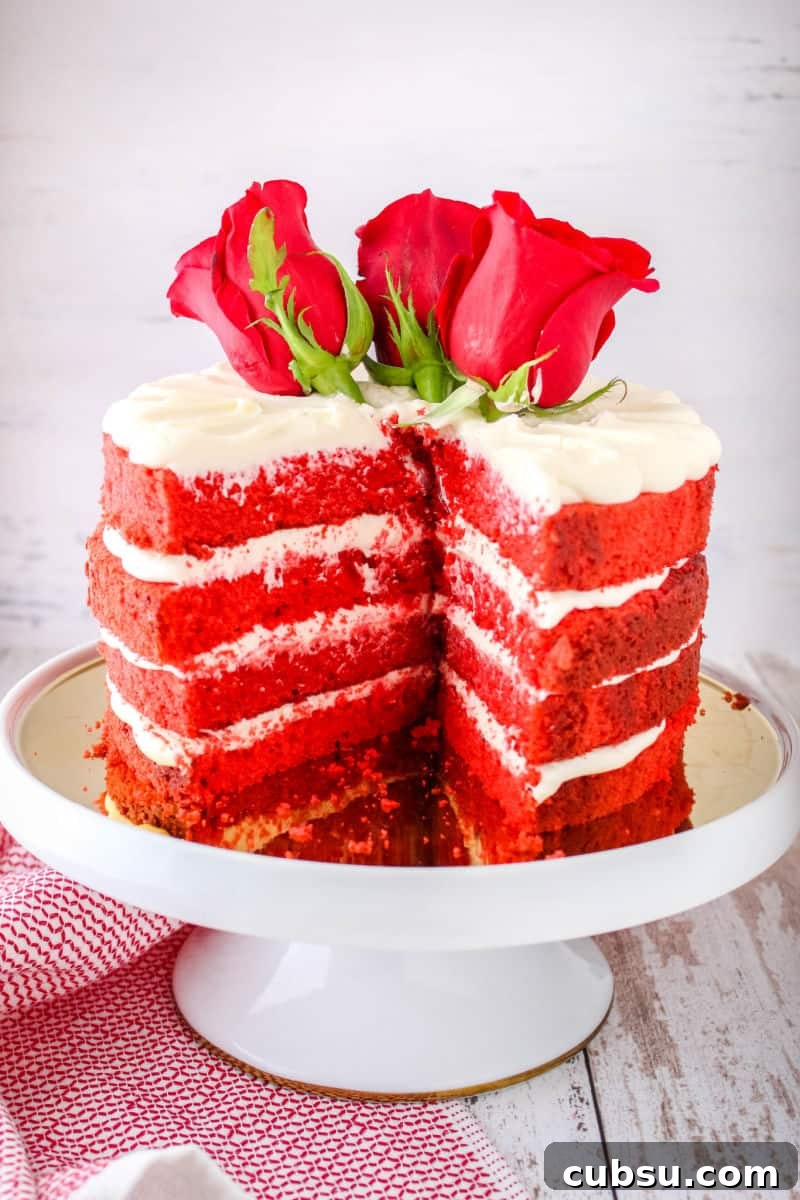
My cake got a simple finishing touch from four leftover roses and baby’s breath. It’s an elegant, effortless look—easy to achieve and impressive on the plate.
Important tip: let the cakes cool completely and consider chilling the frosting briefly before assembly. If the cake or frosting is too warm, layers can shift and frosting can slide—your cake will still taste great but may lose its shape. If time allows, bake a day ahead and assemble the day you serve it.
Want more cake recipes?
- Samoa Poke Cake
- New York Style Cheesecake
- Mom’s Best Ever Coconut Cake
- Lemon Raspberry Cake
- Brown Sugar Bacon Chocolate Cake
- Rum Soaked Honey Pound Cake
- Homemade Carrot Cake
- Applesauce Oatmeal Cake
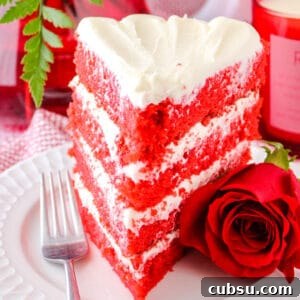
Homemade Red Velvet Cake
Nothing says I love you like a homemade cake. Red velvet cake is a Southern favorite and a delicious way to end your meal.
Ingredients
Red Velvet Cake
- 3 cups cake flour (see notes for substitute)
- 1 1/2 teaspoons unsweetened cocoa powder
- 1 teaspoon baking soda
- 1/2 cup unsalted butter, room temperature
- 1 cup vegetable oil
- 2 cups granulated sugar
- 4 large eggs
- 1 ounce red food coloring (about 1 bottle)
- 1 teaspoon apple cider vinegar
- 1 teaspoon vanilla extract
- 1 cup buttermilk (or see note for sour milk)
Cream Cheese Frosting
- 1/2 cup unsalted butter, room temperature
- 16 ounces cream cheese, room temperature
- 1 tablespoon vanilla extract
- 5–6 cups powdered sugar, added gradually until desired consistency
Instructions
Red Velvet Cake
- Preheat oven to 350°F. Grease two 8- or 9-inch round pans, line with parchment, and grease the paper.
- Whisk together cake flour, cocoa powder, and baking soda in a medium bowl.
- Cream butter, oil, and sugar in a stand mixer or large bowl with a hand mixer for about 5 minutes until pale and fluffy.
- Add eggs one at a time. Mix in food coloring, vinegar, and vanilla until combined.
- Alternate adding half the flour mixture and buttermilk, finishing with flour. Mix until just combined.
- Divide batter between pans, smooth tops, and bake 40–50 minutes or until a toothpick comes out clean.
- Cool in pans 15 minutes, then transfer to a wire rack to cool completely.
Cream Cheese Frosting
- Beat butter, cream cheese, and vanilla until smooth, about 3 minutes.
- Add powdered sugar 1 cup at a time until desired sweetness and thickness are reached. Beat 5 minutes until fluffy.
Assembly
- Level cooled cakes and cut each in half to create four layers.
- Place one layer on a cake stand and spread 1/3–1/2 cup frosting to the edges. Repeat with remaining layers.
- Frost the outside or scrape for a naked cake look. Smooth with an offset spatula if desired.
- Wrap rose stems before inserting if decorating with fresh flowers. Chill or serve immediately.
Notes
- Do not use self-rising flour. To substitute cake flour: combine 2 1/2 cups all-purpose flour + 2 tablespoons all-purpose flour + 6 tablespoons cornstarch.
- To make a quick buttermilk substitute, combine 1 cup 2% or whole milk with 1 tablespoon lemon juice or white vinegar; let sit 5 minutes.
All nutritional information is an estimate and will vary based on brands and portion sizes.