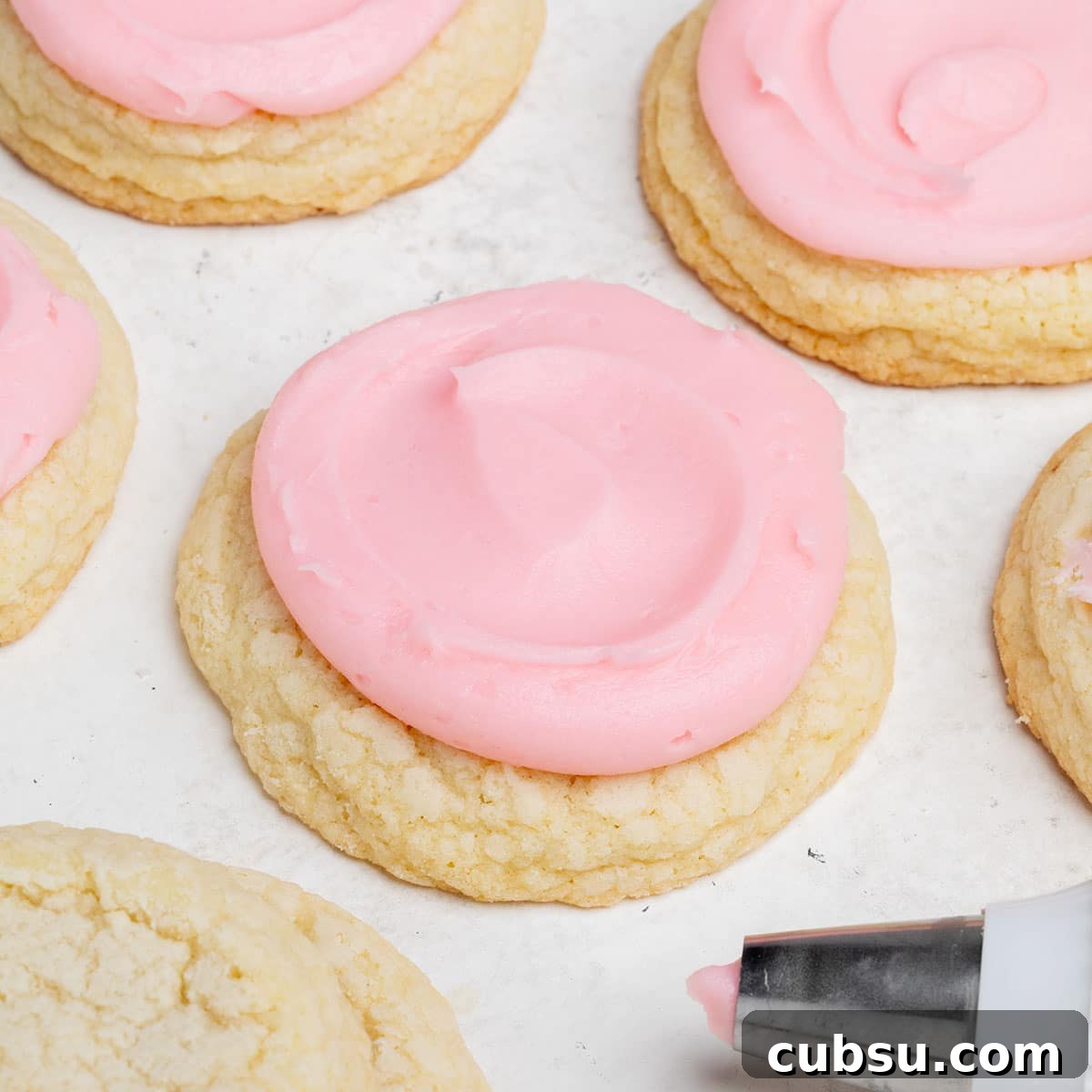
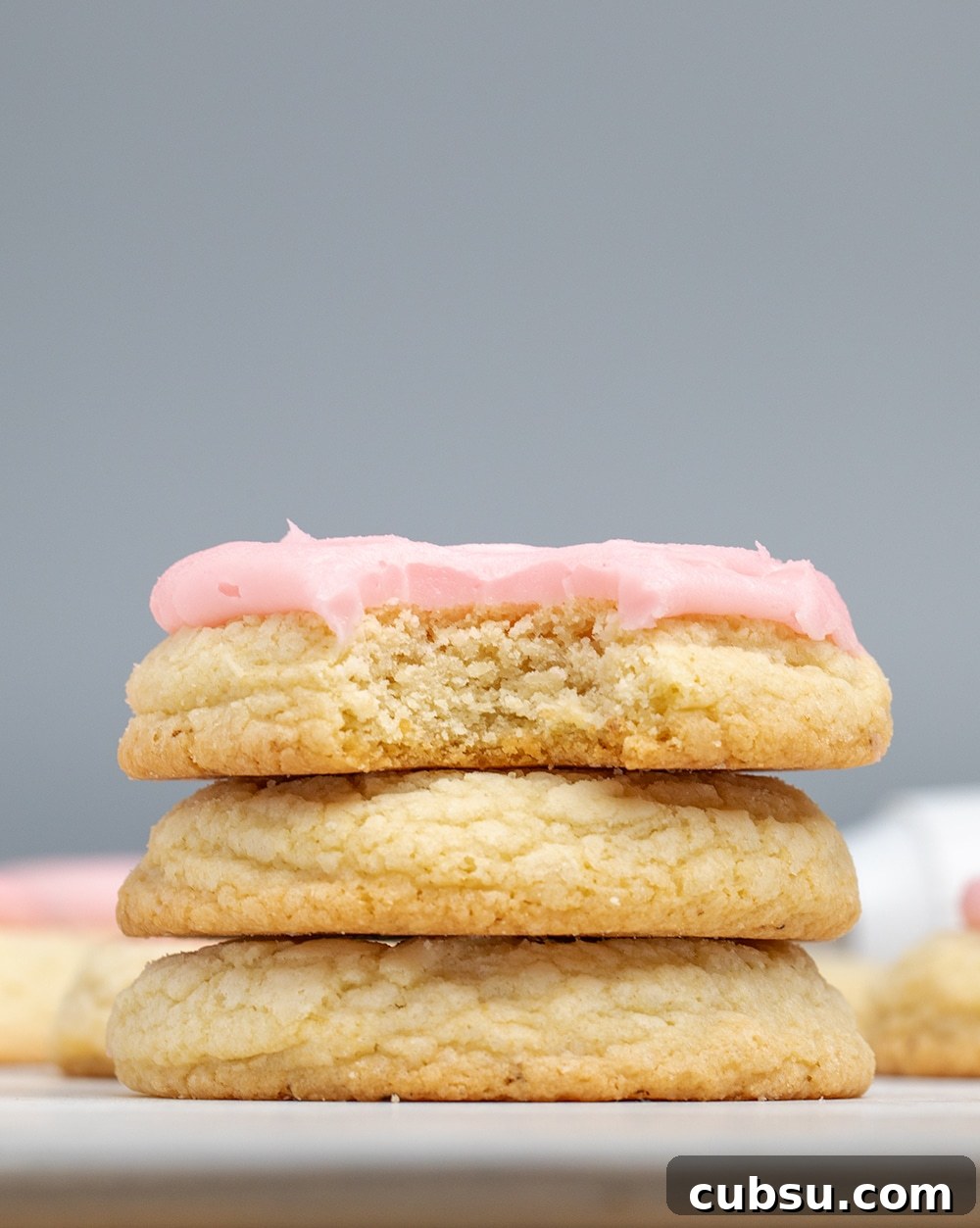
This gluten-free Crumbl Cookies copycat recipe delivers a bakery-style sugar cookie whenever you crave one but can’t visit the store. These cookies capture the same soft, chewy texture and rich flavor of the Crumbl originals while being safe for a gluten-free diet.
Whether you bake often or are trying this for the first time, the instructions are straightforward and accessible. With a handful of pantry staples and a little attention to technique, you’ll end up with tender, lightly sweet cookies topped with a thick, buttery frosting that holds its shape.
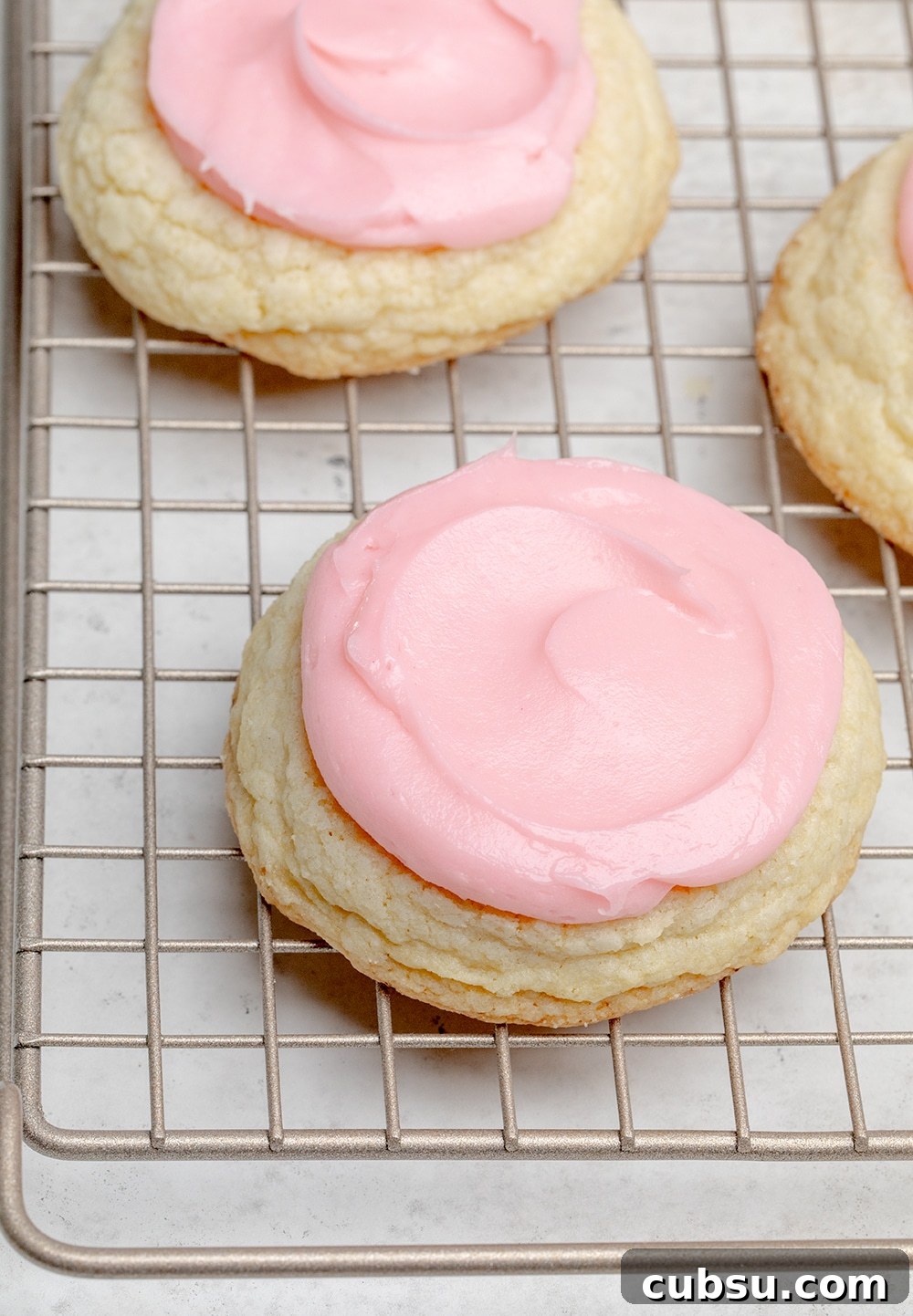
Why this recipe works
This gluten-free version is simple and reliable. It uses common ingredients and minimal equipment, so you don’t need specialty tools to get bakery-style results. The combination of a rice-based all-purpose gluten-free flour blend, properly handled butter, the right amount of sugar, and careful baking temperatures produces cookies that are soft, slightly chewy, and rich.
Many tasters find these cookies indistinguishable from the originals and sometimes prefer them, especially when a nostalgic Crumbl flavor (like the discontinued pink sugar cookie) is recreated at home. The cookie base has a subtle bakery richness and the frosting has a buttery note with an optional hint of almond.
These cookies are portioned at about 2 ounces each, closer to the smaller size some stores rarely stock; for an even more authentic oversized Crumbl-style cookie, double each mound of dough and bake a larger portion while adjusting the bake time as described below.
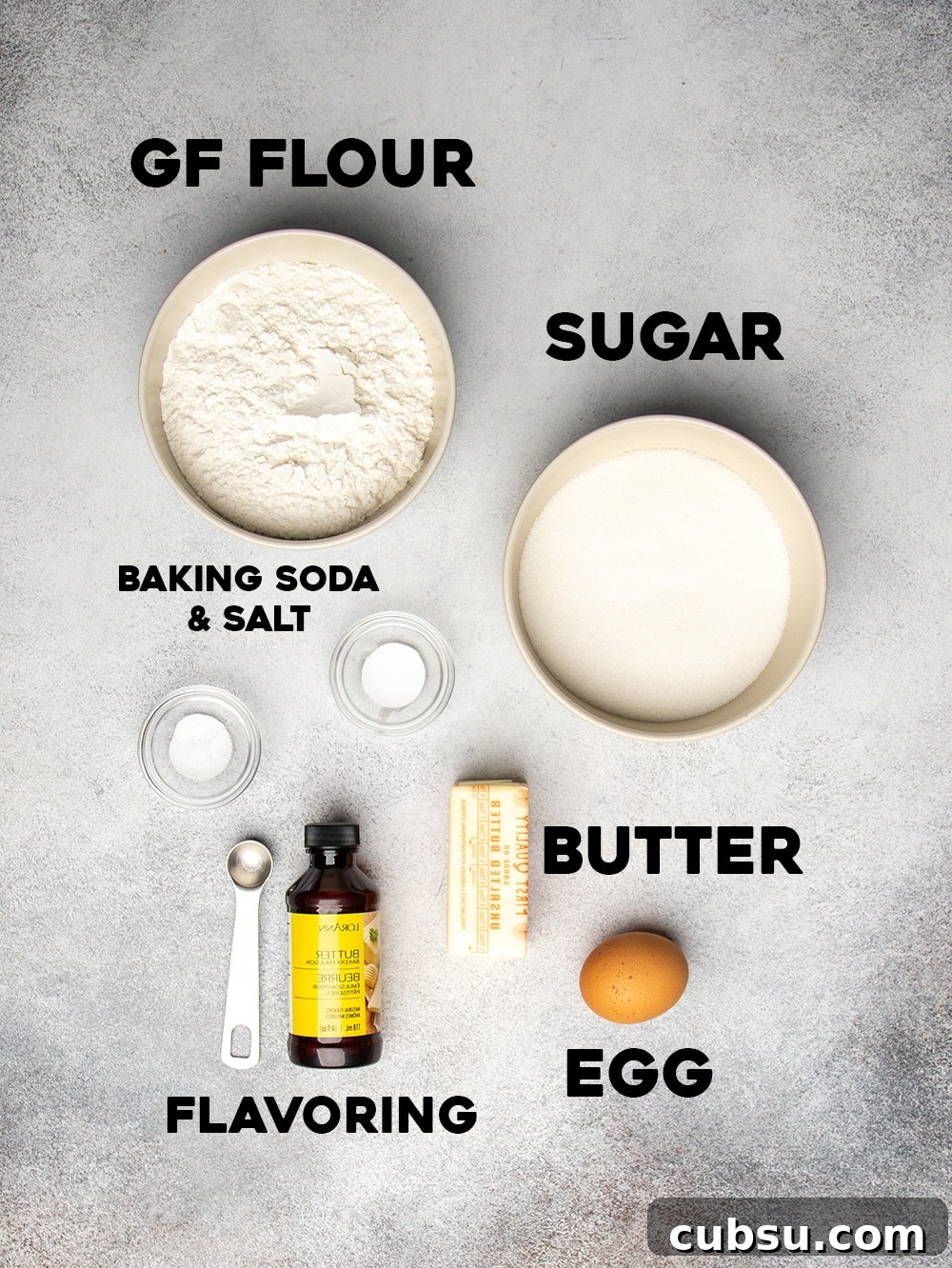
Cookie ingredient notes
With so few ingredients, each one matters. Choose and measure carefully for the best texture and flavor:
- All-purpose gluten-free flour blend: Use a quality rice-based all-purpose gluten-free blend designed to replace wheat flour; using the wrong flours will change texture and shape.
- Baking soda encourages light browning; salt enhances the cookie’s overall flavor.
- Granulated sugar provides sweetness, helps tenderize the dough, and promotes gentle browning.
- Butter should be at cool room temperature: soft enough to leave an impression with a light touch but not greasy. Unsalted butter is recommended so you can control the salt and moisture content.
- Egg binds the dough, adds structure, and contributes moisture and richness.
- Flavoring such as butter emulsion or butter-vanilla emulsion adds depth. If you don’t have that, use twice as much pure vanilla extract.
How to make famous Crumbl sugar cookies gluten free
Some steps focus on appearance—tinting the frosting, shaping and swirling—but the crucial technical details are what make these cookies consistently good. Measure your flour by weight if possible, use butter at the recommended temperature, and avoid overbeating once the egg is added.
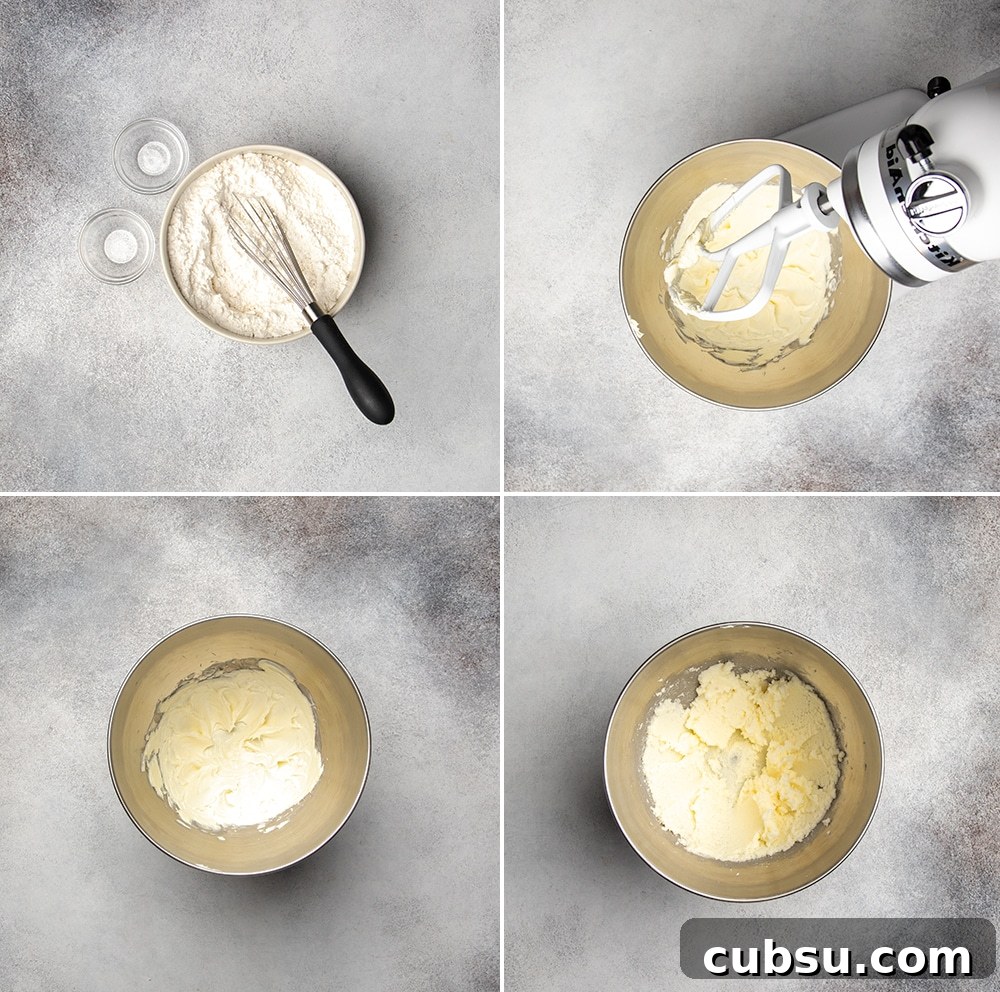
- Whisk together the dry ingredients—gluten-free flour blend, xanthan gum (if needed), baking soda, and salt—until evenly combined.
- Beat the cool room temperature butter until smooth and creamy, but not overly aerated.
- Add the granulated sugar and beat until incorporated; the mixture will have a slightly grainy texture.
- Add the egg and butter emulsion or vanilla extract, beating until smooth and just a bit fluffy. Avoid overbeating.
- Fold in the dry ingredients and beat on medium until a thick, non-greasy dough forms.
- Scoop the dough into mounds about 3 tablespoons each (roughly 2 ounces) and place them on lined baking sheets. Do not flatten or disturb the mounds.
- Bake starting at 350°F for a short burst to gain some height, then immediately reduce the oven temperature to 300°F to finish baking without excessive browning. Bake until the centers are no longer glossy.
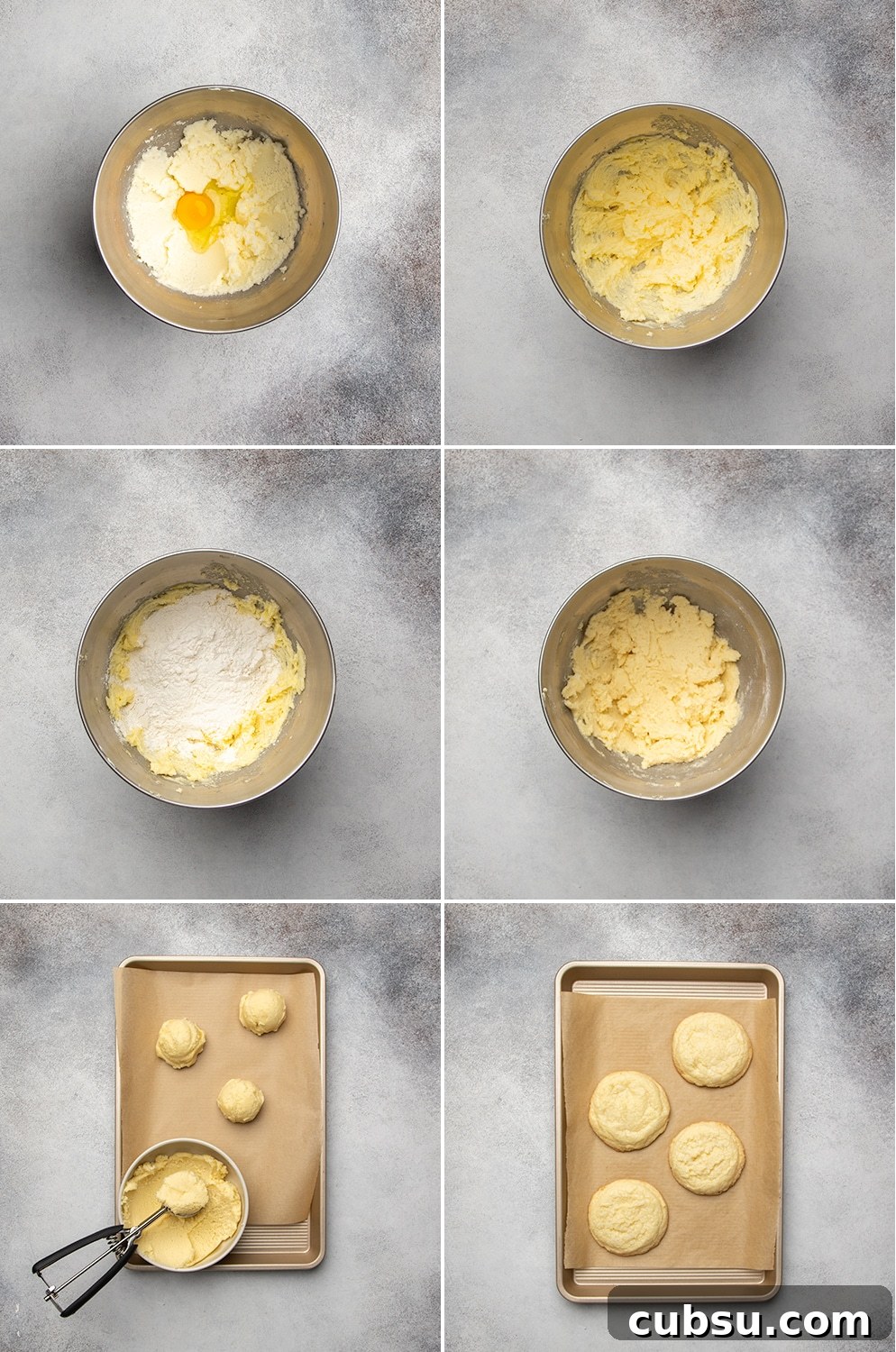
How to make the Crumbl cookie frosting
The frosting is a classic buttercream adjusted to be thick enough to hold a tall swirl yet spreadable enough to shape. Using cool room temperature butter and the right balance of cream and powdered sugar produces a stable, creamy frosting that sets firm enough to stack cookies gently.
Beat the butter until smooth, add heavy cream and flavorings—vanilla and optional almond extract—and then gradually add confectioners’ sugar until the frosting reaches a thick, pipeable consistency. If you want the signature pink, add a tiny amount of neon gel food coloring for a bright, bakery-style hue.
How to frost a Crumbl cookie
A slightly moistened spoon or offset spatula makes it easier to shape the frosting while keeping it thick and smooth. Place about 2 tablespoons of frosting in the center of each cooled cookie. Press the frosting outward toward the edge to form an even layer, then use a clean moistened spatula to press around the edge and finish with a gentle inward swirl. Let the frosting set for about an hour; leaving them overnight uncovered helps the frosting firm so you can stack cookies gently.
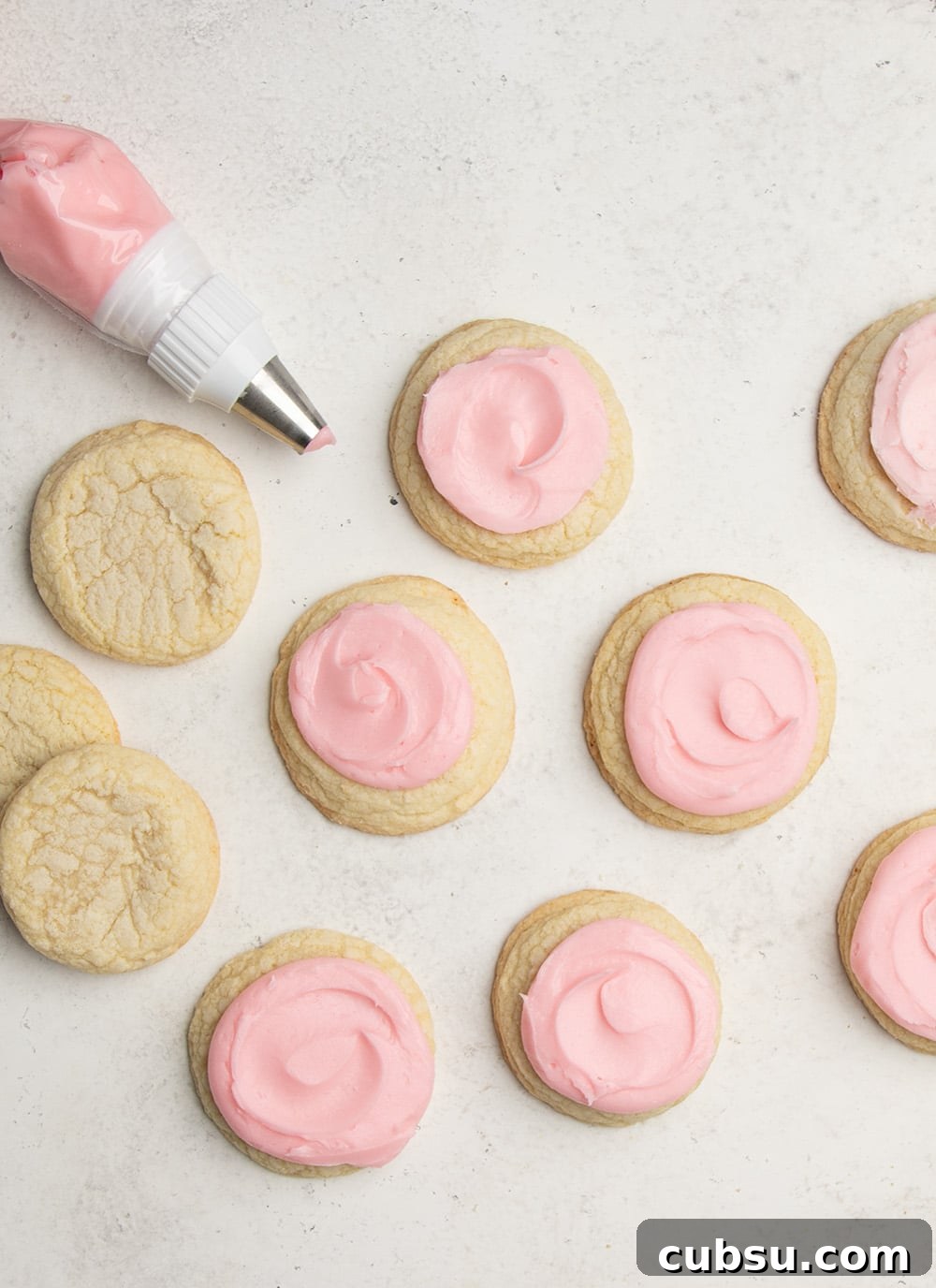
Tips for perfect cookies every time
Beyond following the recipe, attention to ingredient temperature and handling makes a big difference. Here are practical tips to improve consistency and final texture:
Cool room temperature butter
Butter at cool room temperature blends evenly with sugar to create the proper structure. If butter is too cold, it won’t incorporate; if too warm and greasy, the dough will spread and lose height. If you forgot to soften butter, chop it into small pieces and leave it in the warmest part of the kitchen, or place a warmed bowl over it briefly to speed softening.
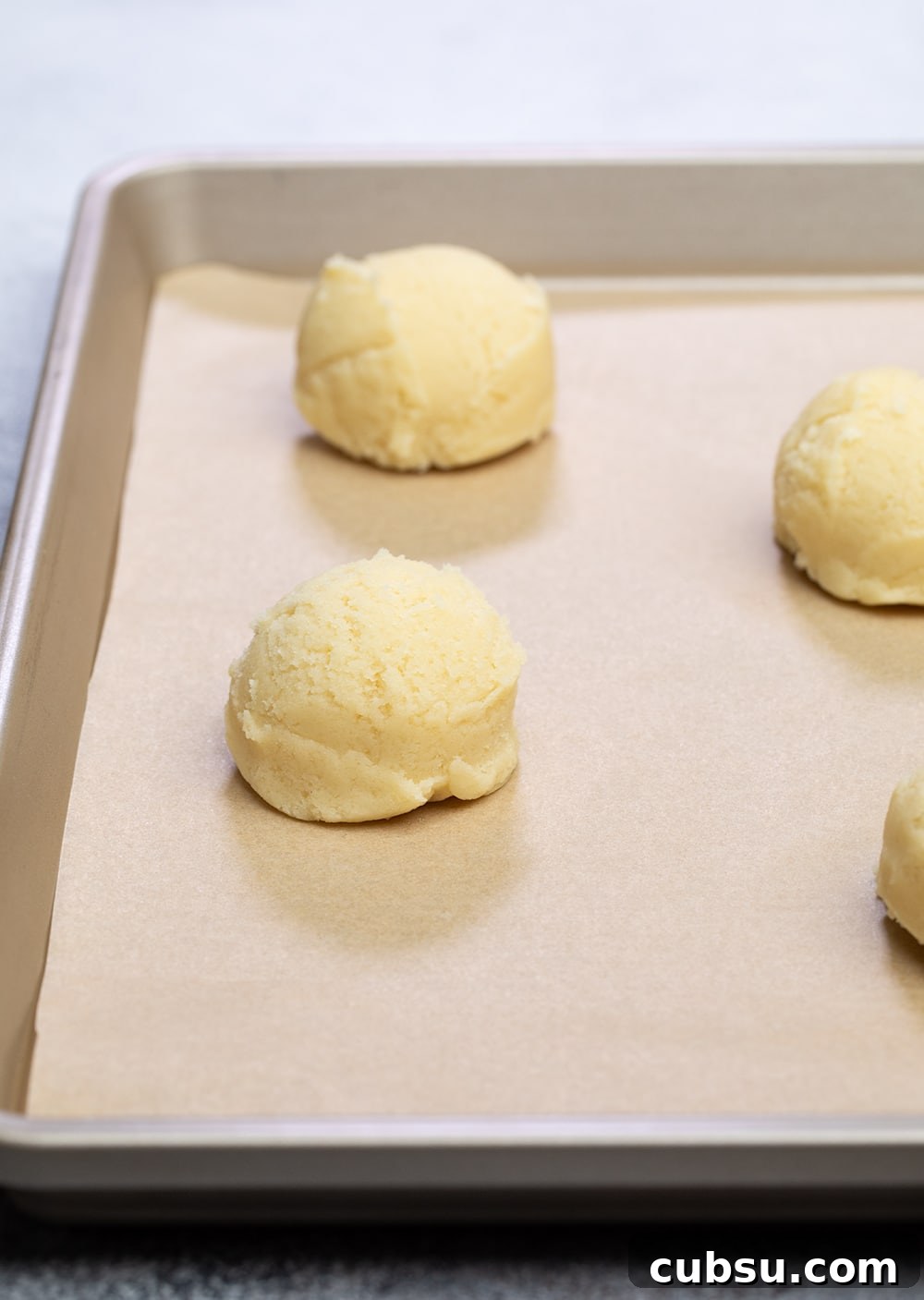
Watch your baking temperature and time
Begin baking at a higher temperature (350°F) for a few minutes to encourage lift, then reduce to 300°F to finish without over-browning. Overbaking dries cookies; perfectly baked cookies should be soft and chewy. An alternative method is to bake entirely at 300°F for 20–22 minutes if you prefer wider, flatter cookies with a paler bottom.
Quality gluten-free flour
A balanced, rice-based all-purpose gluten-free flour blend is essential. Some specialty flours like coconut or almond require specific recipes and won’t behave like an all-purpose blend here. Poorly balanced blends can cause gritty texture, odd flavor notes, or spreading issues.
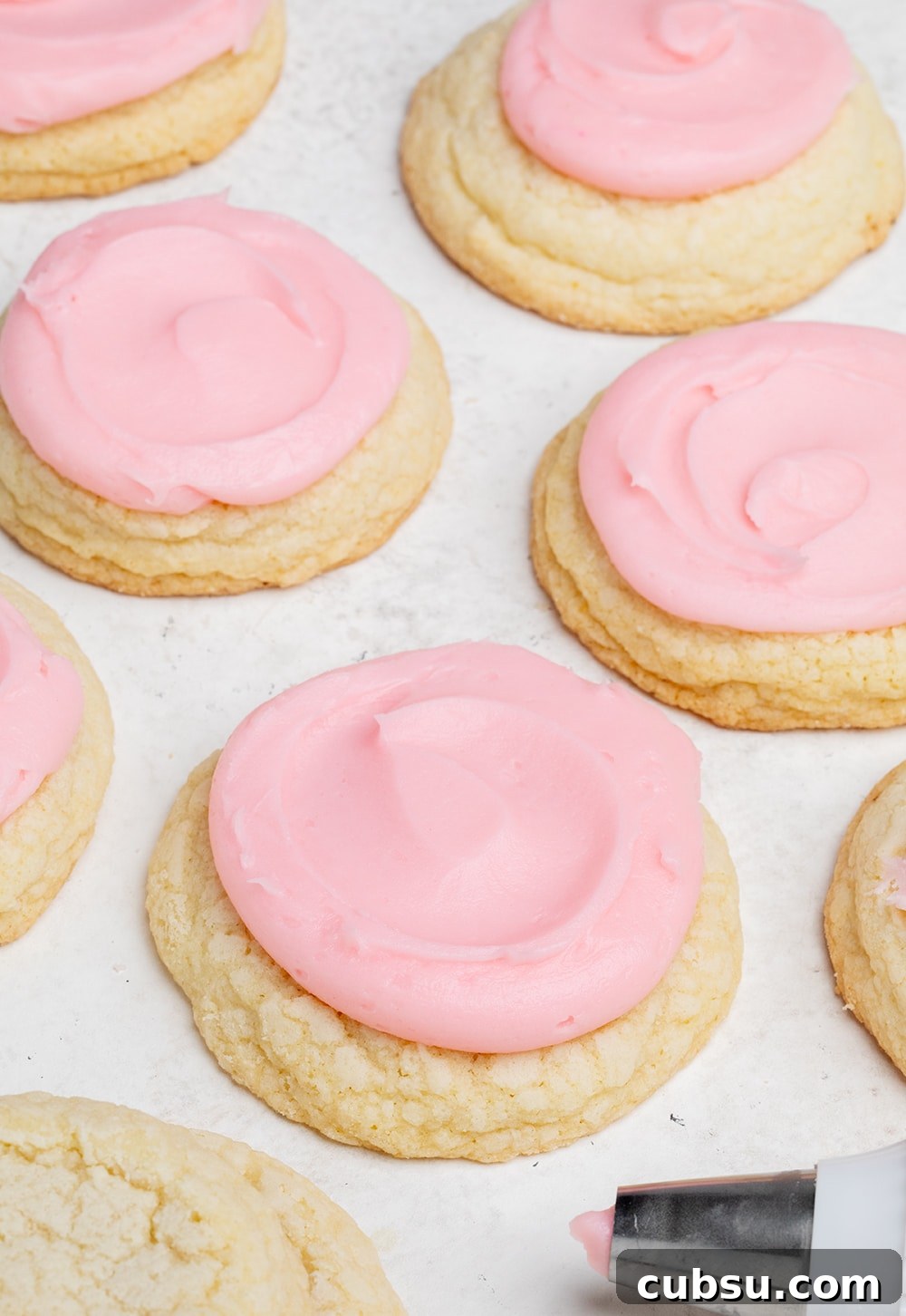
Crumbl Cookie FAQs
Taste testers report these gluten-free cookies are very similar to the original: soft, chewy, and flavorful. The texture and sweetness closely match the Crumbl experience.
Unfrosted cookies keep at room temperature, covered, for about 2 days or frozen for up to 5 months. Frosted cookies can be refrigerated for up to 3 days or frozen in a single layer and stored in an airtight container for up to 3 months.
Yes—try a reliable vegan butter and a plant-based milk. For frosting, combining vegan butter with a bit of vegetable shortening can improve stability. Brands and results vary, so test small batches first.
Aquafaba (about 50 g) or two egg whites can sometimes replace a whole egg. If using egg whites or aquafaba, flatten the centers of dough mounds slightly before baking so cookies bake level.
The original Crumbl cookies are made with wheat flour and are not gluten-free, so this homemade version is a safer alternative for those avoiding gluten.
Flat cookies are usually from butter that was too soft or not starting the bake at a high enough temperature to set the edges. Follow the temperature steps and use butter at cool room temperature.
No. Butter emulsion adds a deeper buttery flavor, but you can simply use extra vanilla extract if you prefer.
You can add a small amount of chocolate chips, but the result will be a chocolate chip cookie variation rather than a faithful reproduction of Crumbl’s chocolate chip flavor.
Gluten Free Crumbl Cookies

Equipment
- Stand mixer with paddle attachment or hand mixer
Ingredients
For the cookies
- 1 ½ cups (210 g) all-purpose gluten-free flour blend (use a rice-based AP blend)
- ⅜ teaspoon xanthan gum (omit if your blend already contains it)
- ½ teaspoon baking soda
- ¼ teaspoon kosher salt
- 8 tablespoons (112 g) unsalted butter, at cool room temperature
- 1 cup (200 g) granulated sugar
- 1 egg (50 g out of shell), at room temperature
- ½ teaspoon butter vanilla emulsion or twice as much pure vanilla extract
For the frosting
- 10 tablespoons (140 g) unsalted butter, at cool room temperature (not greasy)
- 2 tablespoons (1 fl oz) heavy cream, at room temperature
- ½ teaspoon pure vanilla extract
- ½ teaspoon pure almond extract (optional)
- ¼ teaspoon kosher salt
- 3 ½ cups (400 g) confectioners’ sugar, plus more as needed
- 1 drop neon pink gel food coloring (optional)
Instructions
Make the cookies
- Whisk the flour blend, xanthan gum, baking soda, and salt in a medium bowl; set aside.
- Preheat oven to 350°F. Line rimmed baking sheets with parchment paper.
- Beat the butter in a large bowl or stand mixer on medium-high until creamy, about 3 minutes.
- Add the granulated sugar and beat until combined and light but not fluffy.
- Add the egg and butter emulsion or vanilla, and beat until smooth.
- Add the dry ingredients and beat on medium until just combined; the dough should be thick and not greasy.
- Scoop mounds of dough about 3 tablespoons each (≈2 ounces) and place 2 inches apart on the sheets. Do not flatten.
- Bake in the center of the oven for 5 minutes at 350°F, then reduce the oven temperature to 300°F and bake until the centers are no longer shiny, about 12 more minutes.
- Cool on the baking sheet at least 10 minutes before transferring to a wire rack to cool completely.
Make the frosting
- Beat the butter until smooth but not airy, about 2 minutes.
- Add heavy cream, almond extract (if using), vanilla, and salt, then increase speed and beat until creamy, about 3 minutes.
- Add about 2 cups of confectioners’ sugar and mix slowly until incorporated, then beat on high until uniformly thick, another 3 minutes.
- Add remaining powdered sugar as needed to reach a thick, pipeable consistency. Add food coloring if desired, mixing slowly at first to avoid incorporating air.
Frost the cookies
- When cookies are completely cool, place about 2 tablespoons of frosting on each cookie.
- Mound frosting in the center, then use a slightly moistened spoon or offset spatula to press the frosting toward the edge and create a mostly even layer. Press a clean, moist spatula around the edge and finish with a slight swirl toward the center.
- Let the cookies set about an hour. Leaving them overnight uncovered will help the frosting firm so cookies can be stacked gently.
Storage
- Unfrosted cookies: room temperature, covered, up to 2 days; frozen up to 5 months.
- Frosted cookies: refrigerated up to 3 days; frozen in a single layer, then stored in an airtight container up to 3 months.
Notes
If you feel pressured to frost perfectly, don’t—spoon and smooth the frosting as best you can. Moistening your spoon helps achieve a smoother finish and encourages the frosting to set up firmer. Nutritional values are approximate and intended as a guideline.
Nutrition
Per cookie with frosting (approximate): Calories 413; Carbohydrates 101 g; Protein 2 g; Fat 25 g. Use these values only as an estimate.