How to grow Puntarelle
In my last blog post I wrote about how to cook and use puntarelle. Here I explain how to grow them at home, based on my own experience. They proved surprisingly easy to cultivate last year despite a very wet season and limited sun.
If you’d like a reliable autumn and winter salad vegetable, read on for practical tips on sowing, care and harvest.
Puntarelle seeds & stockists
The first step is to obtain seeds. I was fortunate to receive a packet from my Italian friend and food mentor, Carla Tomasi. If you can’t source seeds locally, look for varieties labelled Cicoria Catalogna Puntarelle di Brindisi from reputable Italian suppliers.
Stockists vary by country. In the UK, Paolo at Seeds of Italy has sold the Franchi variety. In the USA and Australia similar Franchi seed packets have been available from specialised suppliers. Seed packet instructions can differ between companies and sometimes even between a supplier’s web description and the printed directions. Below are the practical recommendations I developed while growing puntarelle on the Llŷn Peninsula (about 52°N). Adjust timings for your local climate.
Site
Choose well-drained, fertile soil in full sun or partial shade. We planted ours in ground cleared after a potato crop, enriched with a layer of young bracken and homemade compost. Good soil preparation helps plants establish quickly.
Temperatures
Puntarelle prefer mild conditions around 15°C. Some seed suppliers state they tolerate down to 5°C, but in our experience shoots suffered when exposed to freezing temperatures. Protect young plants from severe cold where possible.
Sowing
Sow seeds between June and early September. Late September sowings failed to produce usable shoots in our climate. Puntarelle are primarily an autumn/winter crop, so there’s no need to sow early in the year when other vegetables are available.
I sowed seeds in modules, placing two or three seeds per cell and later thinning to the strongest seedling. Direct sowing into the ground is possible, but starting in modules reduces slug and snail losses and gives better control over spacing and establishment. For staggered harvests, make successive sowings across the recommended period.
Transplant
When seedlings are 7–10 cm tall, transplant them to the final spacing of roughly 30 cm between plants. Keep the beds weed-free and water regularly until the roots are well established.
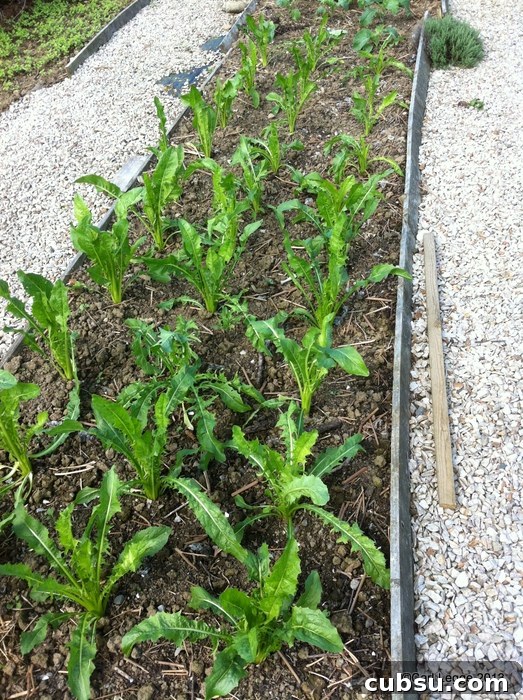
The top photo shows plants about a month after sowing.
Problems
We experienced only minor pest damage. Slugs and snails can nibble the leaf ribs and young shoots, so keep an eye out and take common-sense control measures. A more serious issue is internal rotting of the shoots: the ribbed interior can turn brown and decay. This seemed most likely when shoots were left in the ground too long or during prolonged wet weather. Successional sowing and timely harvesting help reduce this risk.
Harvest
Puntarelle typically mature in about two months. Harvest the shoots when they reach 5–20 cm tall. In our garden we began picking from mid-September onwards. With careful succession sowing and depending on local frost patterns, it’s possible to harvest into the following year. I collected some leaves in December, but the shoots were past their best then.
I experimented with leaving stump ends in the ground to re-shoot. Early plants produced some regrowth, but it was rarely of culinary quality worth harvesting.
Once harvested, puntarelle are straightforward to prepare and delicious in many dishes. Buon appetito!