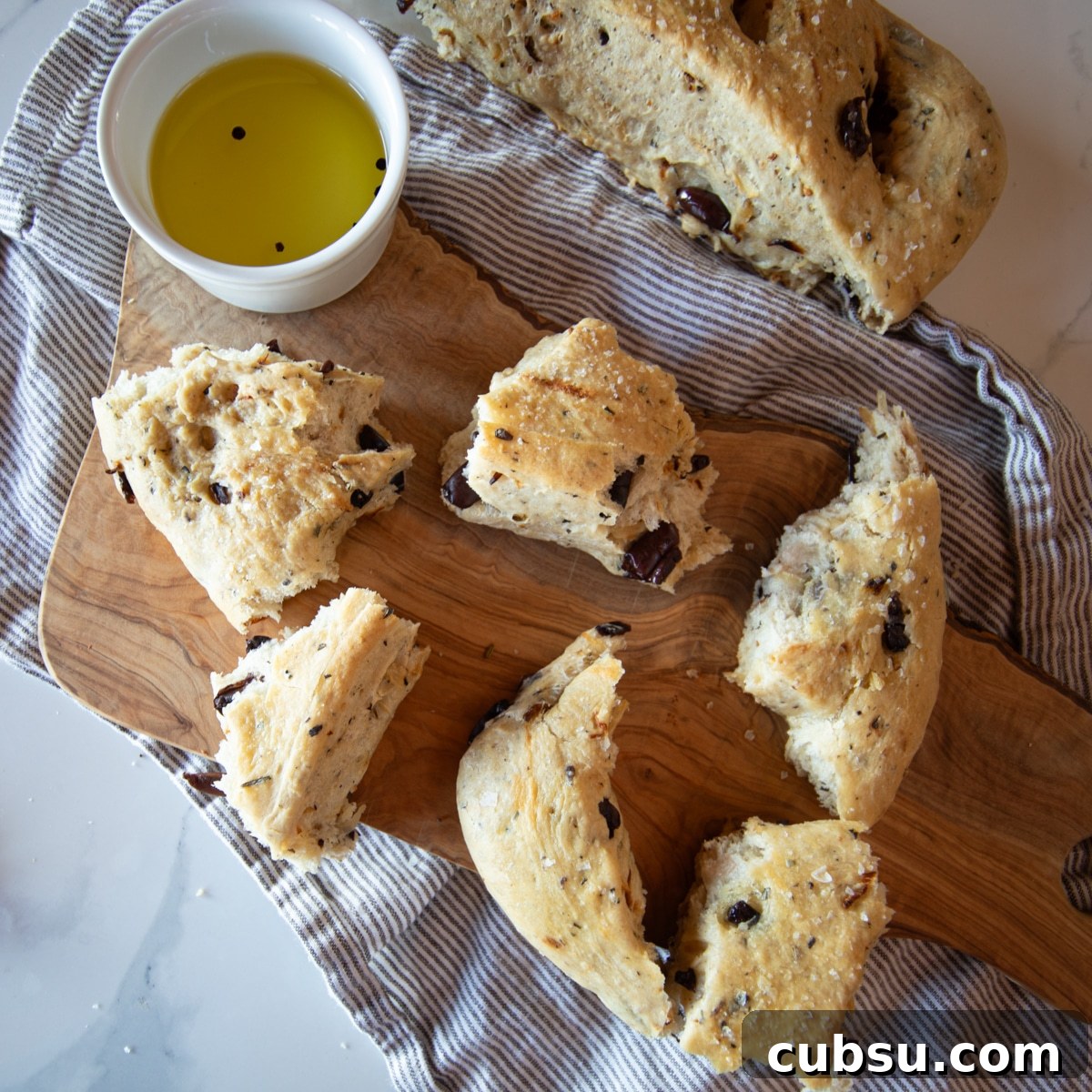
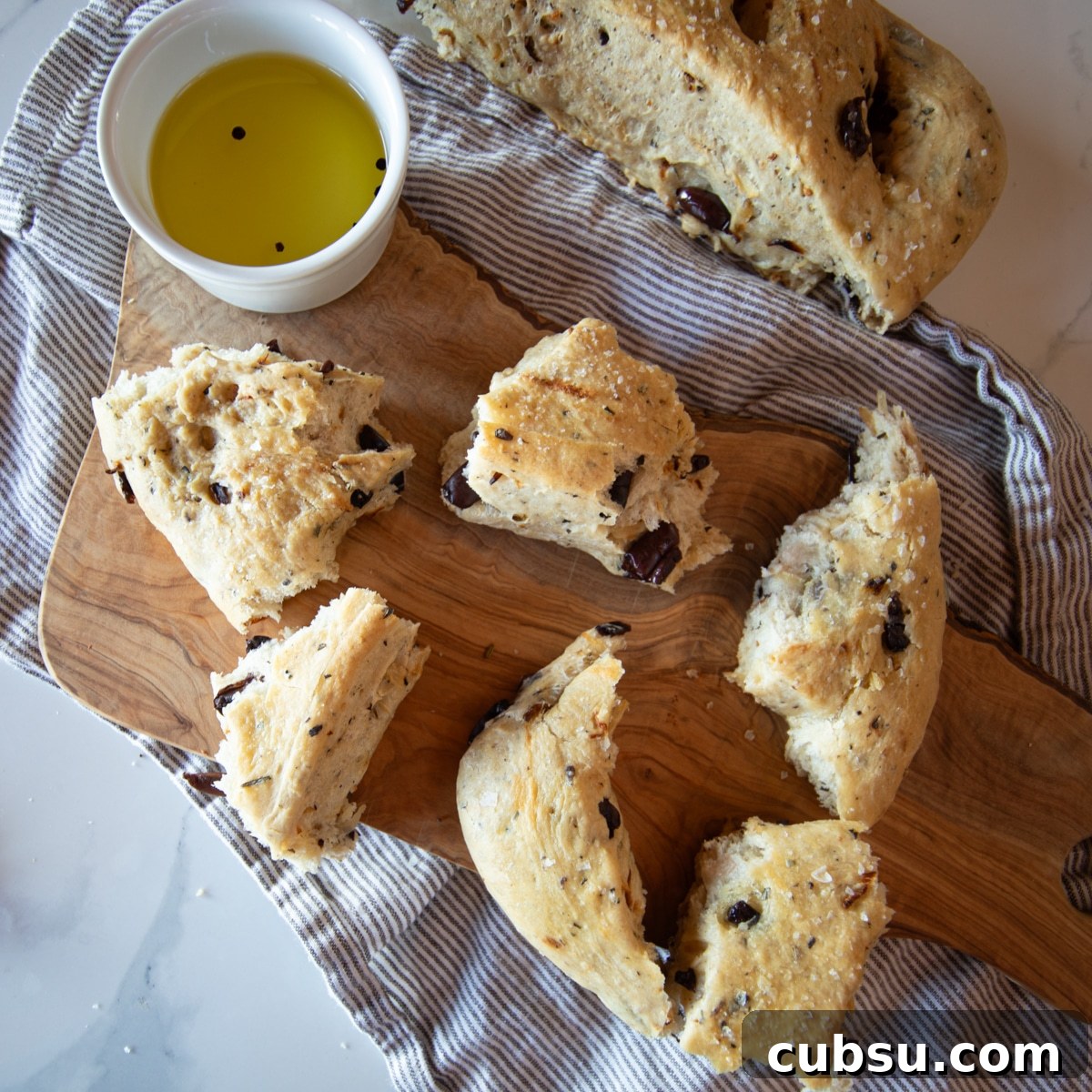
Fougasse is the French cousin of focaccia, traditionally made with black olives and deeply scored before baking to resemble an ear of wheat. My version features caramelized onion slices, fennel seed, and fresh rosemary.
This bread uses a poolish starter for improved texture and flavor, so plan to begin the process the day before baking.
Jump to Recipe
If you want to nail this recipe on your first try, use the Table of Contents in the original post to find the sections most helpful for you.
Baking yeasted bread is one of my favorite kitchen activities. I fell in love with bread in culinary school and often baked fresh loaves every day while studying and working on other recipes.
Watching simple ingredients transform into a fragrant, golden loaf feels a little like gardening: you do the work, wait, and then enjoy the harvest at the table.
Each month this year I’ve been baking breads around themed prompts with blogger friends. In December we made holiday breads; last month I baked a banana millet loaf for an ancient grains theme. This month I chose French breads and settled on fougasse.
🥖 What is Fougasse Bread?
Fougasse is the French relative of Italian focaccia. Both are flatbreads enriched with olive oil and share ancient Roman origins, but they evolved into distinct regional breads. Typical fougasse characteristics include:
- It’s especially popular in Provence in southern France and often incorporates fresh herbs and flaky sea salt on top.
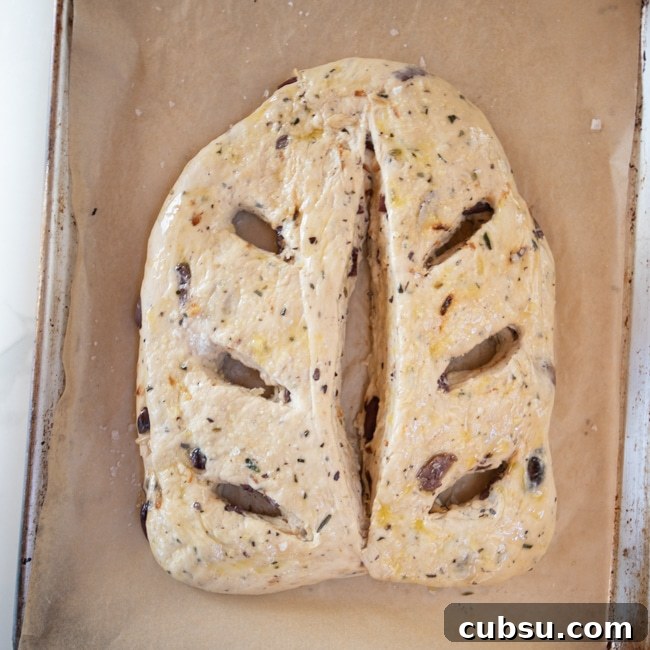
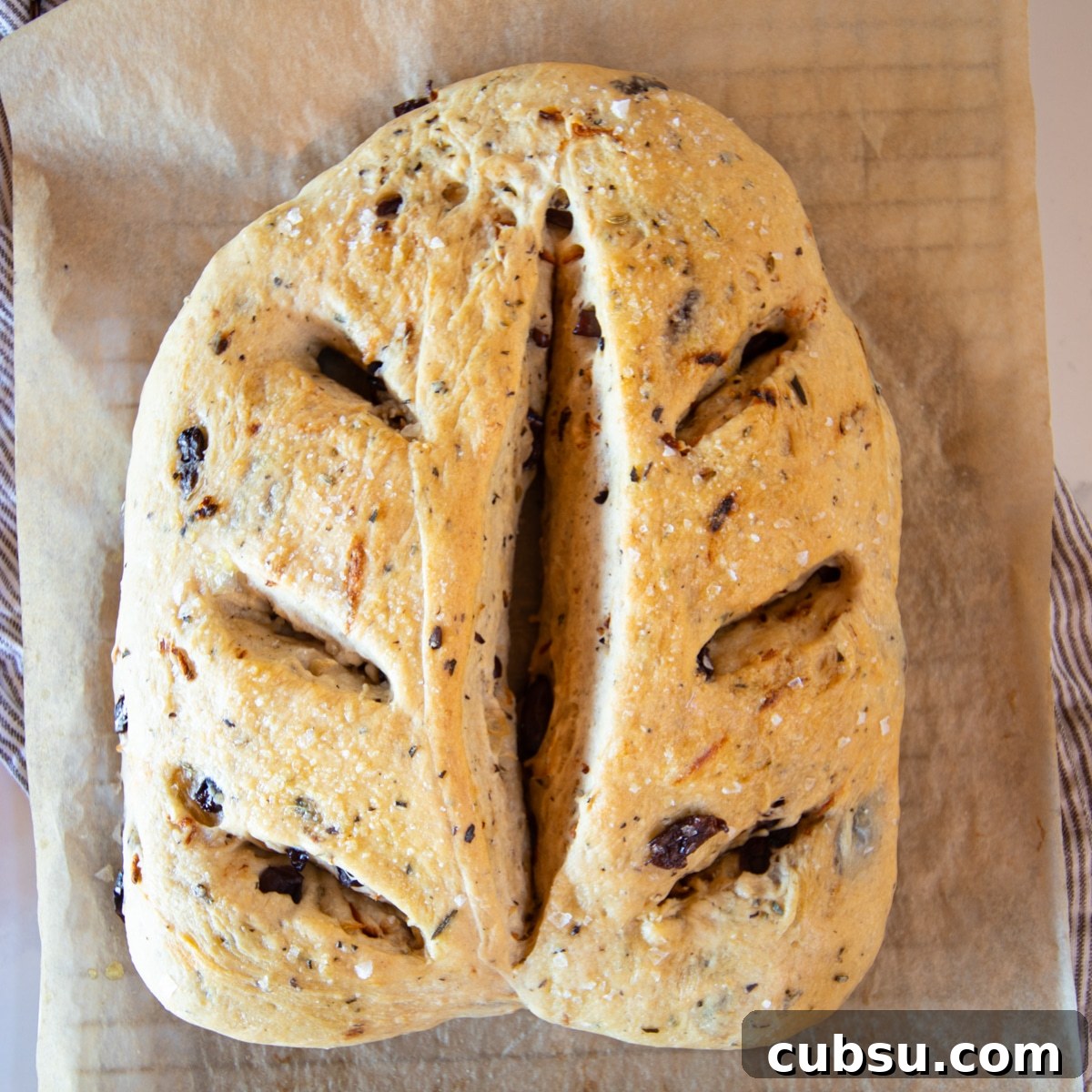
- The dough is rolled or stretched into an oval or leaf shape and then cut with diagonal slits to resemble an ear of wheat.
- When baked, fougasse has a crisp crust and a soft, chewy interior if made with bread flour; using all-purpose flour yields a more tender crumb.
- Many recipes begin with a poolish starter that ferments overnight to boost flavor and improve texture; the dough is completed and baked the following day.
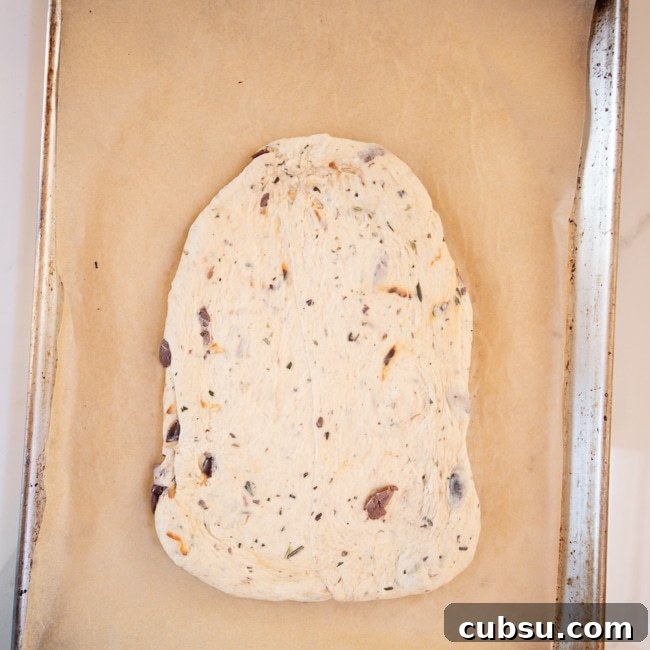
Below are photos that illustrate shaping and scoring the dough.
🧅 Main Ingredients + Notes
Some ingredients make a big difference to the final flavor and texture. Below are notes on key items; full measurements and directions are in the recipe card at the end of this post.
- Bread flour – For a chewier interior I recommend bread flour. If you prefer a more tender crumb, all-purpose flour will work.
- Yellow onions – Use yellow onions for their mild, sweet flavor when caramelized.
- Kalamata olives – This recipe highlights Kalamata olives, but you can mix Kalamatas with green olives if you prefer.
- Extra-virgin olive oil – A good-quality olive oil improves both flavor and mouthfeel.
Disclosure: This post may contain affiliate links to products I use in my kitchen. There is no additional cost to you, and I may earn a small commission if you purchase through them.
🔪 Recommended Equipment
These tools make the process easier:
- Kitchen scale
- Medium mixing bowl
- Whisk
- Chef’s knife
- Small skillet for caramelizing onions
- Stand mixer with dough hook (optional)
- Sharp razor blade, very sharp knife, or scissors for scoring
- Sheet pan lined with parchment
- Instant-read thermometer
- Wire cooling rack
💡 Ideas for Variations
- Replace half the white bread flour with whole wheat for a nuttier profile.
- Use Herbs de Provence instead of fresh rosemary and fennel seed.
- If you maintain an active sourdough starter, use it in place of the poolish.
🏔️ High Altitude Notes (around 7,000 ft)
- Increase the active dry yeast in the dough to 2 ½ teaspoons.
- Rising times may be shorter; however, longer rises develop more flavor.
- Bake an additional 5 minutes and aim for an internal temperature of about 193˚F for doneness.
🌱🌱🌱
Black Olive and Herb Fougasse (French Flatbread)
Equipment
- Kitchen scales
- Medium mixing bowl
- Whisk
- Chef’s knife
- Small skillet
- Stand mixer with dough hook (optional)
- Sharp razor blade or knife
- Sheet pan
- Instant-read thermometer
- Cooling rack
Ingredients
Poolish Starter
- 1 cup (about 4.5 oz) unbleached bread flour
- 1/2 cup warm water (105–110˚F)
- 1/8 teaspoon active dry yeast
Bread Filling
- 1 tablespoon unsalted butter
- 1 cup very thinly sliced yellow onions (slices about 1″ long)
- 1/2 teaspoon fennel seed
- 1/2 cup Kalamata olives, quartered lengthwise
- 1 tablespoon minced fresh rosemary
- 1 teaspoon kosher salt
Fougasse Dough
- 2 cups (about 9 oz) unbleached bread flour
- 1/2 cup warm water (105–110˚F)
- 3 teaspoons active dry yeast (or 2½ tsp for high altitude)
- 2 tablespoons extra-virgin olive oil
Instructions
Poolish Starter
- Measure the flour (using a scale or the spoon-and-level method) into a medium bowl. Add the warm water and yeast, whisk vigorously, and cover loosely with plastic wrap. Let the poolish ferment on the counter, away from drafts, overnight.
Bread Filling
- Melt the butter in a small skillet and add the sliced onions. Cook, stirring occasionally, until deeply caramelized, about 20 minutes. Add fennel seed and cook 2–3 more minutes. Transfer to a bowl, stir in the quartered Kalamata olives, rosemary, and salt, and let cool completely.
Fougasse Dough
- Combine the measured flour with the poolish and the warm water. Stir until a shaggy dough forms, then cover loosely and let rest 20 minutes in a warm, draft-free spot.
- Transfer the dough to a stand mixer bowl fitted with the dough hook. Add the yeast and olive oil and mix on medium-low until the oil is mostly absorbed. Add the cooled onion-and-olive mixture and continue mixing until the dough is supple and smooth, about 3–4 minutes.
- Cover the bowl loosely and let the dough rise in a warm, draft-free location for about 1½ hours, gently deflating and turning the dough after 45 minutes. It should roughly double.
- On a lightly floured surface, shape the dough into a roughly 12″ × 6″ oval. Transfer it to a parchment-lined sheet pan, loosely cover, and let rise 30 minutes (about 20 minutes at high altitude).
- Using a razor or very sharp knife, cut a center slit lengthwise, stopping about 1″ from each end. Make three or four diagonal cuts on each side, then gently spread the slits 1½–2″ apart so the openings hold during the next rise.
- Preheat the oven to 400˚F. Let the shaped dough rise until puffy and the openings are obvious, about 30–45 minutes.
- Bake for about 20 minutes, until golden brown. Check doneness by inserting a thermometer into the bottom of the loaf — the target internal temperature is 200˚F (at high altitude, allow an extra 5 minutes and aim for at least 193˚F).
- Remove the fougasse from the oven and cool briefly on a wire rack before serving.
Nutrition
Carbohydrates: 29.4 g |
Protein: 5.2 g |
Fat: 5.7 g