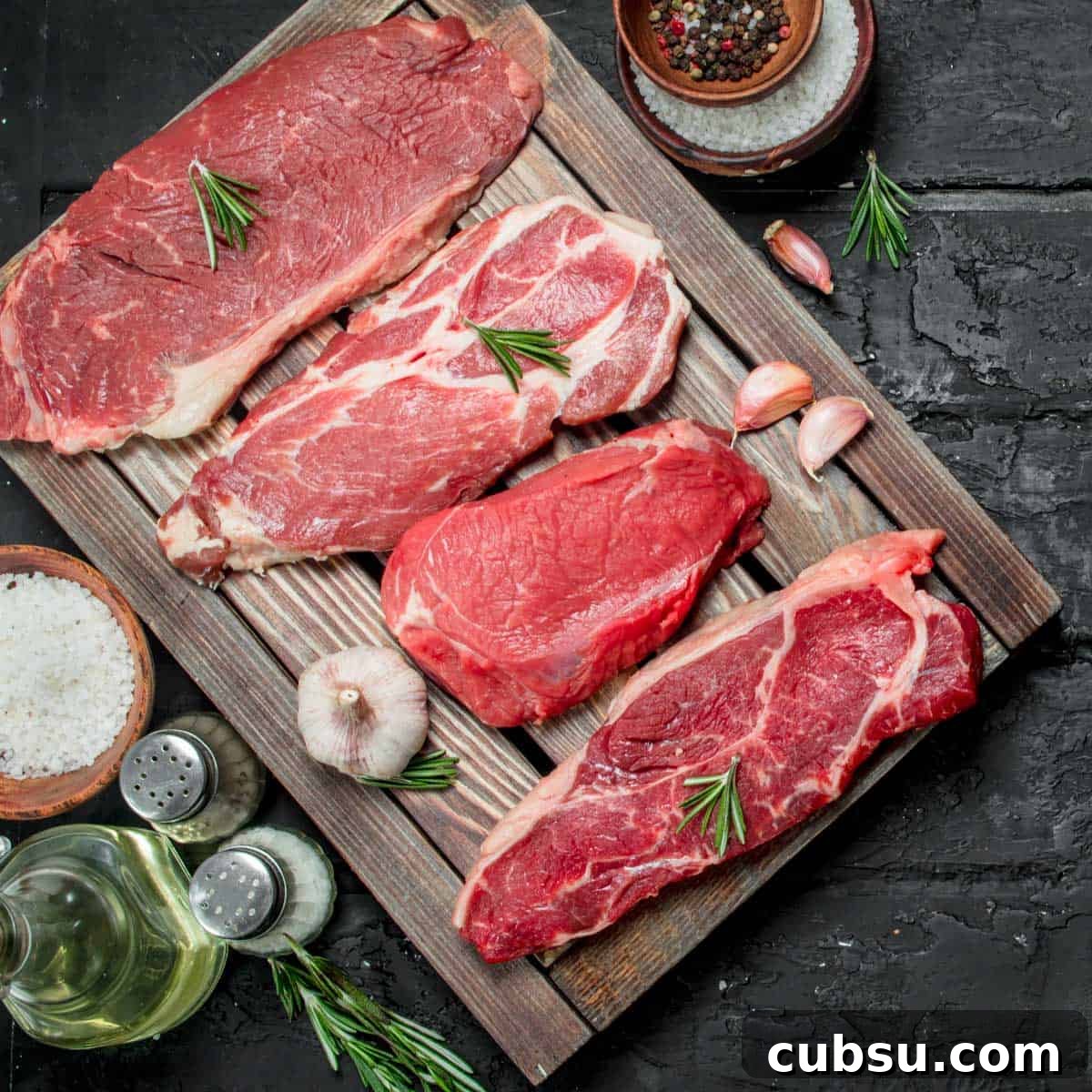
One of the most important decisions when making beef jerky is selecting the cut of meat. The right choice will affect texture, flavor, and shelf life. Below I explain the best meats for jerky and why they work so well.
I’ve also included a video that walks through these cuts, shows what they look like, and highlights my personal favorites.
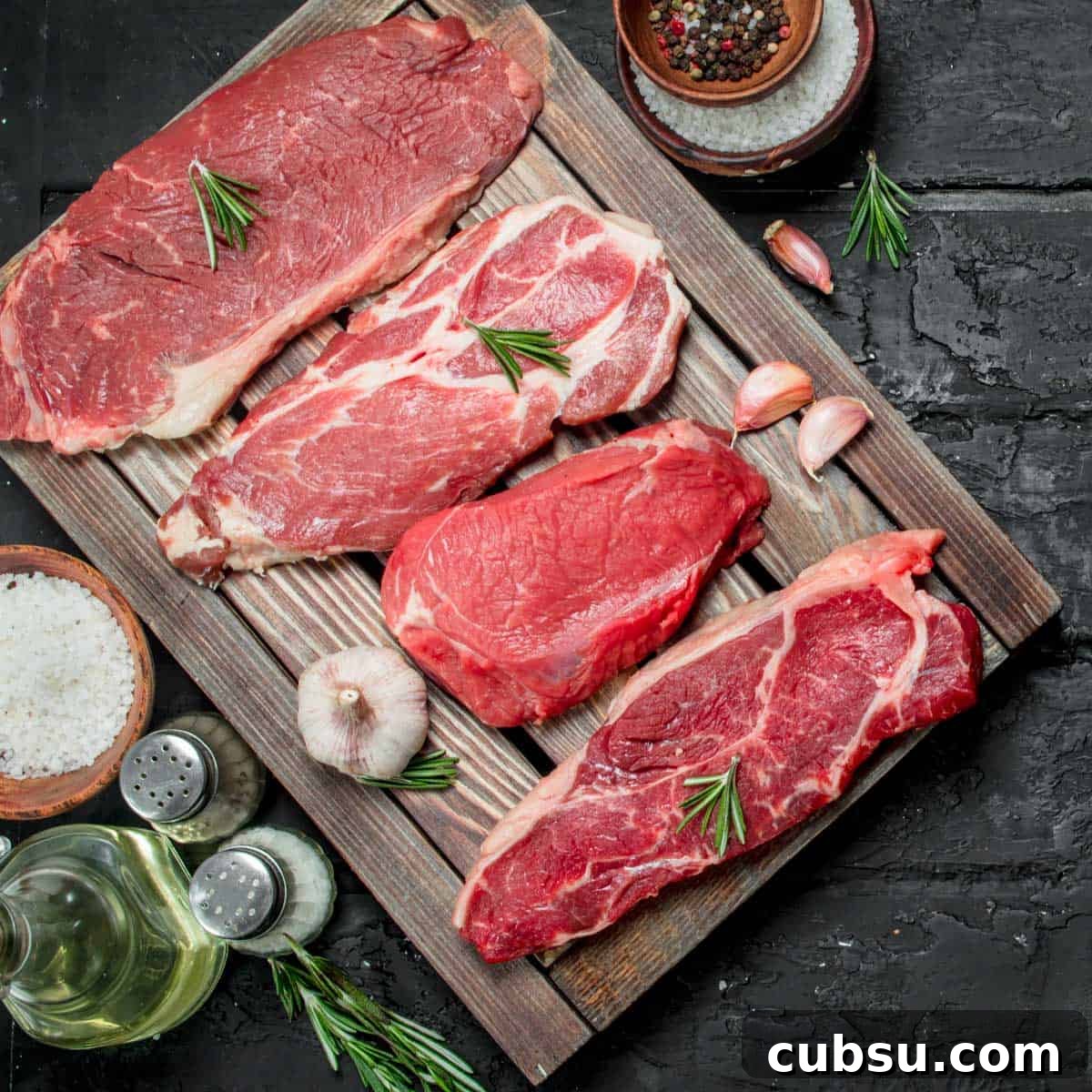
🎥 Video – Best meat for jerky
🥩 What Is the Best Cut of Meat?
Eye of round, bottom round, and top round are among the best beef cuts for jerky. Lean cuts are essential because fat spoils faster and shortens jerky’s shelf life. You can also make jerky from lean ground meat, though the texture will be quite different.
Try several cuts to discover which texture and flavor you prefer.
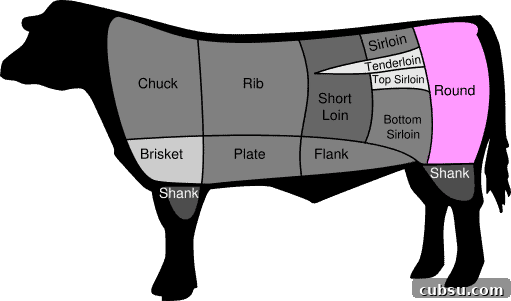
Eye of Round
Eye of round is the top choice for beef jerky. It’s a single oval muscle from the rear leg, very lean and relatively tender for a round cut. It’s my go-to cut for jerky because it yields consistent results.
- Very lean with little interior fat
- Trim the fat cap before slicing
- Grain runs the length of the cut, making slicing straightforward
- Economical compared to premium steaks
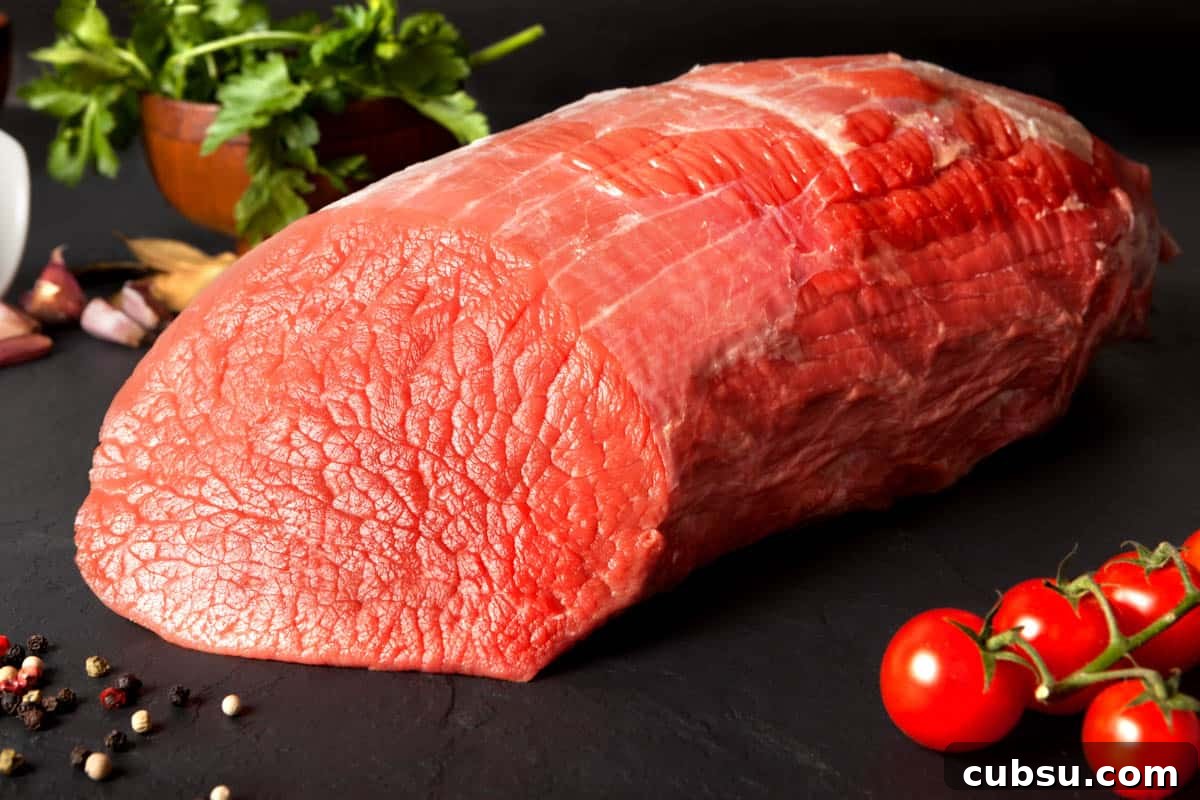
Bottom Round
The bottom round is the outer muscle of the upper rear leg. It’s the least tender of the rounds but still makes excellent jerky with good flavor.
- Lean with possible interior marbling
- Flavorful and economical
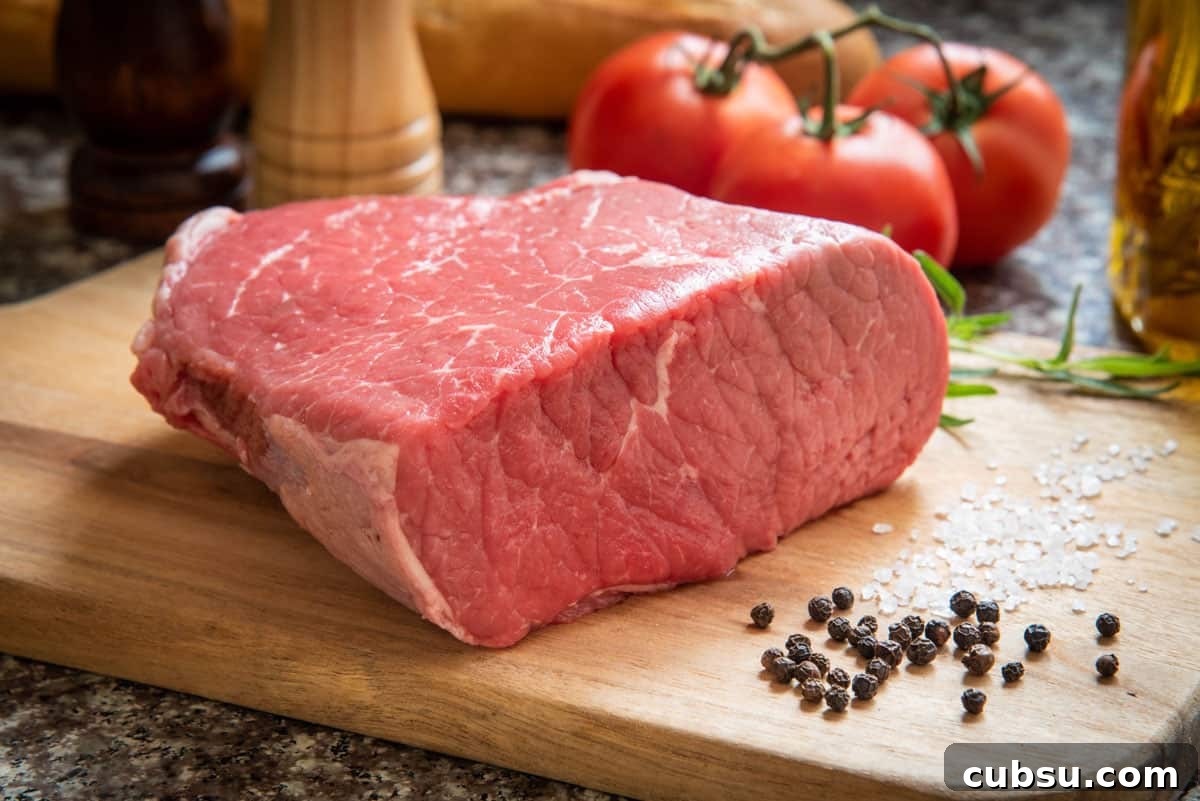
Top Round
Cut from the inner leg opposite the bottom round, top round is slightly more tender than bottom round but not as tender as eye of round. It’s a reliable, lean option for jerky.
- Lean and flavorful
- Economical choice for homemade jerky
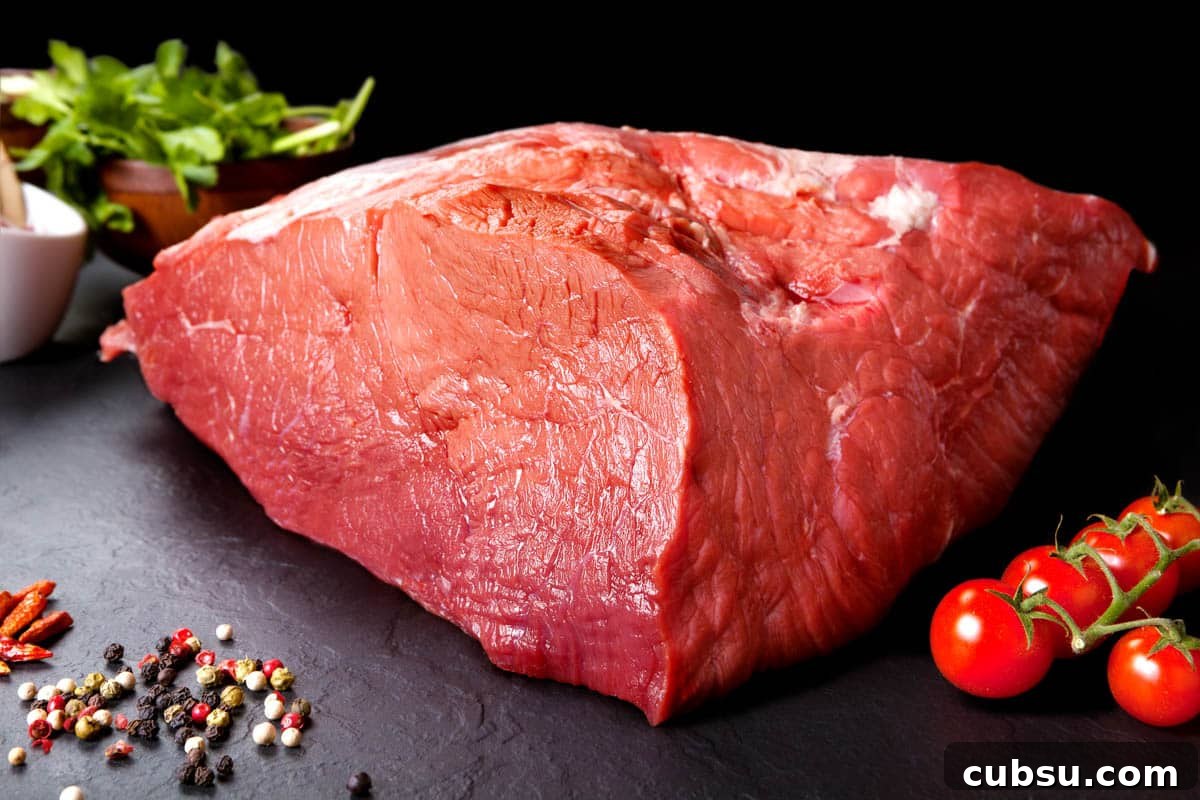
Sirloin Tip
Sirloin tip is among the more tender round cuts and works well for jerky. It’s less commonly used but produces tender strips with good texture.
- Very lean and tender
- Slightly more expensive than basic rounds
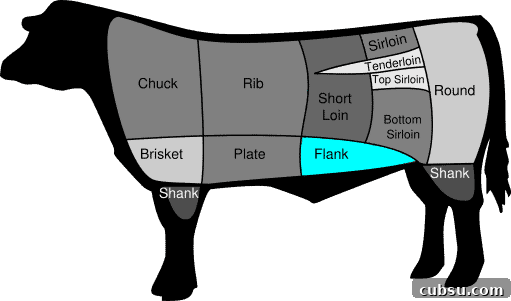
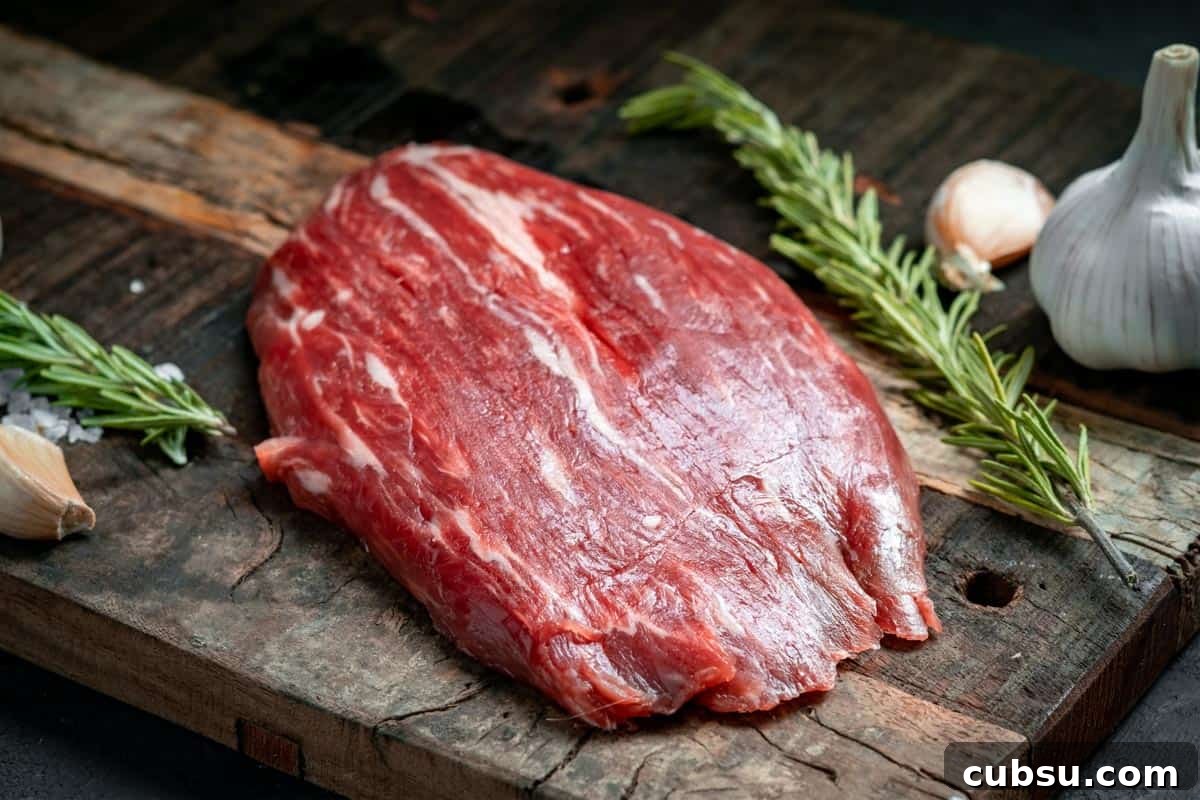
Flank Steak
Flank steak can make excellent jerky but is usually pricier. It has more interior marbling and strong grain—slice against the grain to avoid overly tough jerky.
- Lean but may need trimming
- More interior marbling and bold flavor
- Slice against the grain for better tenderness
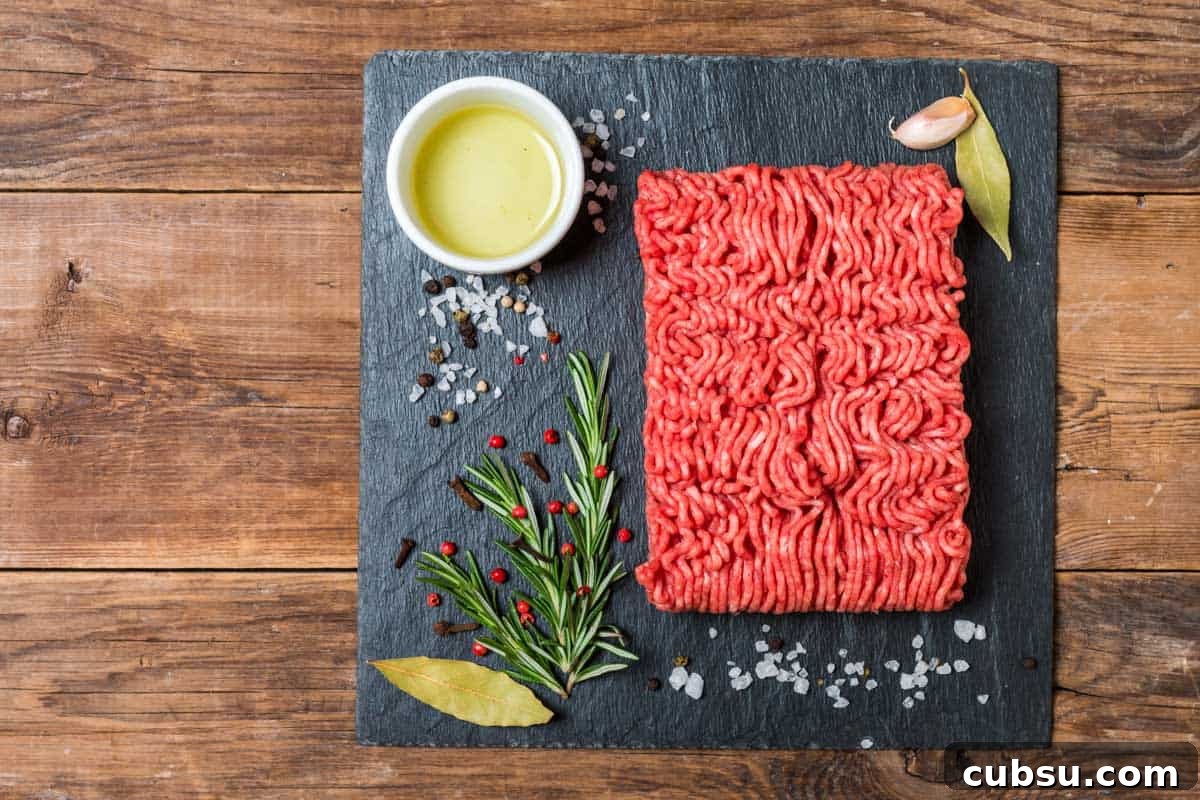
Ground Meat
Ground meat jerky is much easier to chew and is a good alternative for people who prefer a softer texture. Use very lean ground beef (at least 90% lean) and form it with a jerky gun or flatten and cut into strips.
- Produces easier-to-chew jerky
- Use the leanest available ground meat
- Requires shaping tools like a jerky gun or flattening method
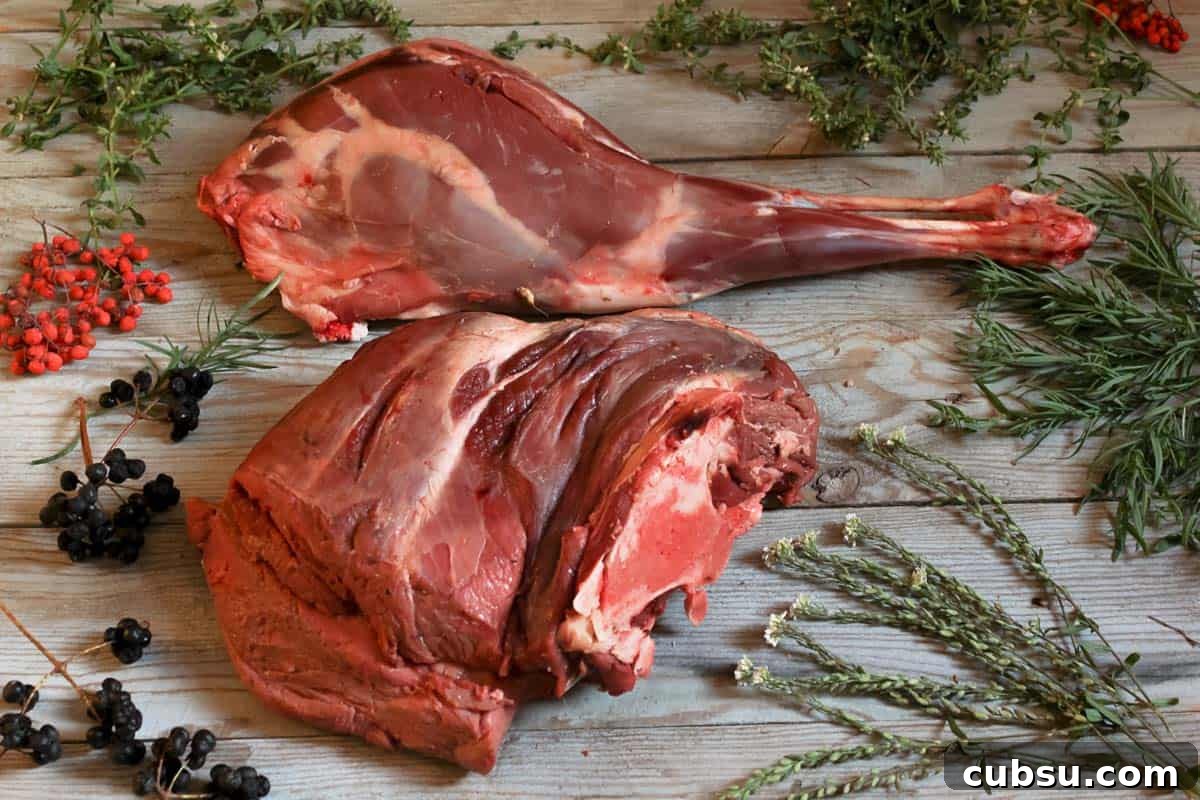
Deer Meat / Venison
Venison is excellent for jerky. It’s very lean, tender, and has a distinct game flavor that many people enjoy. If you harvest your own venison, it’s also as natural and fresh as you can get.
- Very lean with minimal marbling
- Natural, game-forward flavor
- Tender and ideal for jerky
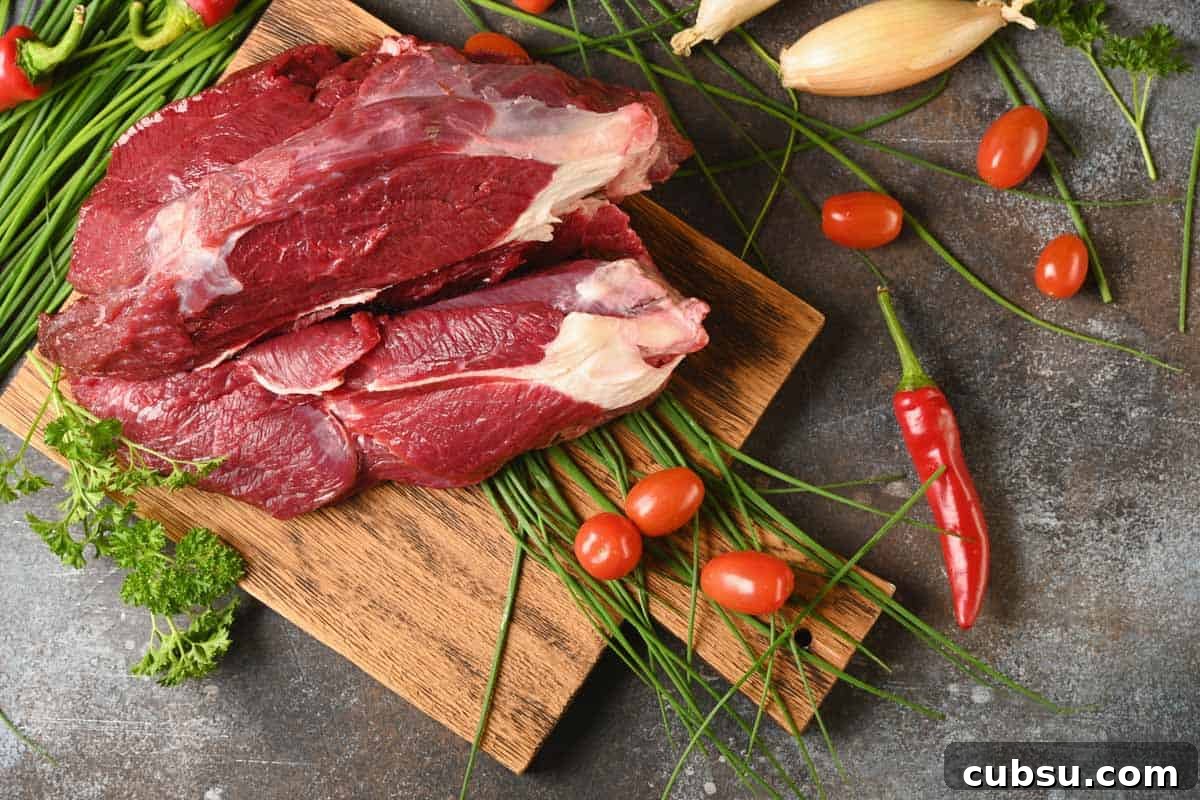
Elk Meat
Elk roasts are another excellent game option. They’re very lean and mildly flavored, which makes elk jerky approachable for people who prefer less intense game notes.
- Very lean with little marbling
- Mild game flavor and tender texture
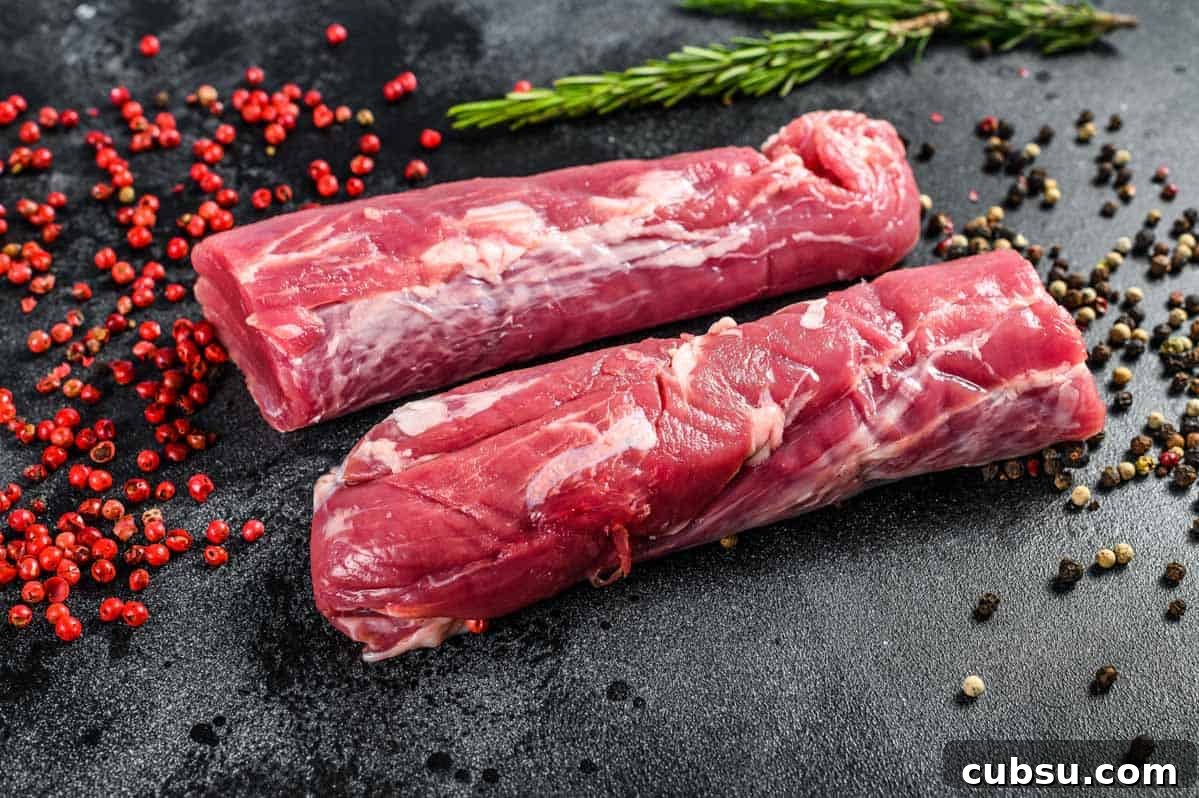
Pork Loin & Tenderloin
Pork loin and tenderloin are slightly fattier than the leanest beef cuts but make tender, flavorful pork jerky. They pair especially well with sweet or slightly spicy marinades.
- Flavorful and tender when cooked properly
- Works well with sweet marinades
- Generally affordable
Tips When Buying Meat
Follow these simple guidelines when shopping for jerky meat:
- Buy lean cuts with minimal fat to extend shelf life.
- Inspect each piece and trim excess fat before slicing.
- Remember jerky loses about two-thirds of its weight during drying—buy accordingly (e.g., 3 lbs raw yields roughly 1 lb dried).
- Consider bulk retailers like Sam’s Club or Costco for lower prices on larger cuts.
- Ask your butcher to slice the meat to your desired thickness—many will do this for free and it saves a lot of prep time.
- Never buy expired or questionable meat; freshness matters for both safety and flavor.
If you’re unsure, ask your local butcher for recommendations—they can often point you to the leanest, best-value cuts.
Jerky Recipes and Information
- The Ultimate Beef Jerky Marinade
- Slicing Meat for Beef Jerky
- How to Make Beef Jerky in a Dehydrator