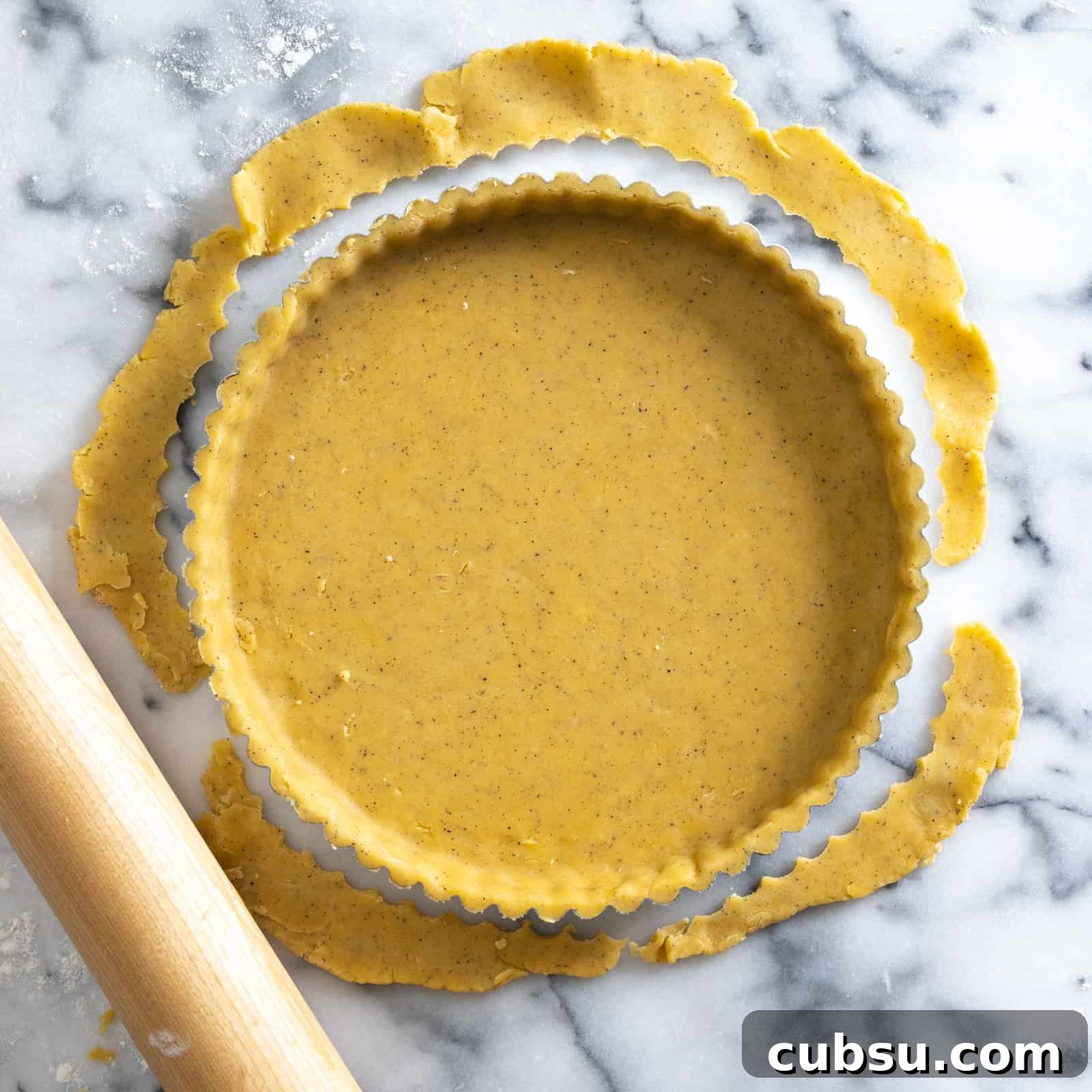
This Savory Tart Dough yields a crisp, flaky shell with just the right amount of salt and a subtle peppery warmth to complement a variety of savory fillings. It’s a versatile dough that works well for a classic 9″ tart, a 9½” tart, mini tartlets, or as the base for a quiche.
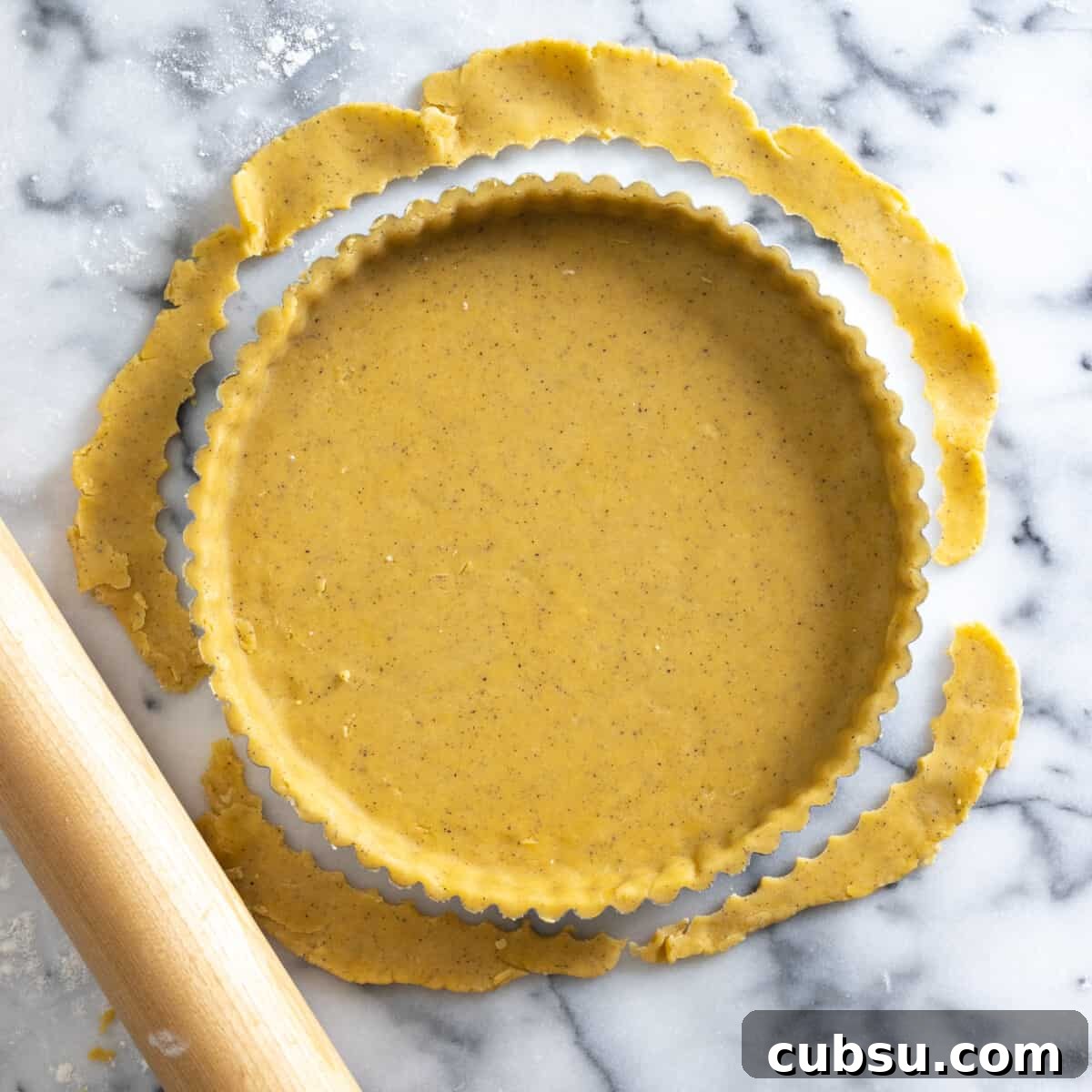
This recipe is adapted from a classic basic tart dough but adjusted to emphasize savory flavors. I reduced the sugar to a single teaspoon for balance, increased the salt slightly, and added freshly ground pepper for a gentle warming note. If you prefer no pepper, omit it—the dough is delicious either way.
For sweet tarts, use the Basic Tart Dough
For strictly sweet tarts, the Basic Tart Dough is still an excellent choice: it performs beautifully with fruit, cream, and chocolate fillings. This Savory Tart Dough, however, is tuned for salty and savory preparations where a less sweet, more savory crust is desired.
Savory Tart Dough is ideal for savory recipes
The small amount of sugar in this dough simply balances the flavors without making it taste sweet. A little extra salt enhances savory depth, and the freshly ground pepper adds warmth that can accentuate fillings such as cheeses, roasted vegetables, or herb-forward preparations.
A simple base for many uses
This dough is adaptable: use it for a single 9″ or 9½” tart, divide it among smaller pans for tartlets, or press it into a rectangular or square pan. It also works well in muffin pans for mini tarts. For full-size tarts, a removable-bottom tart pan helps preserve the fluted edge and makes unmolding easier.
Tips for mixing tart dough
Keep everything cold
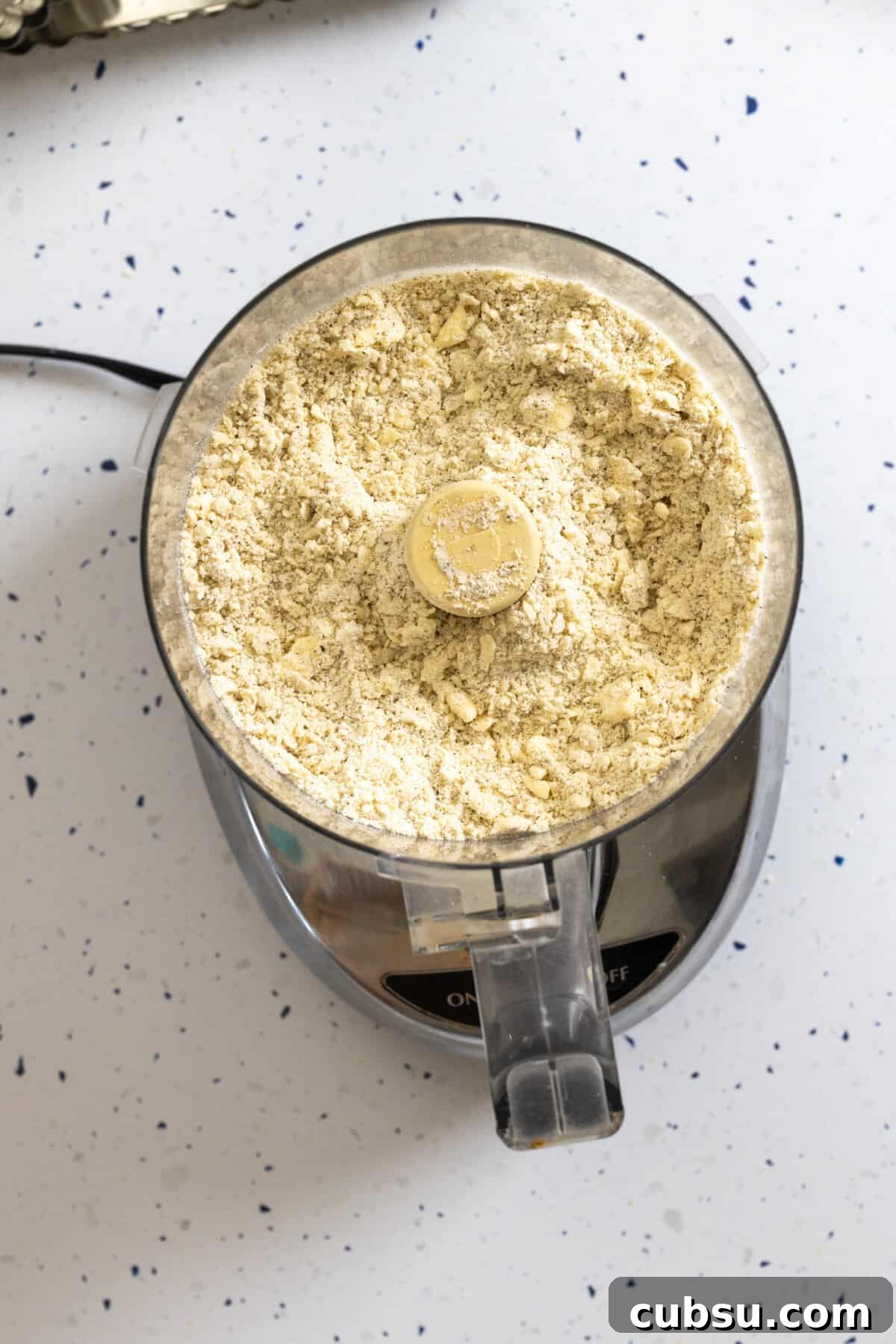
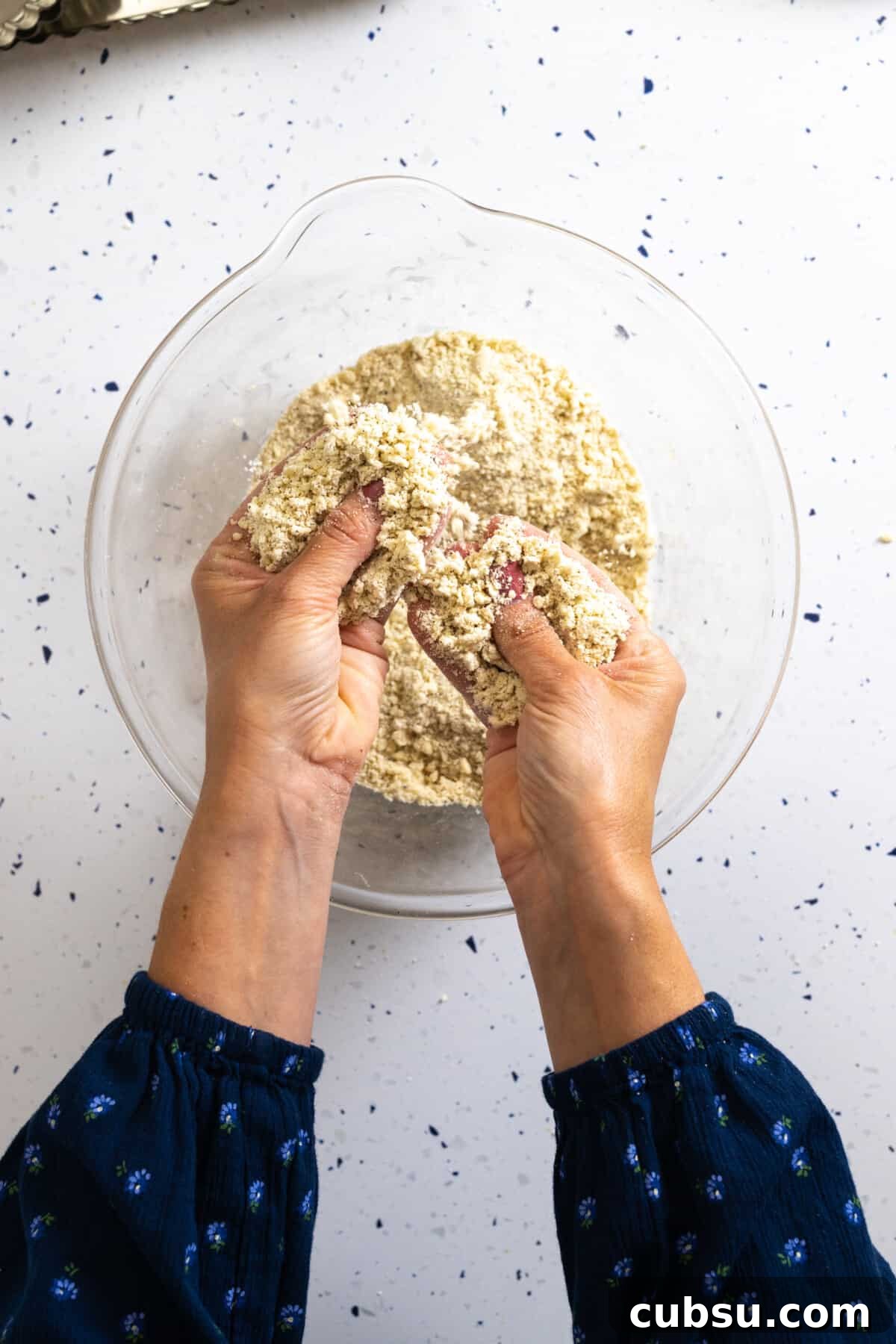
Cold butter is essential for a flaky texture. Cut cold, cubed butter into the dry ingredients until the mixture resembles coarse cornmeal with some pea-sized butter pieces remaining. Those pockets of butter melt during baking, creating the flaky layers you want.
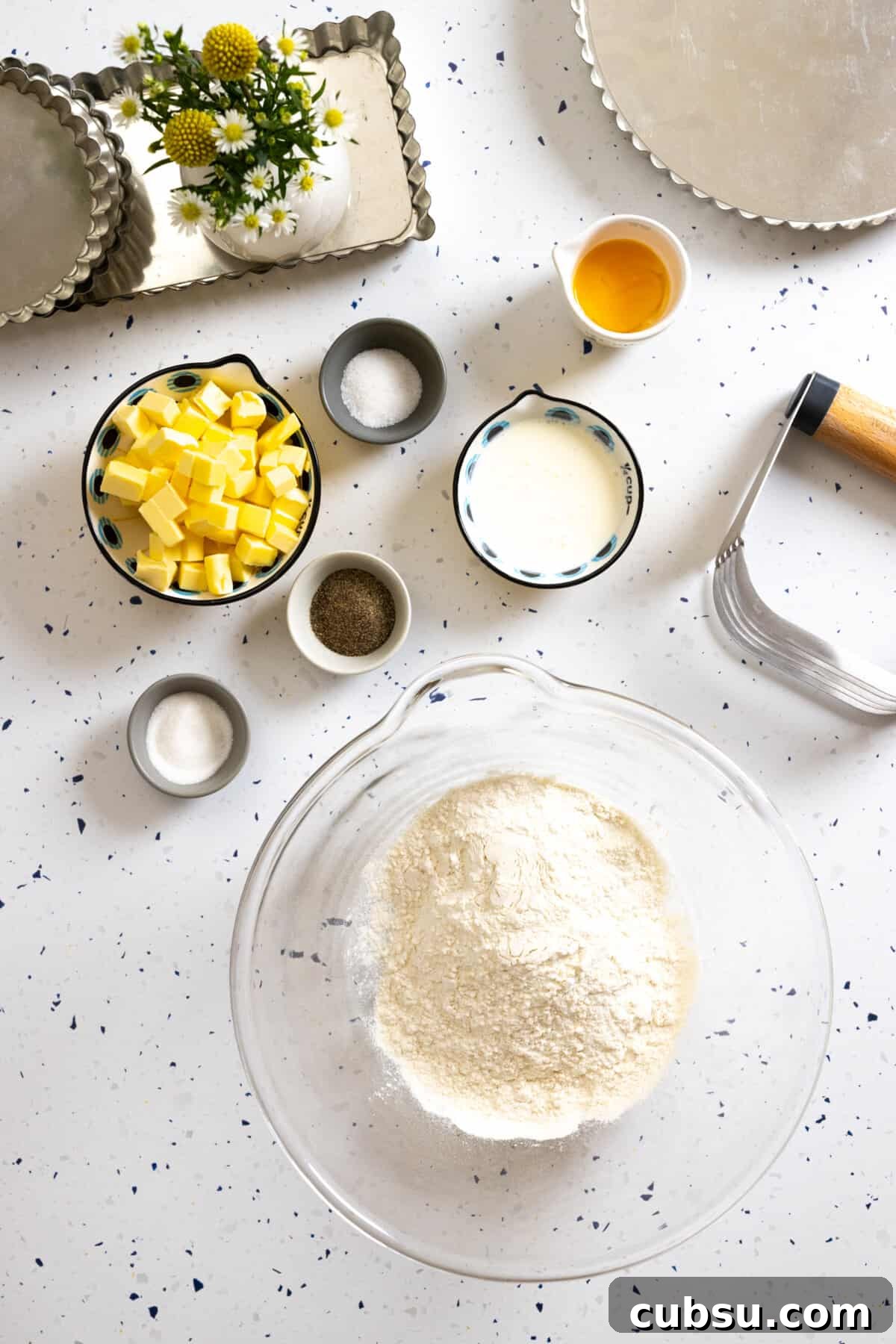
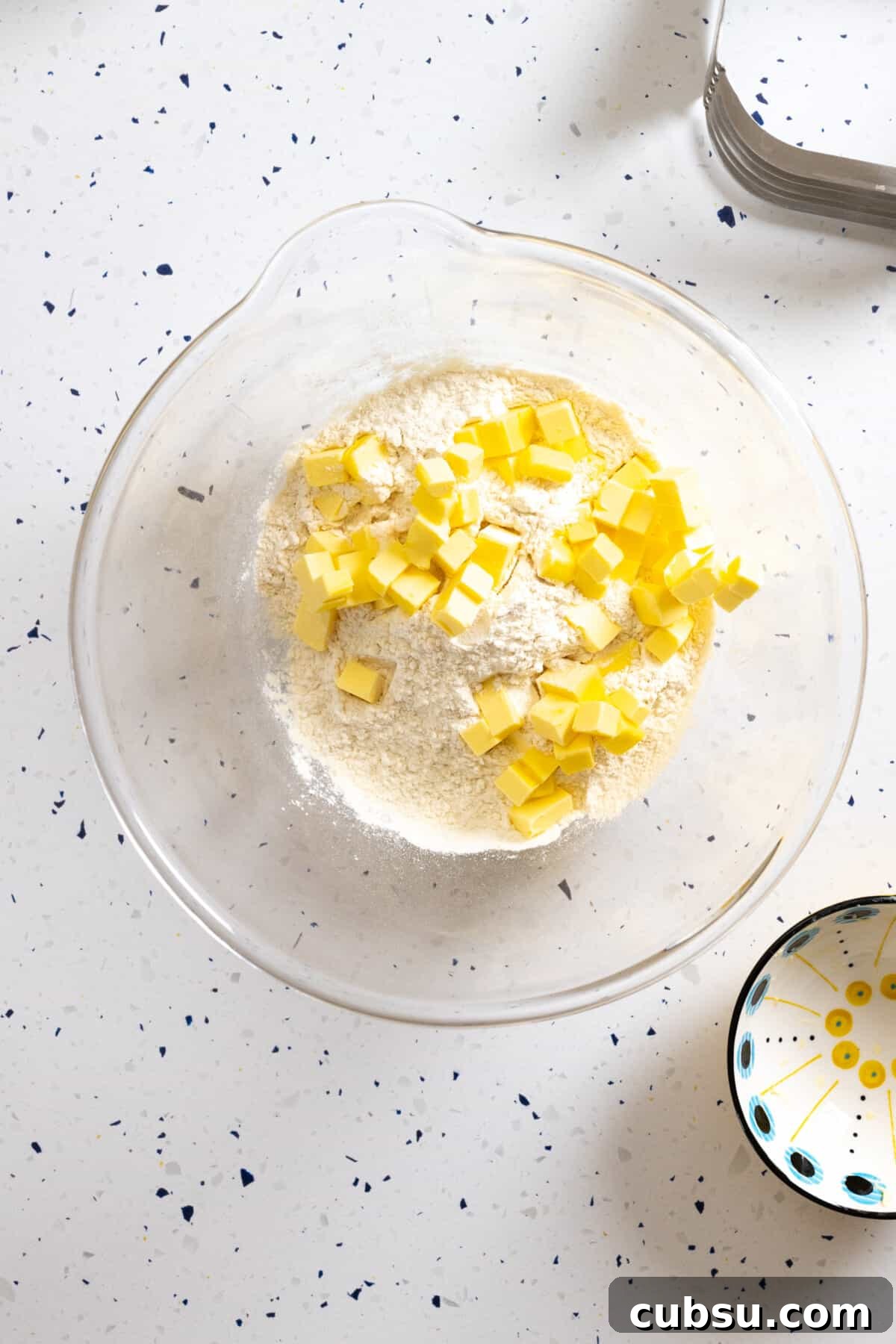
Four methods for mixing tart dough
You can make this dough with minimal equipment. Choose the method that fits your tools and comfort level.
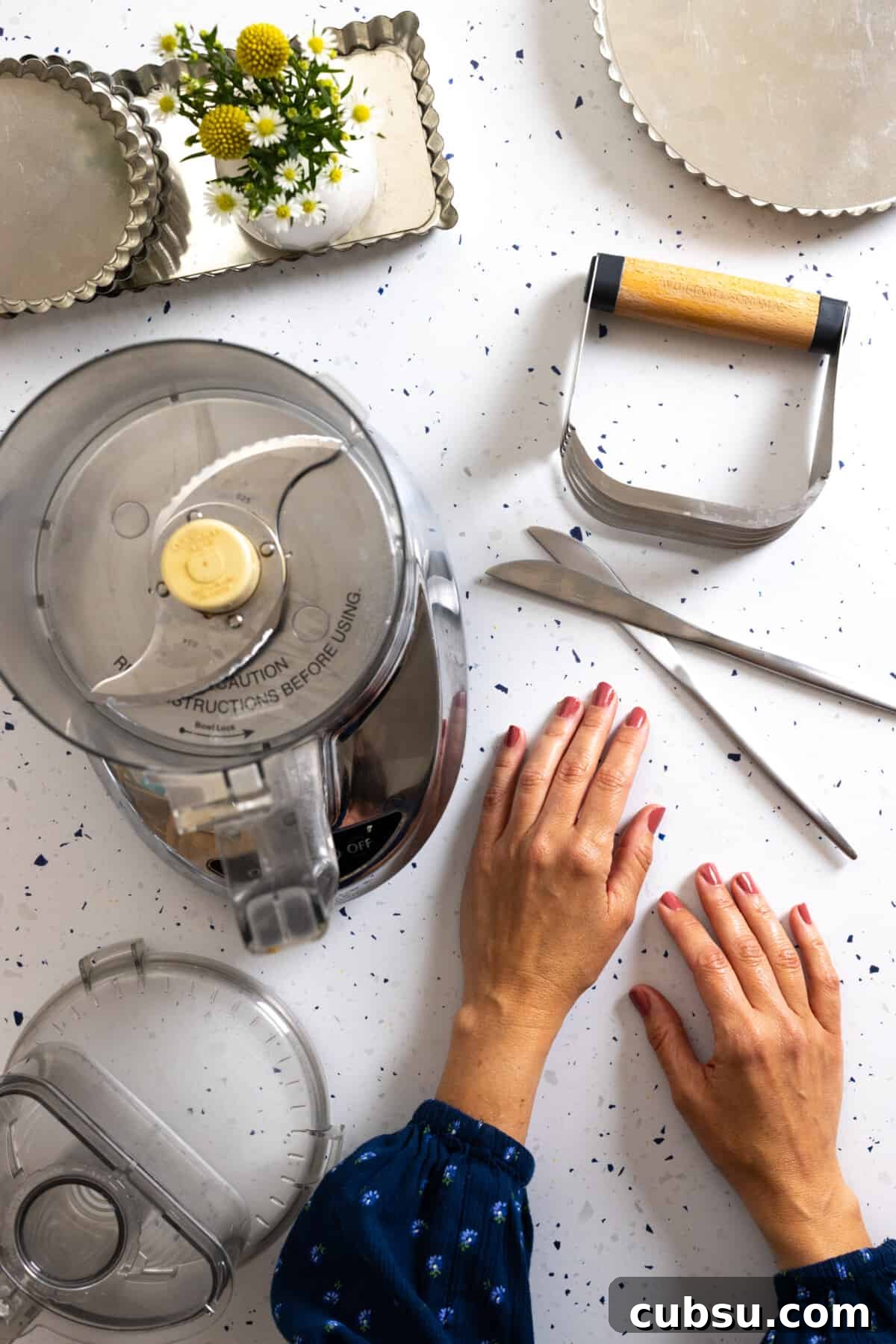
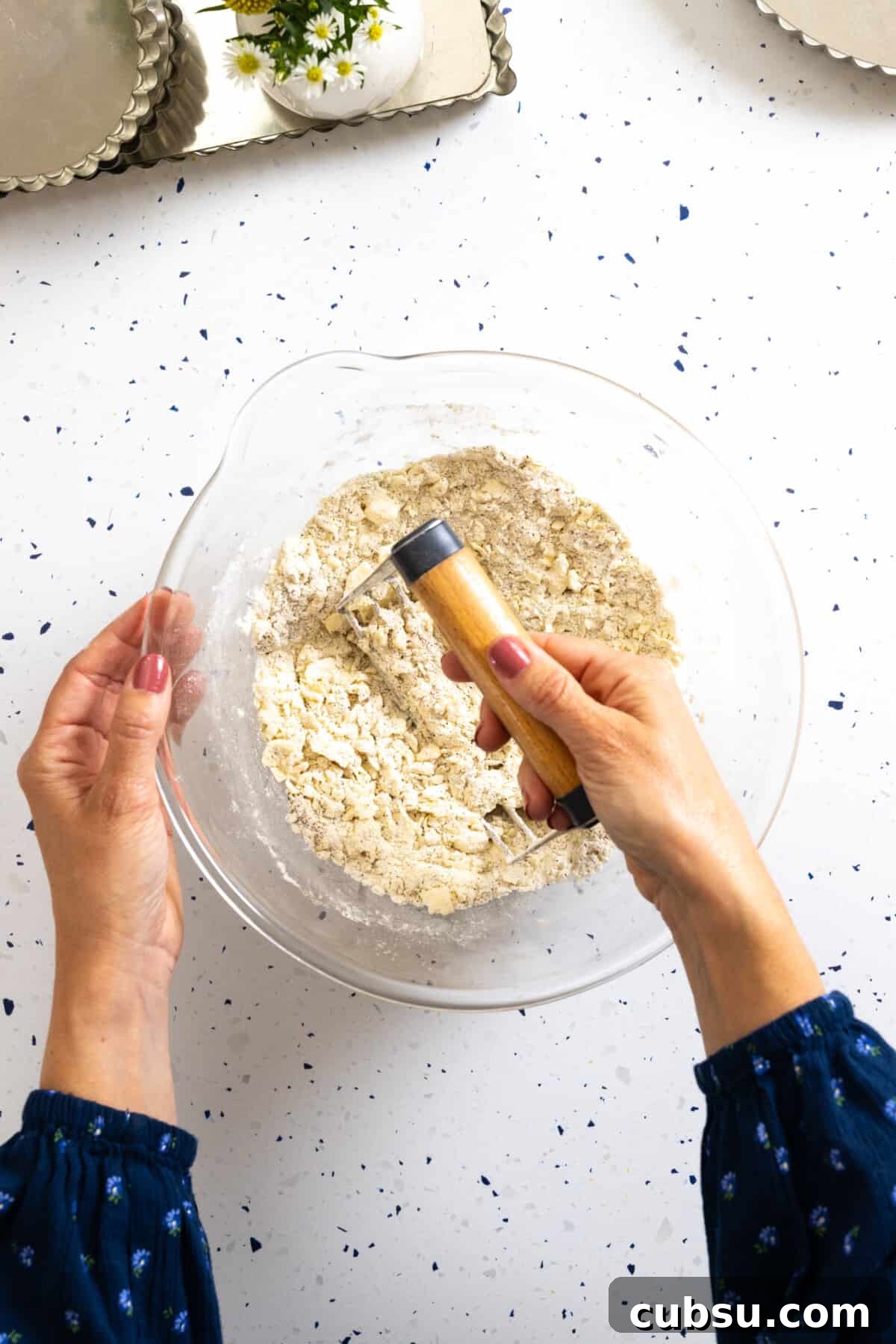
Method 1: Pastry blender
A pastry blender offers control and a satisfying rhythm while cutting butter into flour. It’s ideal for pie and tart doughs, scones, and biscuits.
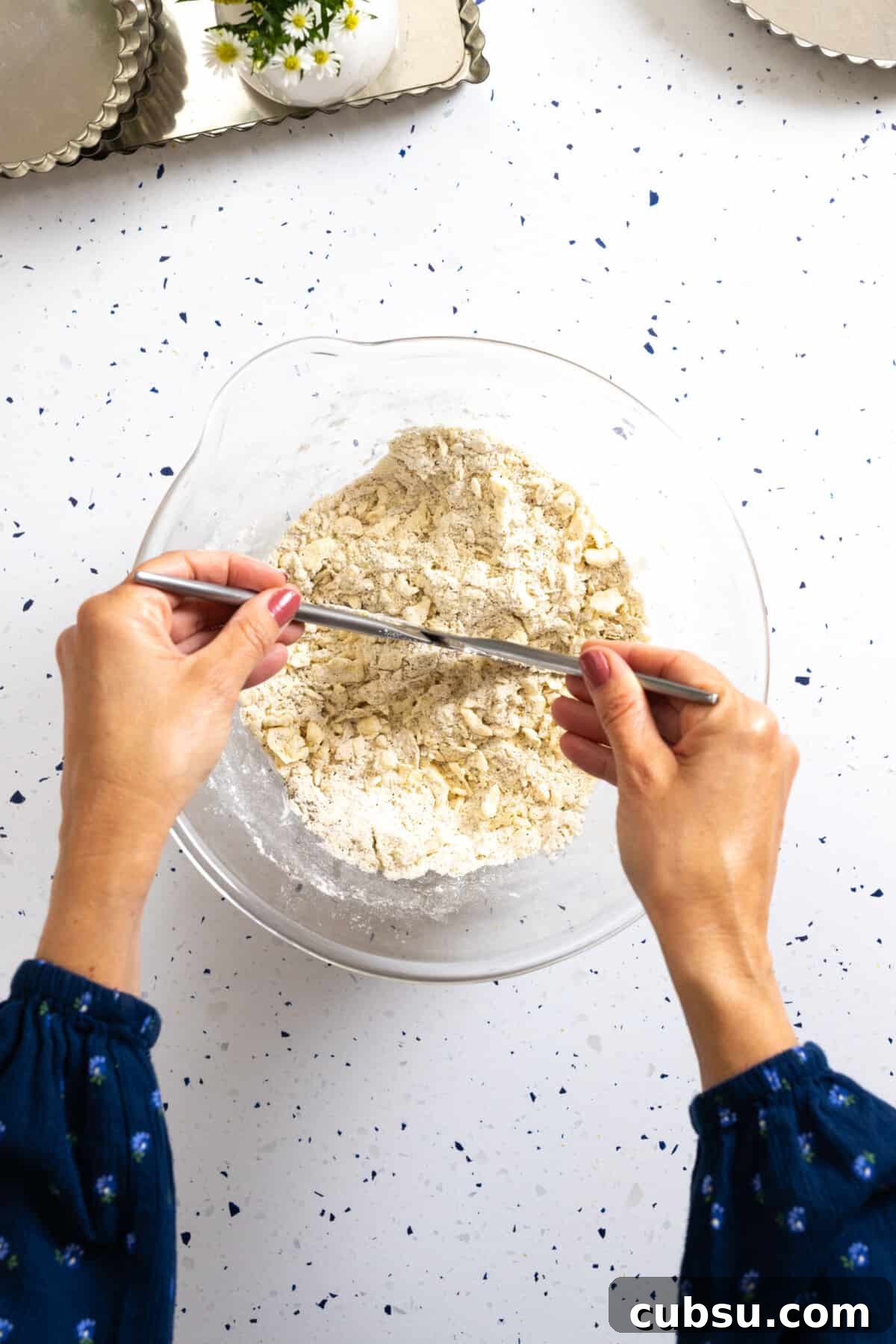
Method 2: Two butter knives
If you don’t have specialized tools, cross two butter knives and use a scissor-like motion to cut butter into the flour. It takes longer but works well.
Method 3: Food processor
A food processor is the fastest method—pulse the blade to cut the butter into the flour. Be careful not to overmix; use short pulses and stop when the mixture resembles coarse crumbs. Finish hydrating the dough in a bowl if needed to avoid overworking it in the processor.
Method 4: Hands
Use your fingers to rub or pinch butter into the flour until coarse and mealy. Move quickly so the butter stays cold; if it softens too much, chill the bowl before continuing.
How to test dough hydration
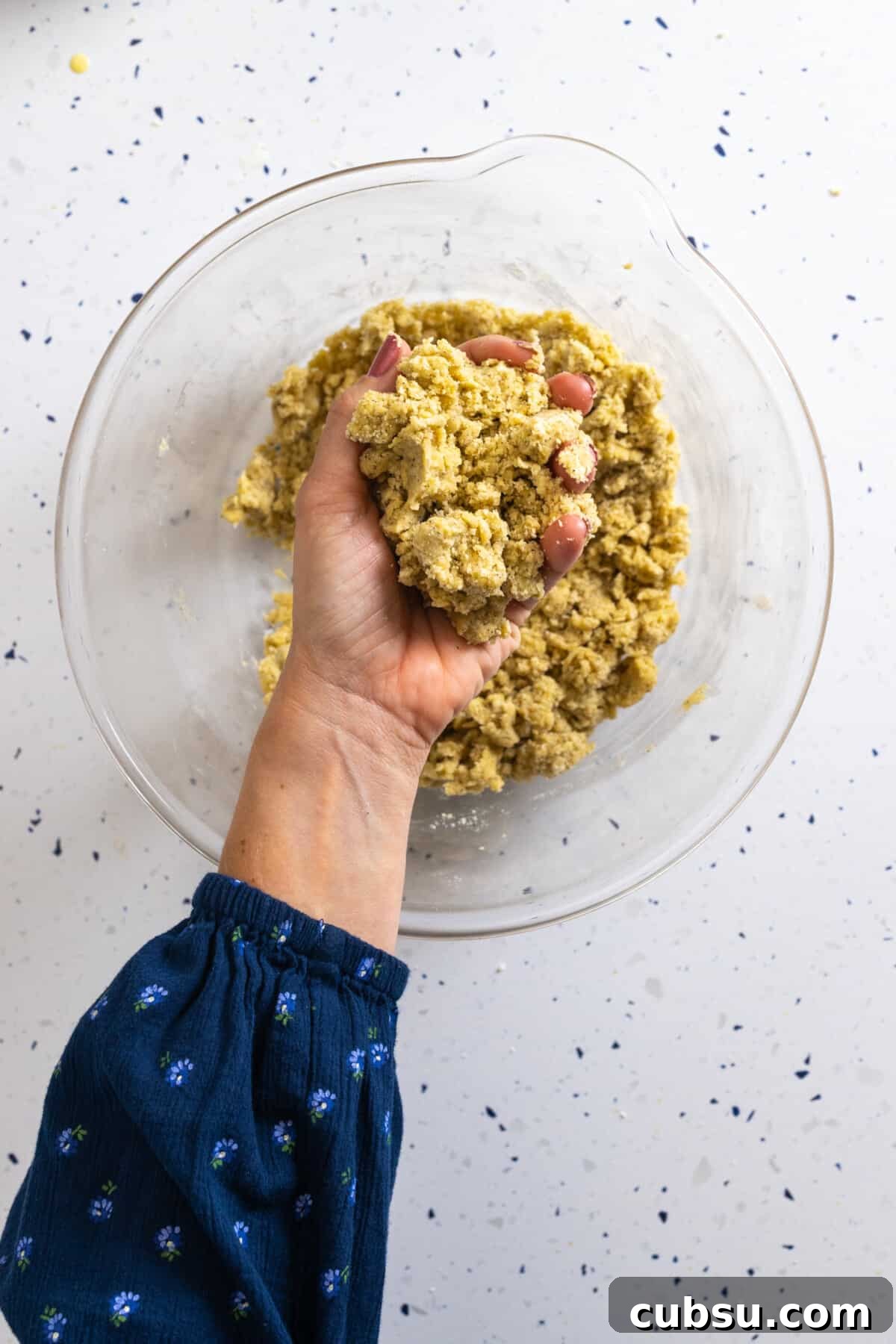
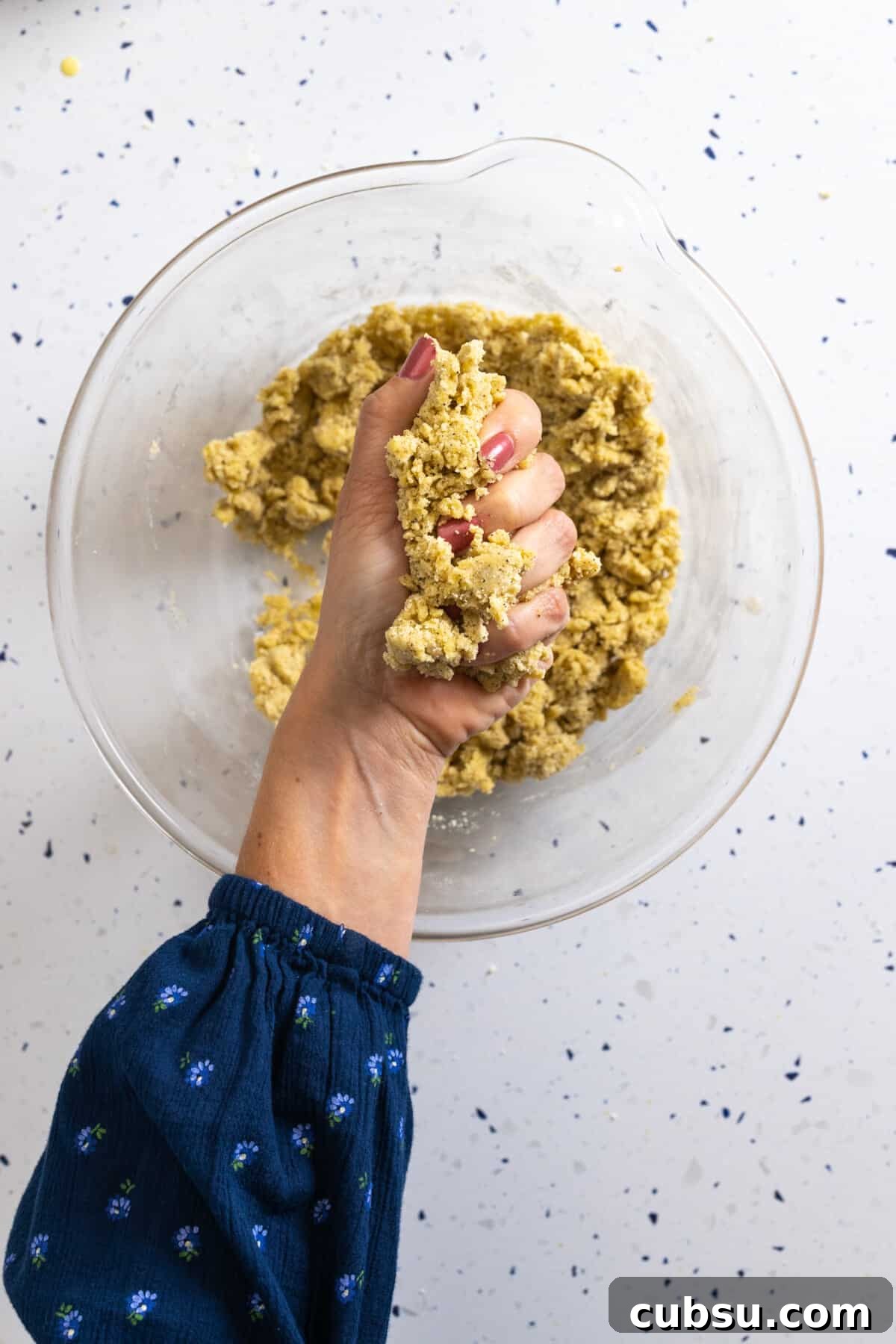
Correct hydration ensures the dough holds together without becoming dense. Take a small handful of the crumbly dough and gently squeeze it. It should hold together when released but not feel sticky. A slightly crumbly but cohesive texture is ideal.
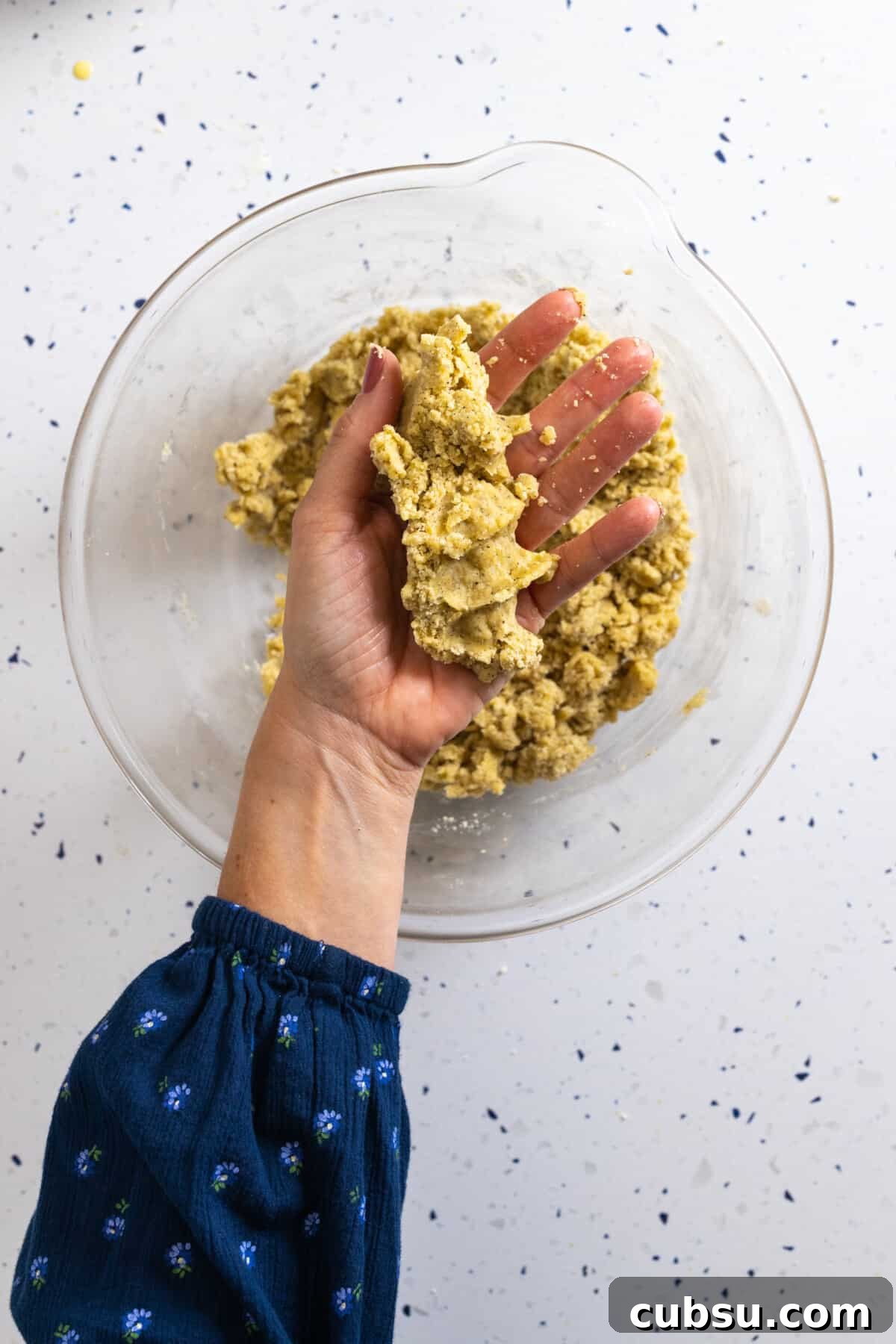
Shaping: roll out or press in
You can roll this dough for a smooth, professional-looking crust or press it directly into the pan for a more rustic finish. Both methods produce the same great flavor; choose based on the look you want and the tools you have.
Roll out
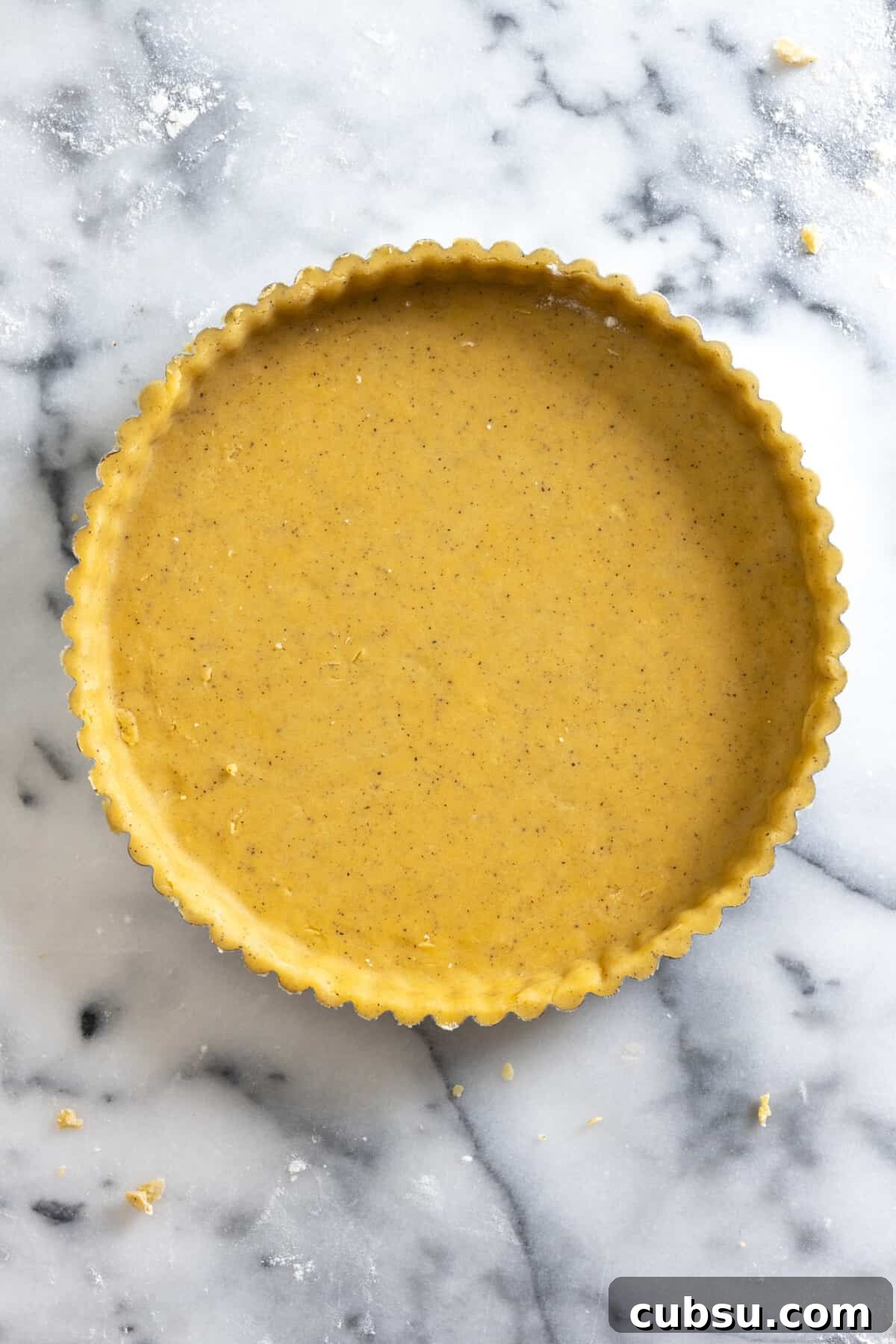
Chill the dough disk, flour your surface lightly, and roll from the center outward, rotating the dough frequently. Roll until it’s about 1–2 inches wider than your pan and roughly 1/8″–1/4″ thick. Roll the dough around the pin and unroll it over the tart pan, then trim the excess by rolling the pin along the pan edge for a crisp finish.
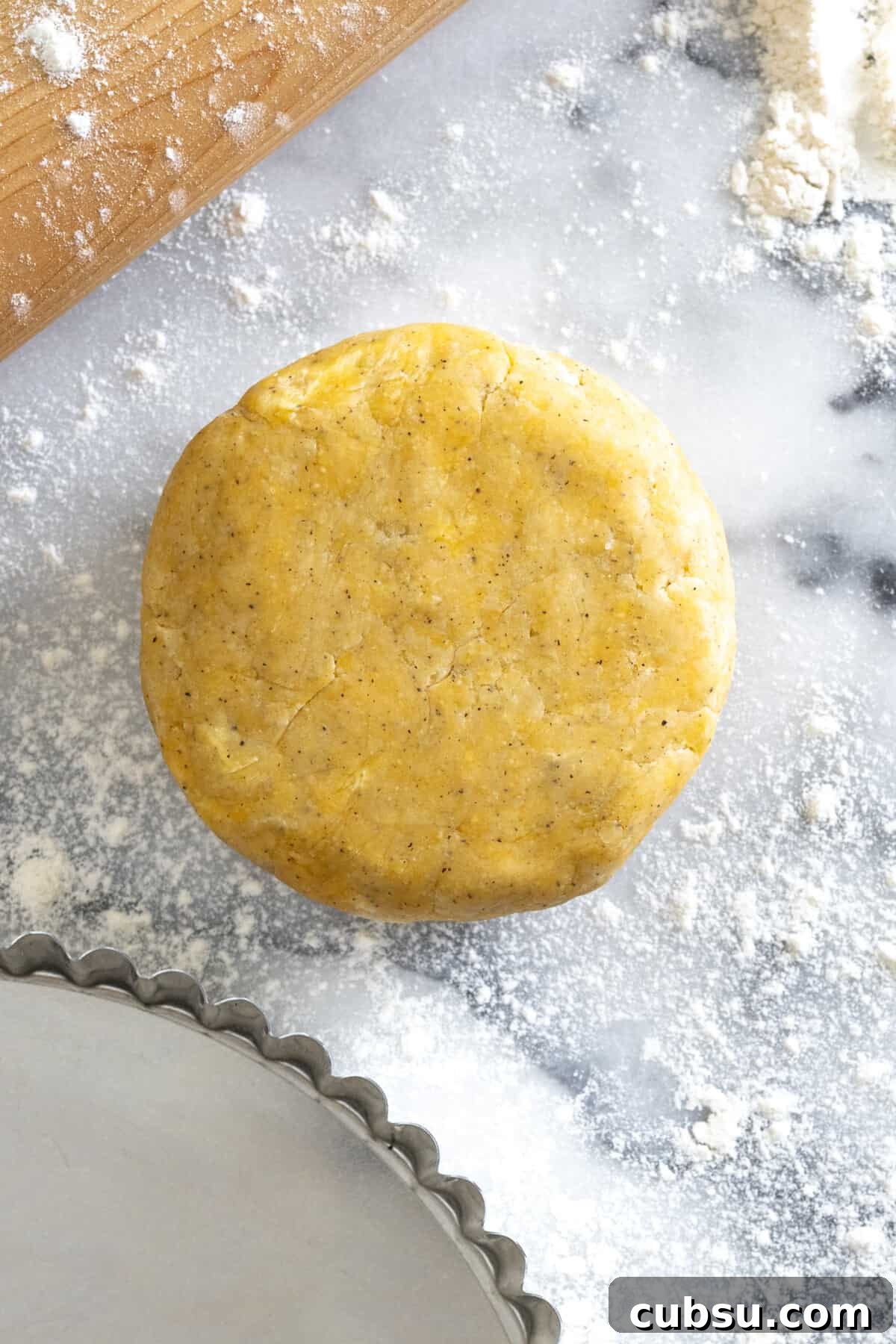
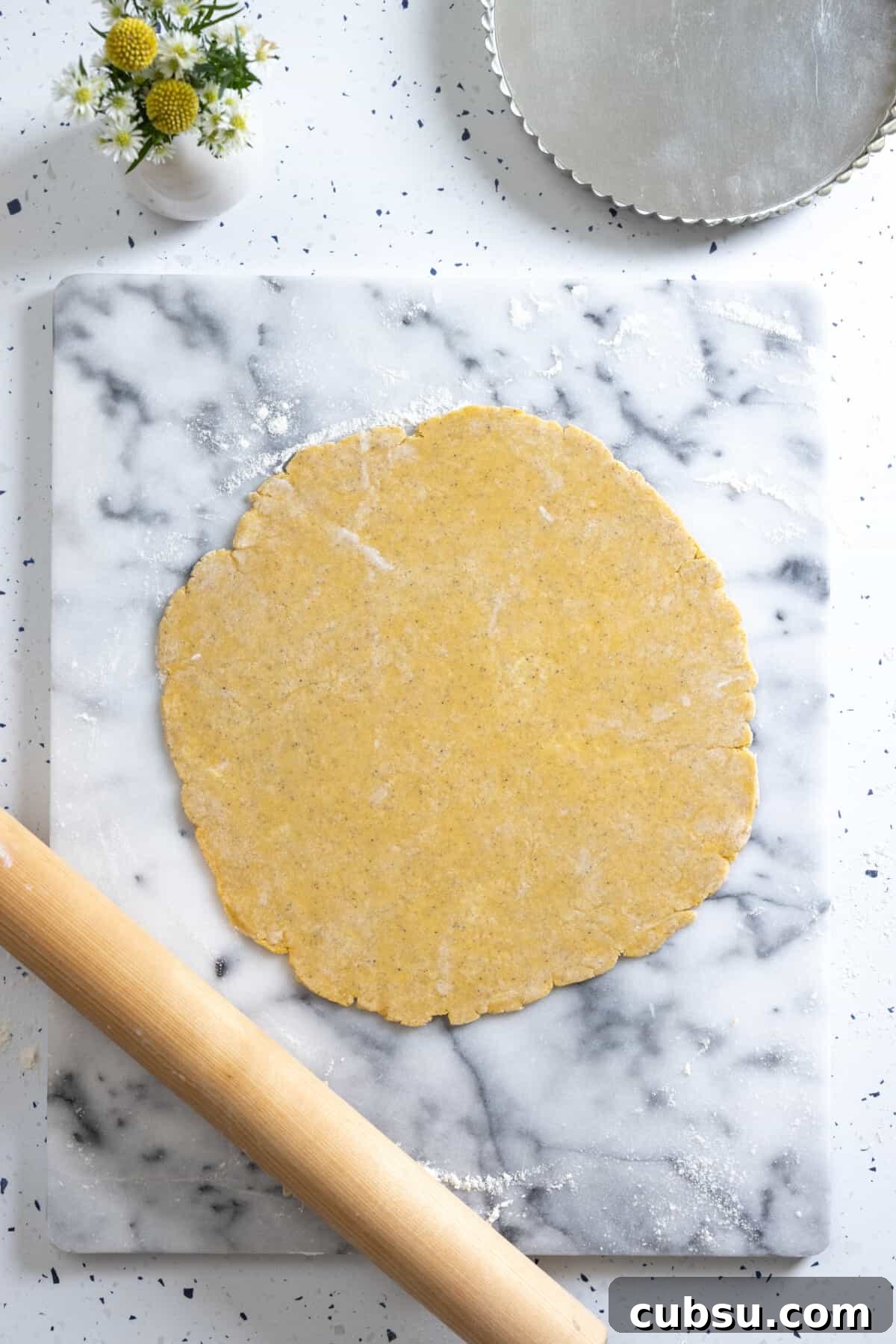
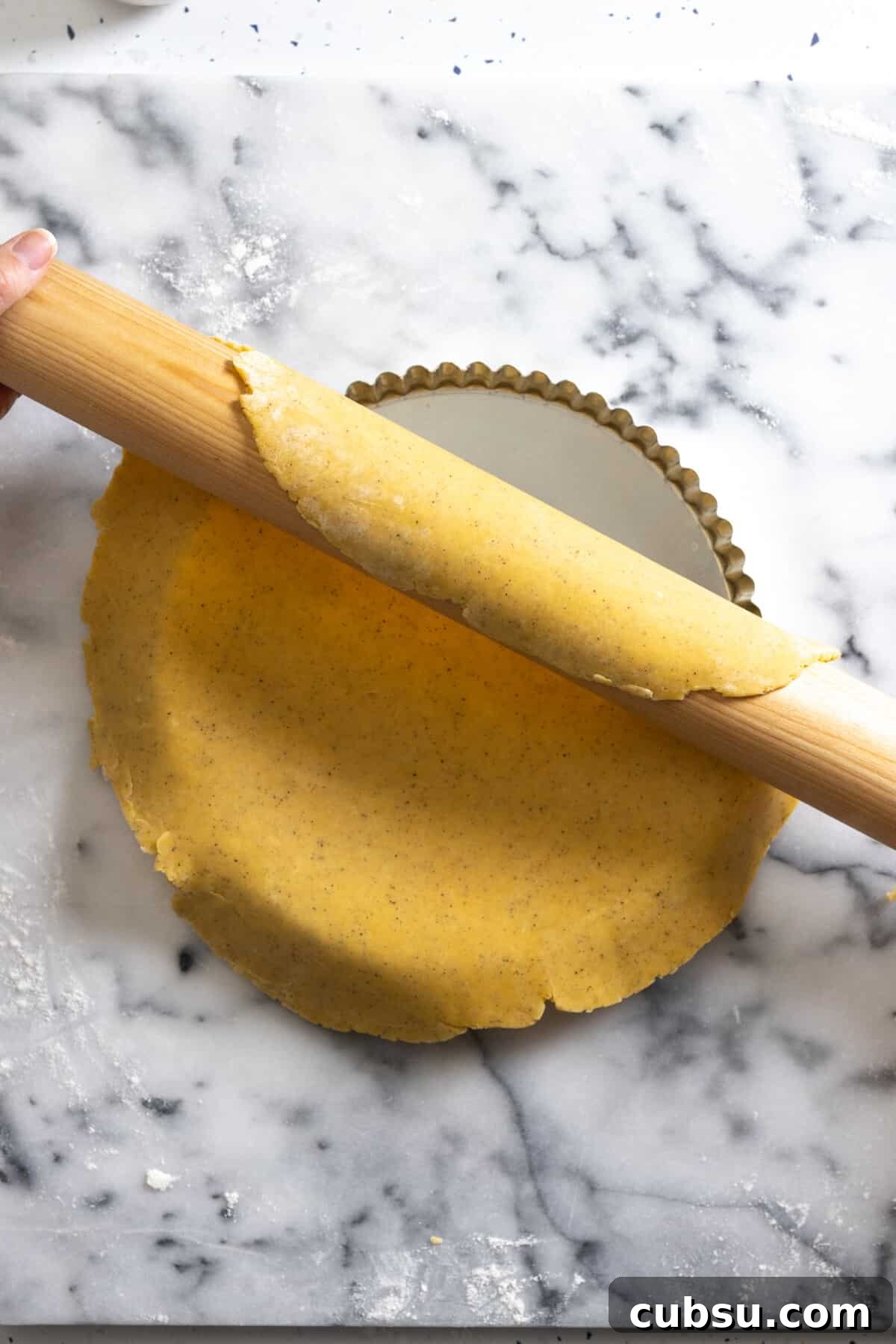
Press-in
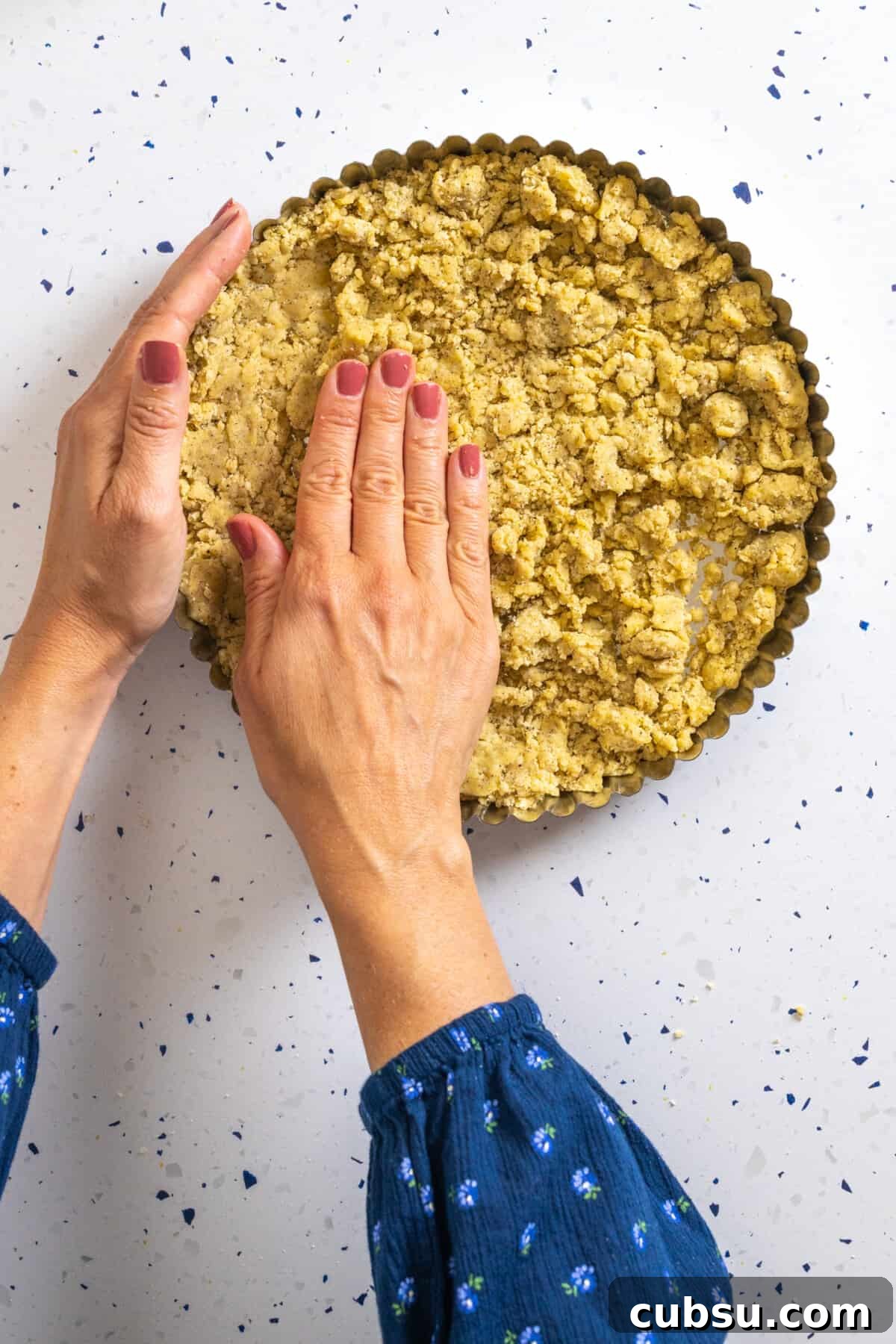
For the press-in method, press the crumbly dough evenly into the bottom and up the sides of the pan. Chill it in the pan before baking. This approach is quick and produces a rustic-looking shell with the same flaky texture.
How to blind bake tart dough
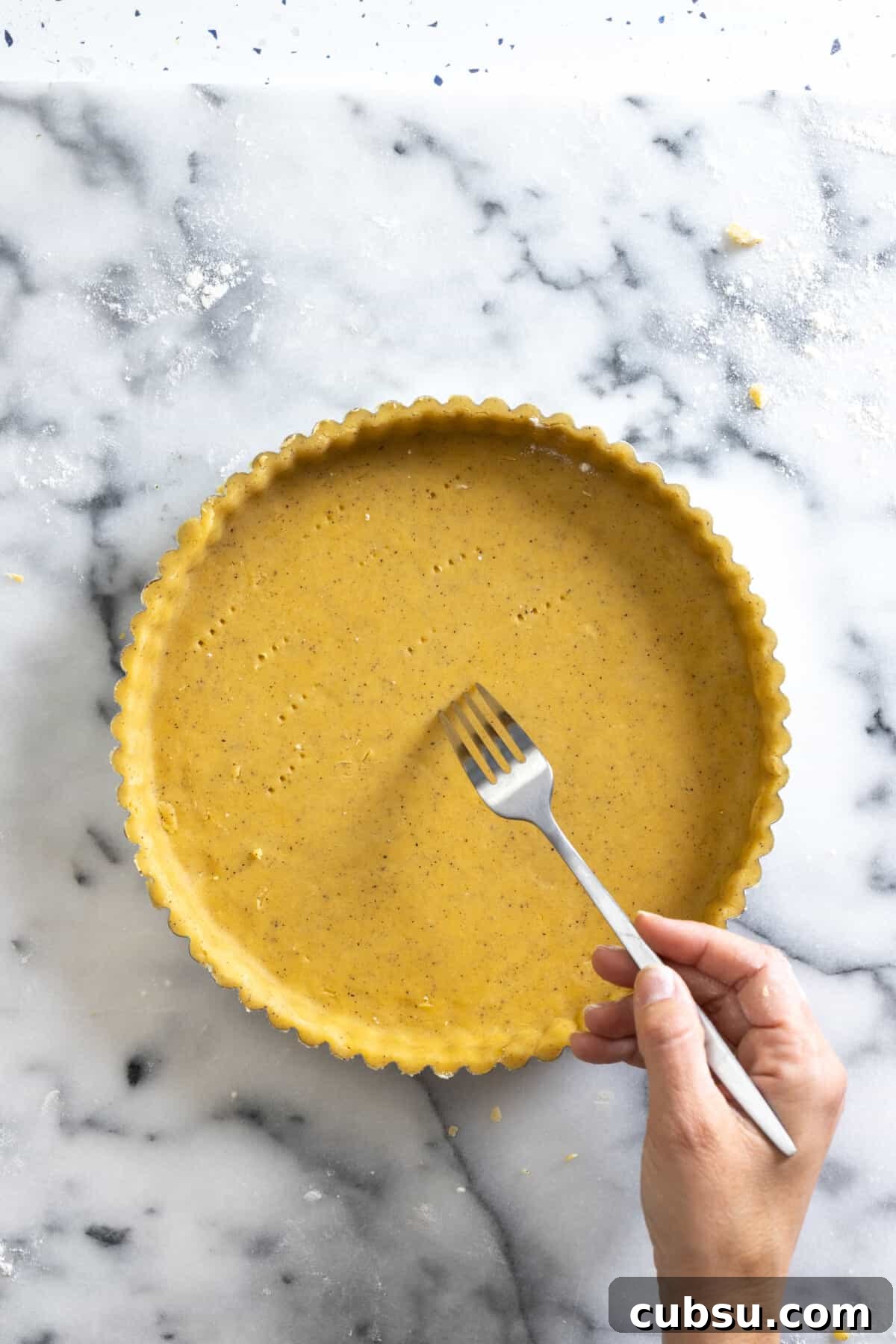
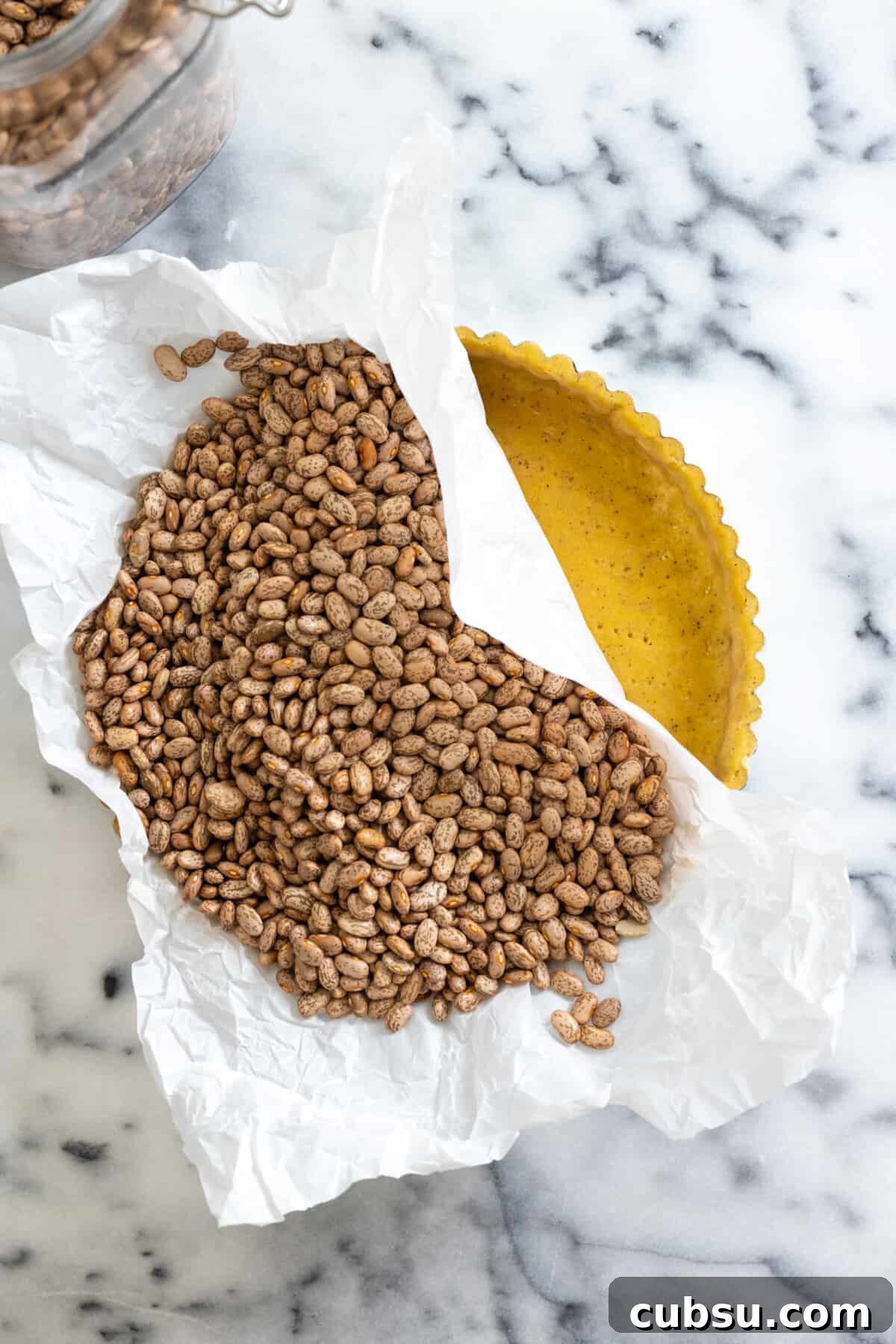
Blind baking sets the shell’s structure before filling. Dock the bottom of the shell with a fork to allow steam to escape and prevent bubbling. Line the shell with parchment or foil, then fill with pie weights, dried beans, or uncooked rice to keep the crust flat while it bakes.
Blind-baking steps
- Line the chilled shell with parchment or foil that extends beyond the edges so you can lift out the weights easily.
- Fill the lined shell with weights, beans, or rice, distributing them evenly across the bottom.
- Bake until the liner no longer sticks and the edges begin to color—about 15–20 minutes depending on size.
- Remove the weights and bake a little longer: about 5 minutes for a partially baked shell or roughly 10 minutes more for a fully baked shell to use with no-bake fillings.
For mini tartlets, line and fill each muffin cup the same way, and follow the same bake times adjusted for smaller size. Once cooled, fill your shells with quiche mixes, cheese fillings, roasted vegetables, or other savory ideas.
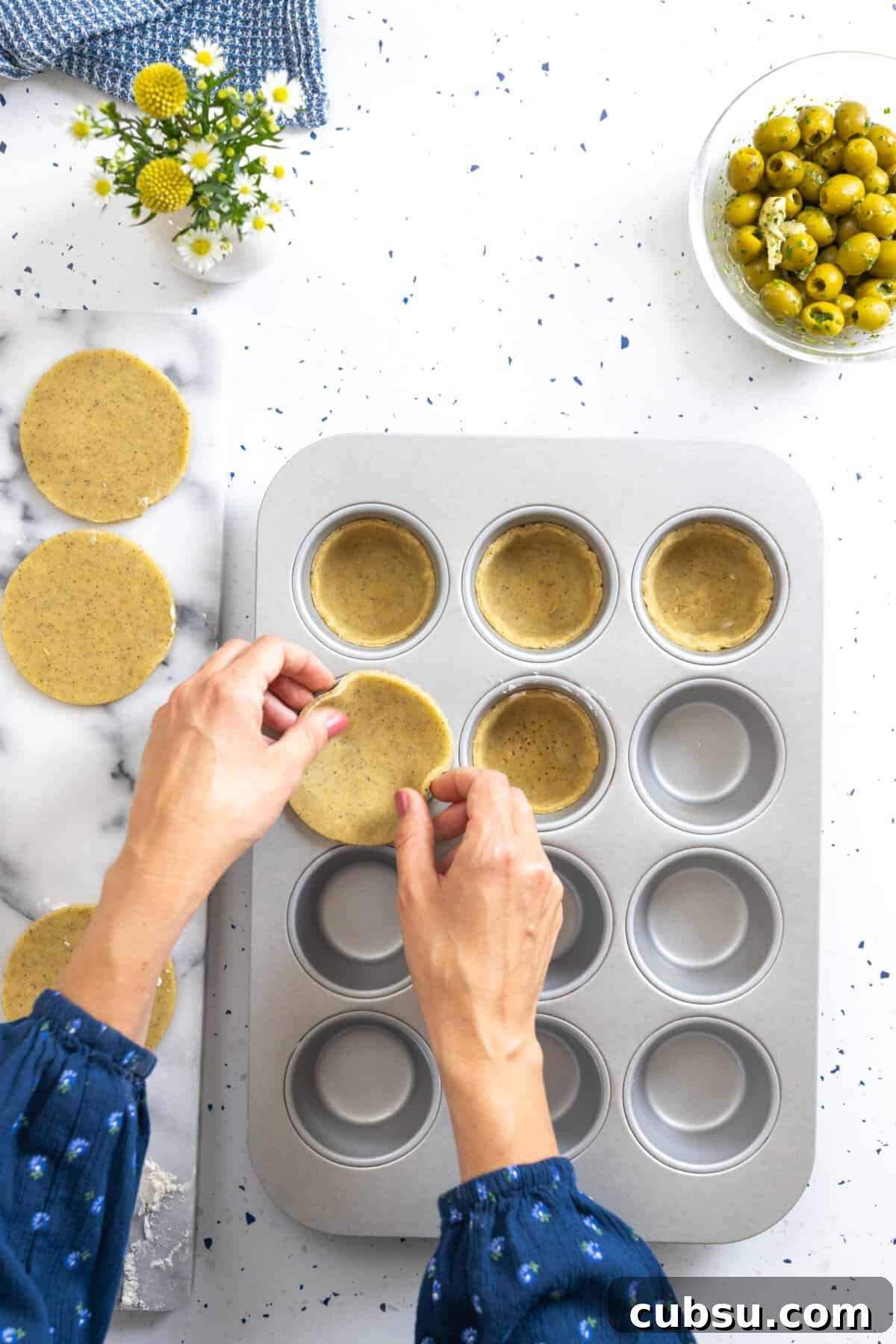
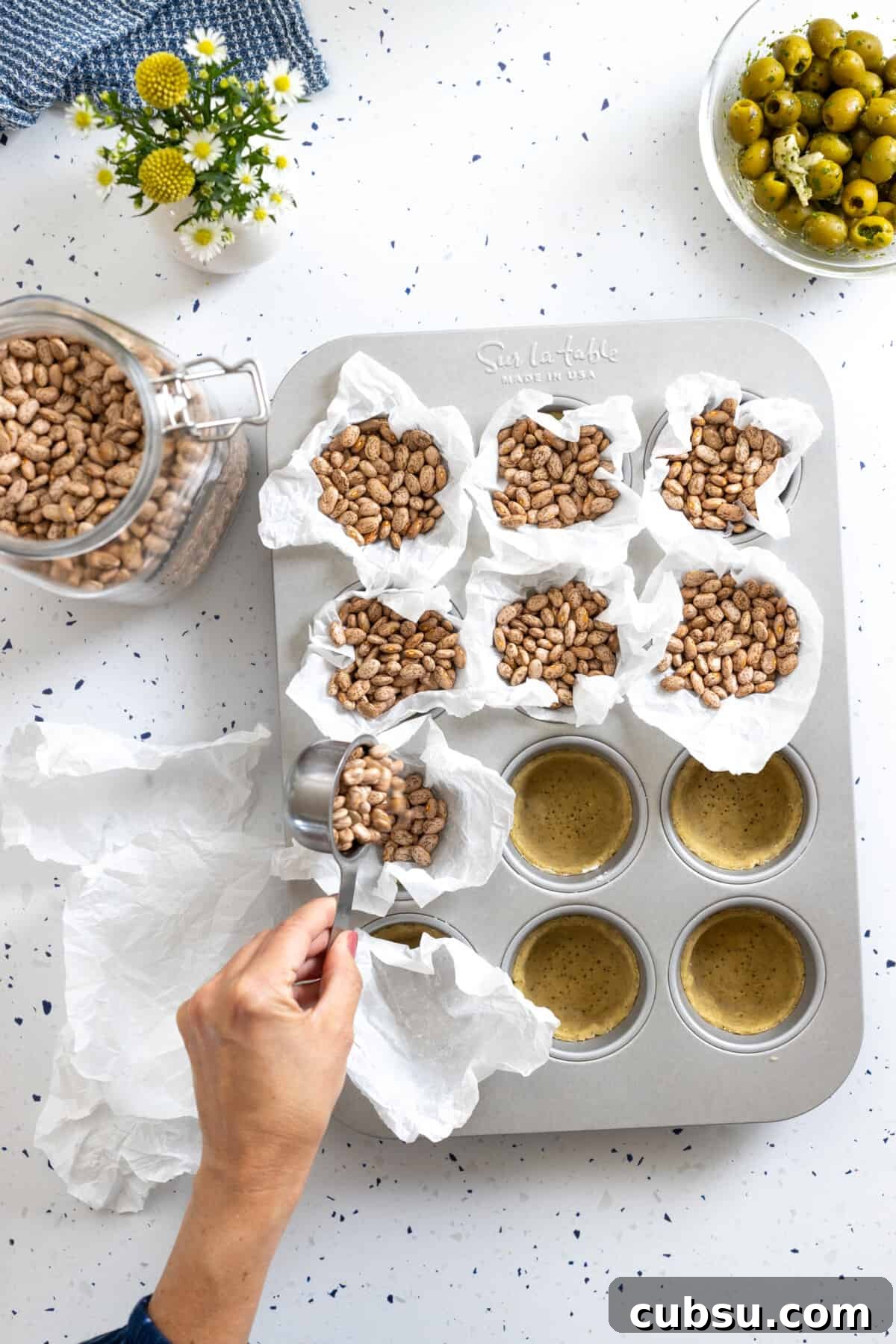
This guide covers the technique and options for shaping and baking a dependable savory tart shell so you can focus on flavorful fillings. Use this dough with herb-and-cheese tartlets, vegetable tarts, or quiches for reliably crisp, flaky results.
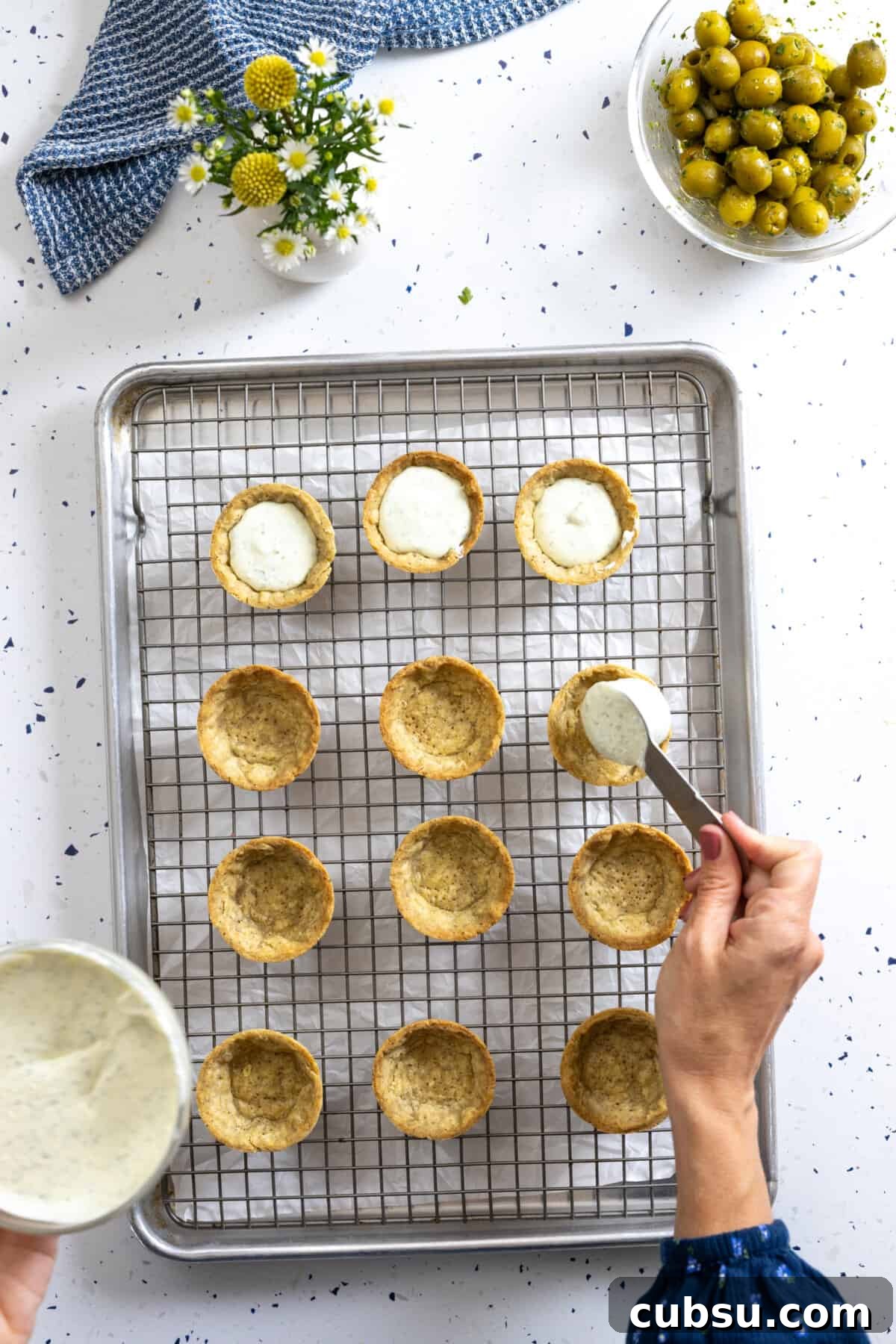
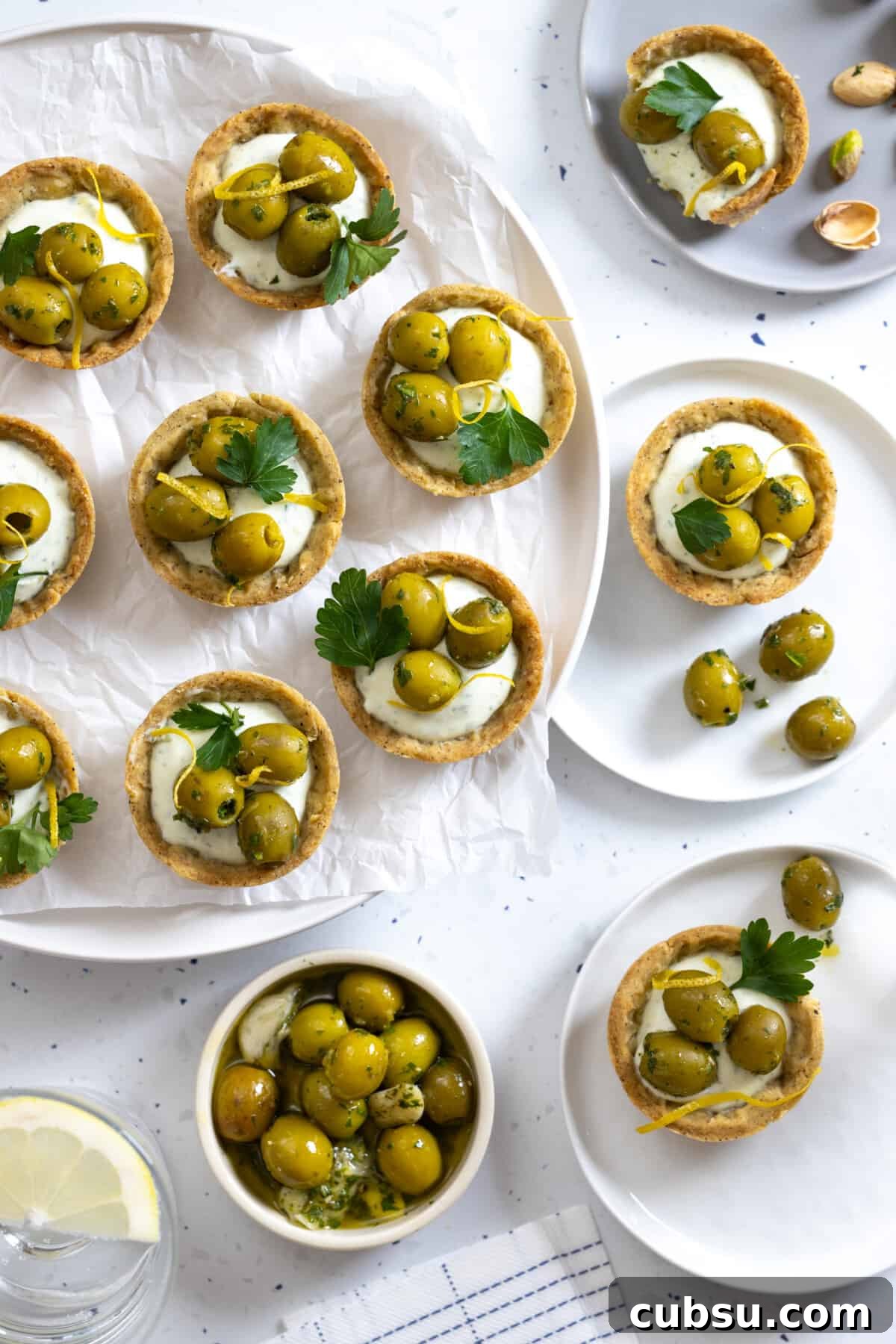
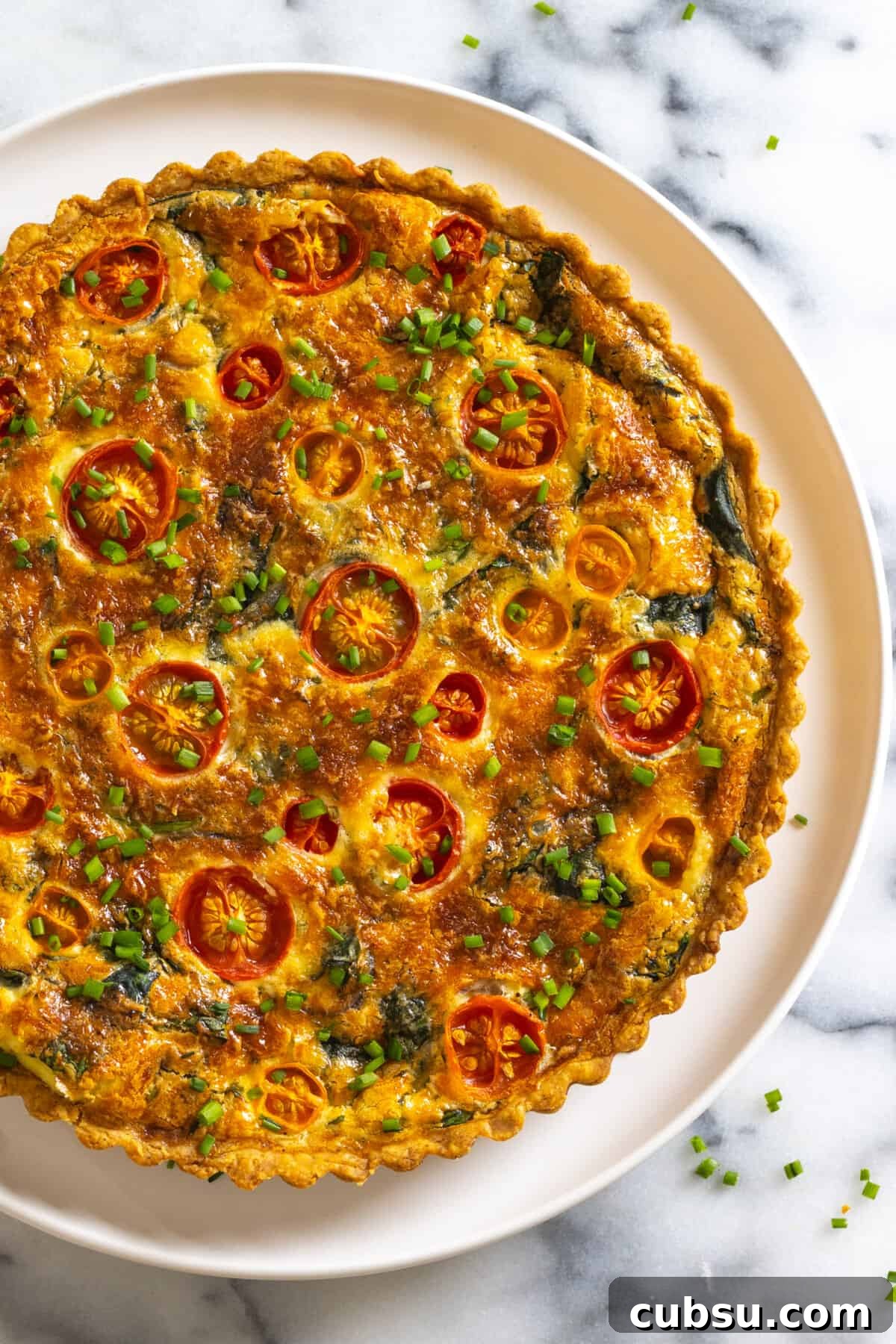
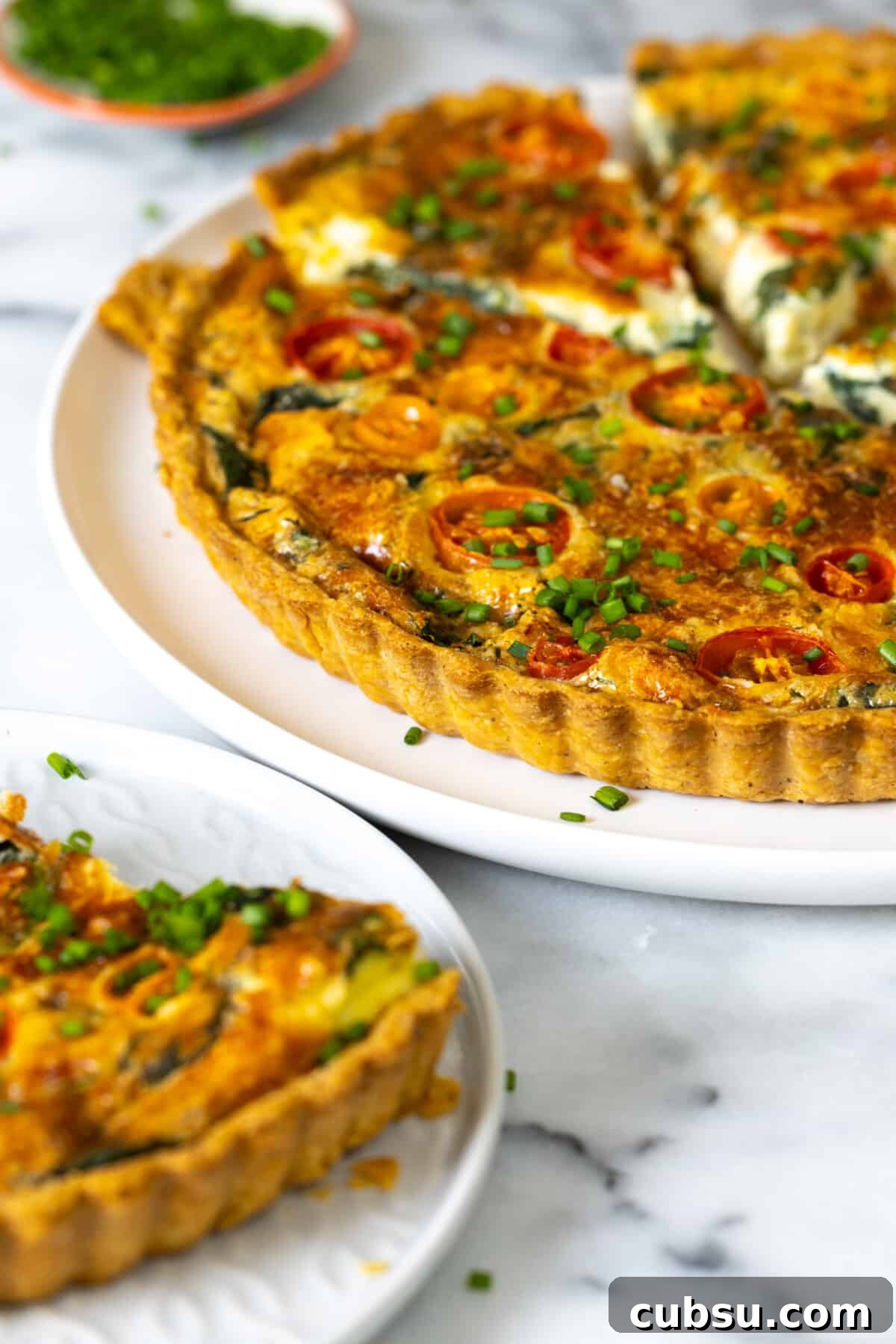
Whatever savory tart you’re imagining, this Savory Tart Dough is a dependable, flexible base. Enjoy experimenting with fillings and shapes, and savor the savory side of baking.
Recipe
Savory Tart Dough
Description
This simple Savory Tart Dough bakes up flaky and crisp with enough salt and a hint of peppery warmth to highlight savory fillings. Use it for tarts, tartlets, or quiches.
Ingredients
1 egg yolk
2 tablespoons heavy cream or whole milk
1 ¼ cups all-purpose flour
1 teaspoon granulated sugar
1 teaspoon fine sea salt
¾ teaspoon freshly ground pepper (optional)
½ cup unsalted butter, cold and cut into ½” cubes
Instructions
Mixing the dough
1. Whisk the egg yolk and cream together in a small bowl; set aside.
2. In a large bowl, whisk the flour, sugar, salt, and pepper.
3. Cut the cold butter into the flour with a pastry blender, two knives, or short pulses in a food processor until the mixture looks like coarse cornmeal with pea-sized butter pieces. Alternatively, use your fingers, working quickly so the butter stays cold.
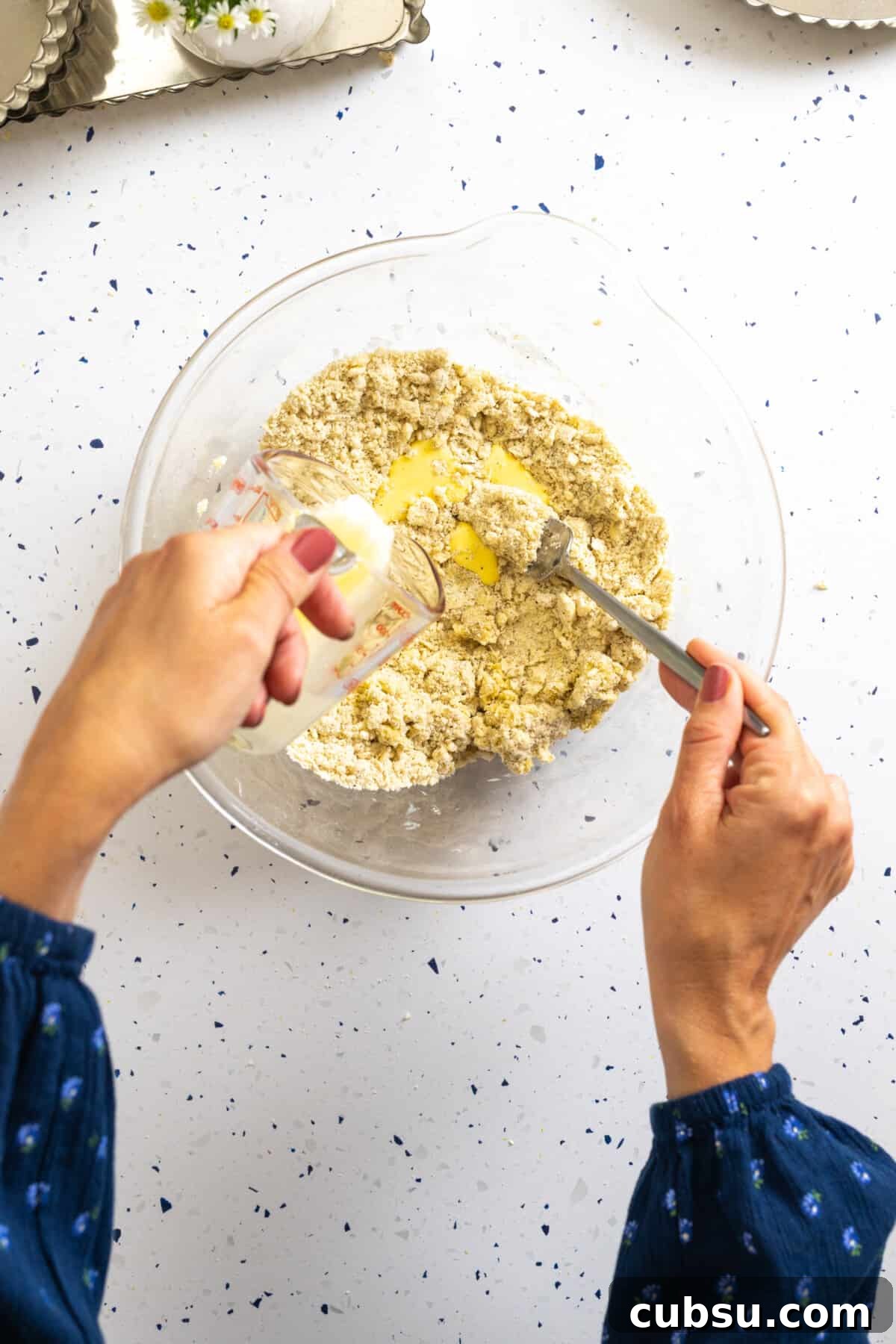
4. Add the egg mixture and mix with a fork until the dough just holds together and appears shaggy. Test by squeezing a small handful — it should hold together without becoming sticky.
5. Gather the dough on a lightly floured surface into a ball, flatten into a disk, wrap, and chill at least 30 minutes (preferably 1 hour). The dough can be frozen for up to 3 months if tightly wrapped.
Shaping the shell
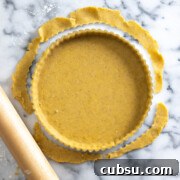
6. To roll out: flour the surface lightly and roll from the center outward, rotating often, until the dough is 1–2″ wider than the tart pan and 1/8″–1/4″ thick. Roll the dough around your rolling pin and unroll over the pan. Trim excess by rolling the pin over the pan edge for a clean finish.
7. Dock the bottom of the shell with a fork and chill while the oven preheats.
Blind baking
8. Preheat the oven to 375°F (190°C).
9. Line the shell with crumpled parchment or foil, pressing it into the edges. Fill with pie weights, dried beans, or uncooked rice, distributed evenly.
10. Bake for about 20 minutes, until the liner no longer sticks and the edges start to color. Remove the weights carefully and bake 5 minutes more for a partially baked shell, or about 10 minutes longer until golden and dry for a fully baked crust for no-bake fillings.
Notes
This recipe can be rolled or pressed into pans and adapted for different sizes: one 9″–9½” tart, multiple smaller tarts, or 12 mini tartlets in a muffin pan. Keep the dough thickness between 1/8″ and 1/4″. Freeze tightly for up to 3 months; thaw in the refrigerator overnight or on the counter for 90–120 minutes before rolling.
- Prep Time: 20 minutes
- Chill Time: 30 minutes (or up to 1 hour preferred)
- Cook Time: 40 minutes
- Yield: One 9½” round tart shell