
Walking into the grocery store planning to buy clean, real food can feel overwhelming. Every aisle offers countless options labeled with health claims, and it can be hard to know which products truly belong in a clean eating pantry.
This clean eating shopping list is a simple, practical guide to help you skip the guesswork and fill your cart with minimally processed, nutrient-dense foods to nourish you and your family.
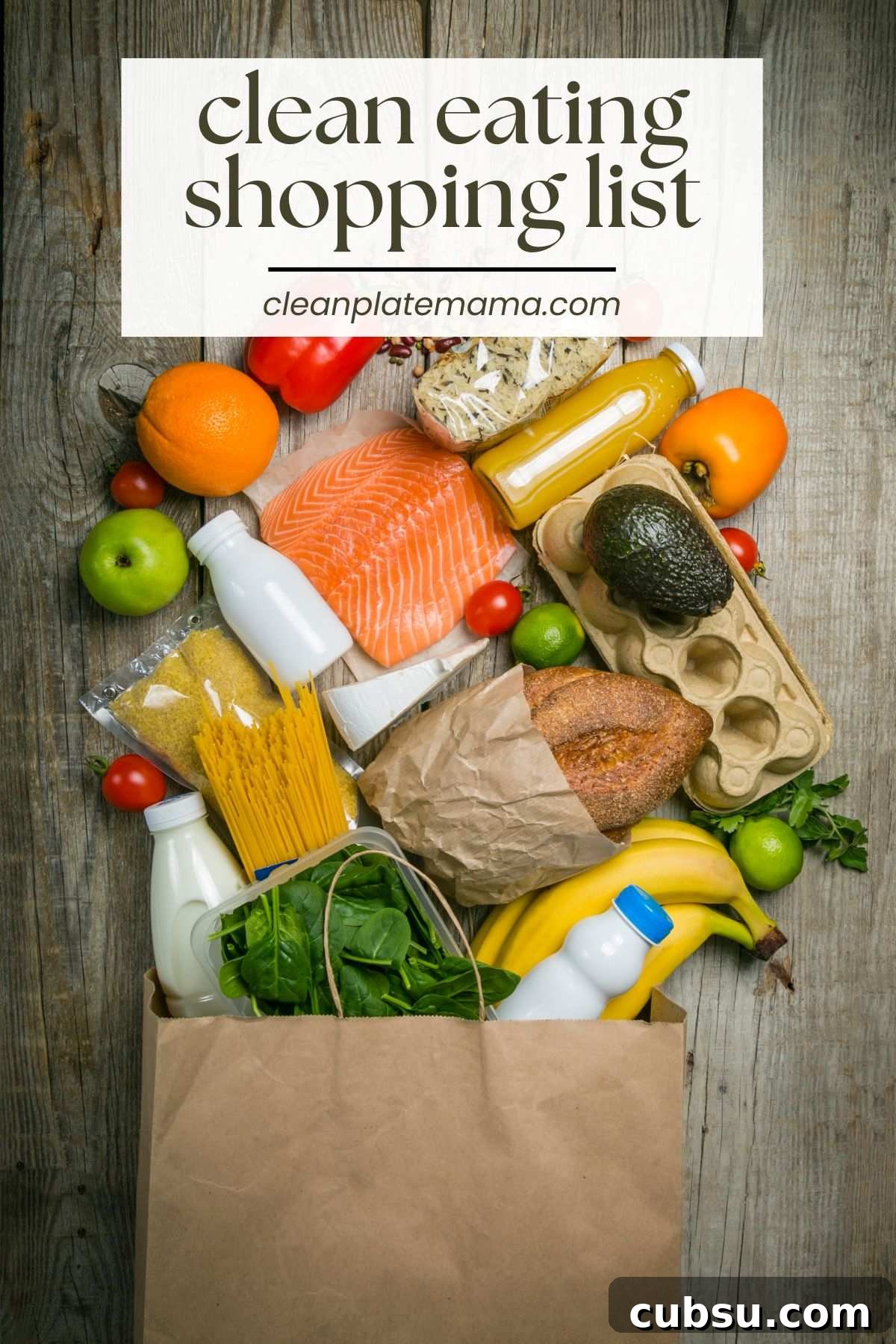
This list covers common items you’ll find in most grocery stores that fit a clean eating approach.
The goal is not to provide an exhaustive inventory, but to give you a useful starting point. Use it to navigate the store and stock your kitchen with real foods that support a healthy lifestyle.
Whether you are new to clean eating or already on the path, this list will help simplify your grocery trips.
Let’s get started!
[feast_advanced_jump_to]
What is Clean Eating?
Clean eating emphasizes foods in or near their natural state: fruits, vegetables, whole grains, quality proteins, full-fat dairy, nuts, seeds, and healthy fats. It focuses on nutrient-dense choices while limiting ultra-processed foods and artificial ingredients.
Clean eating is a lifestyle rather than a strict diet. It’s about making consistent choices that work for your life. Occasional treats are part of a balanced approach.
How I approach clean eating: I follow an approximate 80/15/5 rule—about 80% whole, minimally processed foods, 15% better-for-you processed items, and 5% occasional indulgences. This keeps the approach realistic for a busy life with kids and work.
Clean Eating Shopping List
This section gives a digestible list of clean eating grocery items organized by category. It’s not exhaustive, but it’s a practical place to begin stocking your kitchen.
Where helpful, items are grouped so you can quickly find essentials for meals and snacks.
💚 Notes indicate when organic choices or higher-quality options are recommended for better nutrition and lower pesticide exposure. If organic isn’t available, conventional choices still offer value.
Fruits and Vegetables
Fruits and vegetables are foundation foods for clean eating. Most produce is a great choice—prioritize variety and seasonality when possible.
Vegetables
- Leafy greens (spinach, kale, chard)
- Broccoli
- Cauliflower
- Celery
- Cucumber
- Asparagus
- Bell peppers
- Green beans
- Eggplant
- Mushrooms
- Zucchini
- Tomato
- Cabbage
- Brussels sprouts
- Onion
- Radishes
- Microgreens*
- Potatoes*
- Winter squash (acorn, butternut, spaghetti)
Fruits
- Blueberries*
- Strawberries*
- Blackberries*
- Raspberries
- Bananas
- Apples
- Avocado
- Peaches/nectarines*
- Pears*
- Apricots
- Cherries*
- Grapes*
- Oranges
- Kiwi
- Mango
- Melon
- Pineapple
- Plums
💚 *These items frequently appear on pesticide priority lists; choose organic when feasible.
Whole Grains
Choose whole, unrefined grain products that include the bran, germ, and endosperm for the most nutrients and fiber.
Flours
- Whole wheat flour* or white whole wheat
- Einkorn or spelt flour*
- Oat flour
- Buckwheat flour
Grains
- Farro*
- Whole wheat pasta* (spaghetti, penne)
- Sprouted whole grain bread (Ezekiel or similar)
- Rolled/old-fashioned oats
- Brown rice pasta, brown rice, wild rice
- Quinoa
- Popcorn kernels
*Contain gluten. Avoid if you follow a gluten-free diet. If using oats, choose certified gluten-free oats if sensitivity is a concern, or make homemade oat flour.
💚 When possible, choose organic grains to reduce exposure to pesticides and support sustainable farming practices.
Eggs & Dairy
Eggs
- Pasture-raised or organic eggs are ideal; local eggs can be an excellent choice when available.
Dairy
- Whole milk
- Plain yogurt or kefir with live cultures (no added sugars or fillers)
- Pasture-raised butter
- Cheeses with short ingredient lists (milk, cultures, enzymes, salt)
- Goat cheese
- Full-fat cottage cheese without fillers
- Unsweetened non-dairy alternatives with simple ingredients (milk source and minimal additives)
💚 Look for animal welfare certifications and grass-fed dairy when possible—grass-fed products typically contain more omega-3s and certain vitamins. Organic certification ensures animals were fed organic feed and were not routinely given antibiotics or growth hormones.
Meat, Seafood and Beans
Beef & Pork
- Ground beef, steaks, roasts (choose 100% grass-fed/finished or organic when possible)
- Pork products (opt for antibiotic-free and nitrate-free)
Poultry
- Chicken (organic or antibiotic-free preferred)
- Turkey (organic or antibiotic-free preferred)
Seafood
- Salmon (wild-caught preferred)
- Shrimp (choose low-mercury, responsibly sourced options)
💚 Prefer 100% grass-fed/finished beef and organic choices when available. For pork, choose antibiotic- and nitrate-free options. For poultry, organic or antibiotic-free chicken and turkey are cleaner choices. For seafood, select wild-caught or sustainably farmed fish low in mercury and high in omega-3s.
Beans
- Black beans
- Pinto beans
- Kidney beans
- Cannellini beans
- Garbanzo (chickpeas)
- Lentils
- Frozen edamame
💚 Dried beans are the cleanest option because they contain only the bean. If you use canned beans for convenience, choose varieties with simple ingredients (beans, water, salt) and cans labeled BPA-free.
Healthy Fats, Nuts and Seeds
Oils
Choose unrefined oils and avoid highly processed options. Use minimally processed oils for flavor and health benefits.
Extra-virgin olive oil
Unrefined coconut oil
Avocado oil
Nut Butters, Nuts and Seeds
Nut Butters
- Peanut butter (choose varieties with only peanuts and salt)
- Almond butter (minimal ingredients)
- Cashew butter (simple ingredient lists)
Nuts
- Almonds
- Pistachios
- Walnuts
- Cashews
- Pecans
Seeds
- Chia seeds
- Hemp seeds
- Flaxseed meal
- Pumpkin seeds
💚 Nut and seed butters should list only nuts or seeds and maybe salt—avoid added oils, sugars, or preservatives. Choose raw or dry-roasted nuts without added oils, and opt for organic when pesticide exposure is a concern.
Sweeteners and Condiments
Choose natural, minimally processed sweeteners and use them sparingly, since they still contribute sugars.
- Raw honey
- Pure maple syrup
- Coconut sugar
- Whole dates (for sweetening and snacking)
Dressings, Condiments and Sauces
Dressings
- Ranch made with unrefined oils
- Caesar with simple, whole ingredients
- Balsamic vinaigrette
- Italian vinaigrette
Condiments & Sauces
- Mayonnaise made with avocado or olive oil and minimal ingredients
- Ketchup with limited added sugars
- Mustard with simple ingredients
- Marinara or tomato sauces with short ingredient lists
- BBQ sauces with lower sugar and recognizable ingredients
💚 Look for dressings and condiments made with unrefined oils (olive or avocado), straightforward ingredient lists, and minimal added sugars. If store-bought options are hard to find, homemade dressings and sauces are easy to make with simple pantry staples.
Miscellaneous Pantry Staples
- Coconut aminos (soy-free seasoning)
- Chicken bone broth
- Beef bone broth
- Balsamic vinegar
- Apple cider vinegar (raw, unfiltered)
- Almond flour (useful for gluten-free baking)
- Coconut flour
- Cassava flour
- Tapioca flour
- Cacao powder and quality chocolate chips
- Herbs and spices (organic when possible)
*These flours are often used in gluten-free baking. If you don’t need gluten-free options, they may be optional for your pantry.
Snacks & Other Common Items
When choosing store-bought snacks, check ingredient lists and added sugar. Simpler ingredient lists are usually better. The items below represent better-for-you packaged options; homemade snacks are often cleaner.
Cereal
- Grain-free or protein-forward cereals with short ingredient lists
Salty Snacks
- Popcorn made with unrefined oil
- Simple crackers made from seeds or whole ingredients
- Baked chips made with avocado or olive oil
Sweet Snacks
- Coconut or almond-based cookies with fewer ingredients
- Dark chocolate with minimal added sugar
- Whole fruit bars or fruit-based snacks without added sugar
💚 For the cleanest snack choices, avoid highly refined oils (canola, sunflower, safflower, soy), prefer organic grains when present, and choose naturally sweetened options. Packaged snacks are often compromises—consider making homemade bars, granola, or baked snacks to keep ingredients simple and nourishing.
Tips for Clean Eating Grocery Shopping
- Read ingredient labels. If a product isn’t a whole food, get in the habit of checking the ingredient list. Ask yourself: Can I pronounce these ingredients? Could I buy them individually? If yes, you’re likely choosing a good option.
- Don’t stress. Clean eating is a long-term habit, not perfection. If a packaged item isn’t ideal, focus on overall patterns rather than individual slips.
- Buy local when possible. Farmers markets and local farm stands can offer fresher produce and support local growers.
Printable List
A printable PDF clean eating shopping list is available for printing to take with you on grocery trips. It includes a blank shopping sheet so you can customize your list.
Lastly, please share your feedback on this list. What’s missing or what questions remain? Leave a comment or reach out via the contact page to let me know.