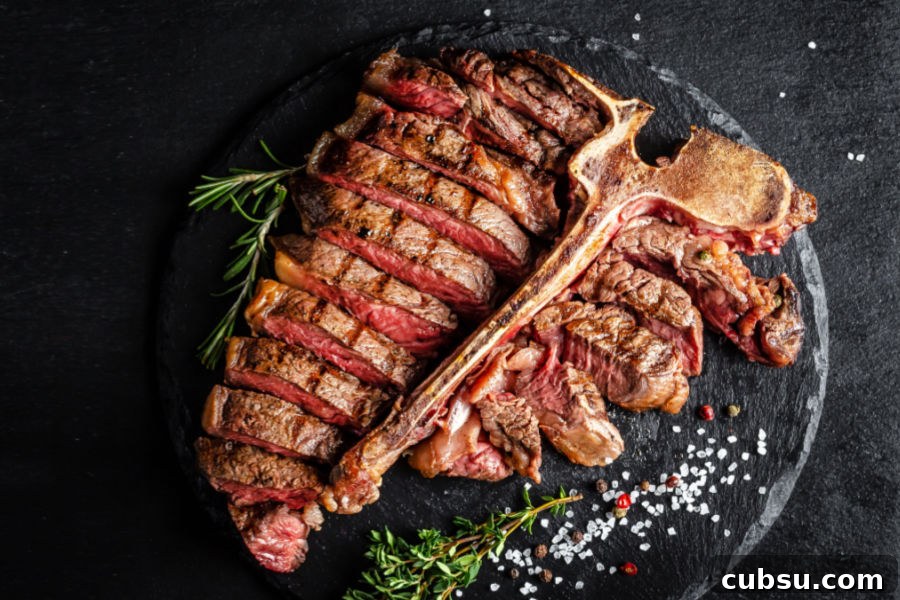
For a memorable Father’s Day dinner, few choices beat a porterhouse steak. This substantial cut delivers both tenderness and bold beef flavor, producing a juicy, perfectly cooked steak when prepared correctly.
Selecting the right cut matters when cooking steak. The porterhouse is an excellent choice for special occasions because it combines two prized cuts in one steak.
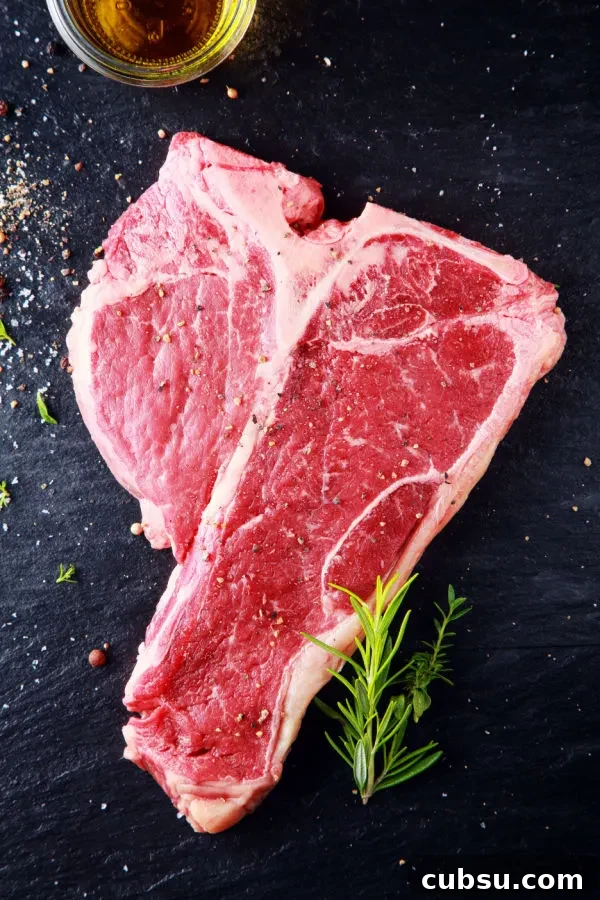
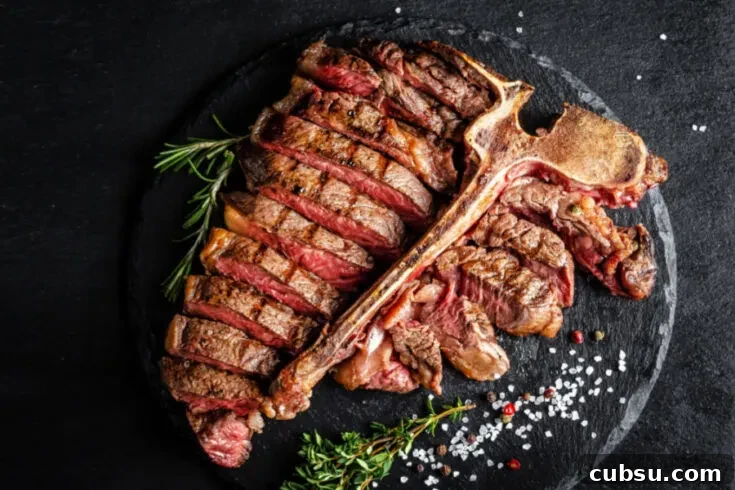
A porterhouse includes the tender filet mignon on one side of the T-shaped bone and the flavorful New York strip on the other. The bone adds richness as the steak cooks, enhancing the overall taste.
You don’t need a steakhouse to enjoy a restaurant-quality porterhouse. With a few simple techniques you can make an outstanding steak at home using only your stovetop and oven.
Before you shop, read on to learn how to choose the best porterhouse and how to cook it so you get the most value from this premium cut.
WHAT IS A PORTERHOUSE STEAK
The porterhouse is cut from the rear end of the short loin where the tenderloin and strip loin meet. The tenderloin provides exceptional tenderness while the strip loin contributes rich, beefy flavor and nice marbling.
Together, these two cuts create a steak that is both flavorful and tender when cooked properly.
A true porterhouse is larger than a T-bone: look for steaks 1.25 to 2 inches thick, and in many cases weighing up to several pounds. Because of its size and quality, it’s often reserved for celebrations like Father’s Day.
WHY IS IT CALLED PORTERHOUSE STEAK
The exact origin of the name is debated, but it likely comes from 19th-century porterhouse taverns that served large cuts of beef with porter beer. That combination became popular, and the name stuck.
Another theory ties the name to a New York hotel known for its steaks. Regardless of the origin, the porterhouse is celebrated for its tenderness and robust flavor.
THE DIFFERENCE BETWEEN PORTERHOUSE & T-BONE STEAK
Both porterhouse and T-bone steaks come from the short loin and share the T-shaped bone. The key difference is tenderloin size: porterhouses include a larger portion of tenderloin, while T-bones have a smaller filet section. That larger tenderloin on the porterhouse is what makes it pricier.
PURCHASING A PORTERHOUSE STEAK
When choosing a porterhouse, look for even fat marbling—thin streaks of fat within the meat—which keeps the steak moist and flavorful during cooking.
Freshness matters: the meat should be bright red without brown or gray patches. Also choose the appropriate size for your meal. Porterhouses can vary widely in weight; plan about 5–6 ounces per person for a standard serving, and increase that for big appetites or celebratory portions.
If cooking one steak for multiple people, choose a large enough porterhouse to slice and share. For best results even a single steak should be at least 1.5 inches thick.
HOW TO SEASON THE STEAK
High-quality steak shines with minimal seasoning. Use kosher salt and freshly ground black pepper rather than complex store-bought blends. After seasoning, let the steak rest at room temperature for about 30 minutes so the flavors penetrate the meat.
THE BEST WAY TO COOK STEAK
Several methods produce great results—grilling, sous vide, and reverse searing among them—but a reliable and straightforward technique is pan-searing followed by oven finishing.
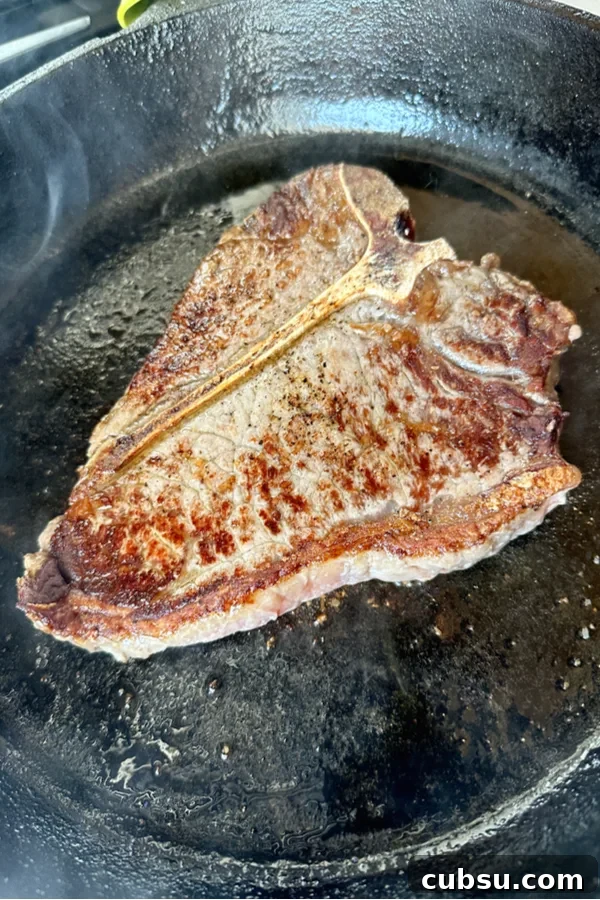
Heat a heavy cast-iron skillet until very hot and sear the steak to form a flavorful crust. Then transfer the skillet to a preheated oven to finish cooking evenly. This approach gives you control over doneness and yields tender, juicy meat. Medium-rare is ideal for porterhouse, but adjust oven time for your preferred level of doneness.
LET THE STEAK REST
After removing the steak from the oven, let it rest 5–10 minutes covered loosely with foil. Resting lets the juices redistribute so the steak stays moist and tender—an essential step for any premium cut.
HOW TO SLICE A PORTERHOUSE STEAK
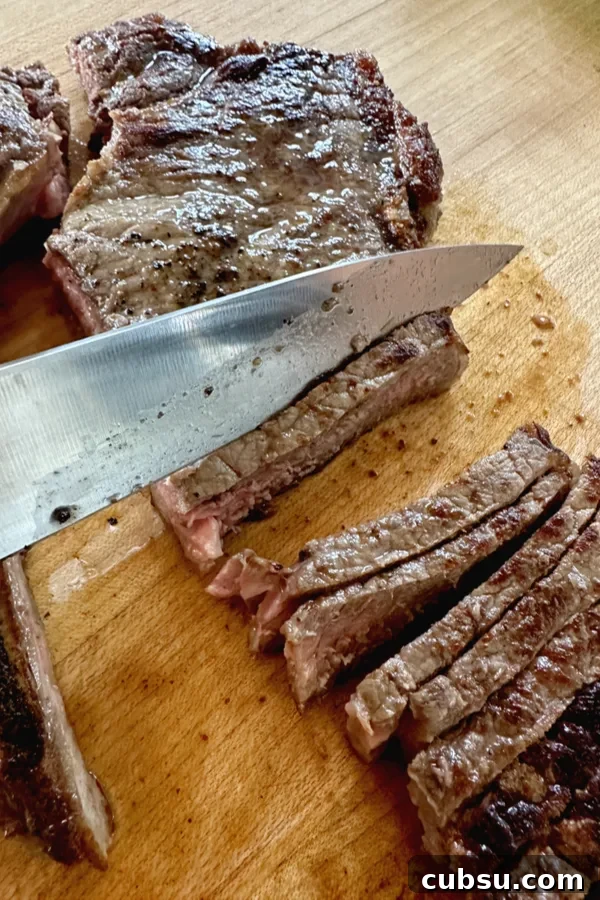
Separate the filet and strip from the bone by cutting along the T-shaped bone. Then slice each section against the grain into even, thin slices to maximize tenderness.
WHAT TO USE IF YOU DON’T HAVE A CAST IRON PAN
If you don’t own cast iron, a heavy-bottomed stainless steel or oven-safe nonstick skillet will work. You can also finish the steak on a large baking sheet. Ensure your pan is safe for high heat and can go into the oven.
The Best Porterhouse Steak Recipe
*Specific measurements and the full printable recipe are included in the recipe card below. Read the tips and steps here for a clear overview.
INGREDIENTS
- 24-ounce porterhouse steak, at least 1.5 inches thick
- 1 tablespoon olive oil, divided
- Kosher salt
- Freshly ground black pepper
- 2 tablespoons unsalted butter, cut into small pieces
INSTRUCTIONS
1. Remove the porterhouse from the refrigerator 30–60 minutes before cooking so it comes to room temperature. Position the oven rack in the middle and preheat the oven to 425°F (218°C).
2. Place a large cast-iron skillet over high heat and let it get very hot, about 5 minutes. Pat the steak dry with paper towels to remove excess moisture.
3. Rub half the olive oil on both sides of the steak and season generously with kosher salt and freshly ground black pepper. Add the remaining oil to the hot pan and swirl to coat.
Pan Sear
4. Carefully place the porterhouse in the skillet, laying it away from you to avoid splatter. Sear the first side for 3 minutes, then flip and sear the other side for 3 minutes. Add butter pieces on top of the steak just before transferring to the oven.
Bake
5. Transfer the skillet to the preheated oven and bake without flipping until the steak reaches your desired doneness. For medium-rare, expect about 4–7 minutes in the oven, depending on thickness.
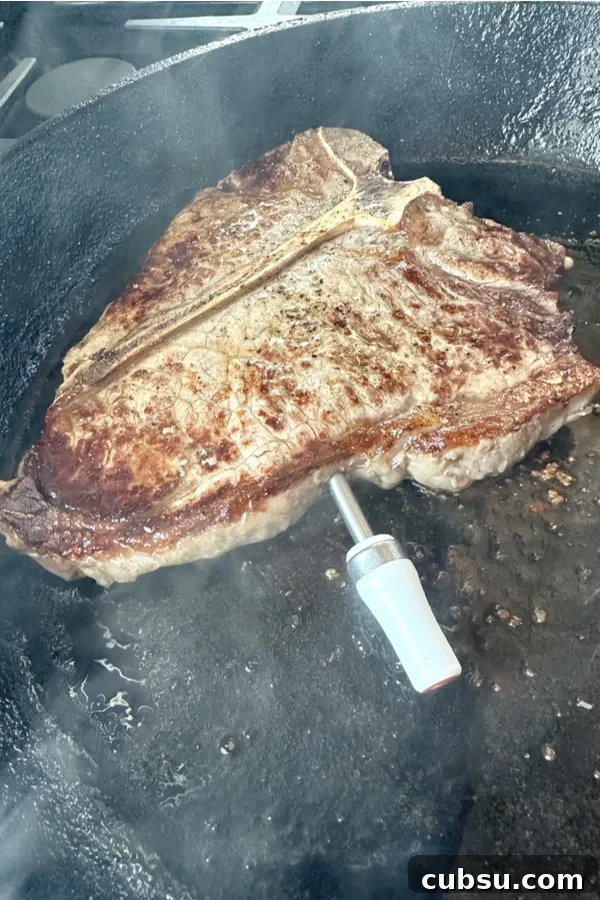
6. Use an instant-read thermometer inserted into the side at the thickest point to check temperature. Remove the steak when it reaches the target temperature for your preferred doneness.
7. Transfer the steak to a cutting board or plate and tent loosely with foil. Rest for 5–10 minutes to allow juices to redistribute.
8. To serve, cut the meat away from the bone, then slice each section against the grain into strips. Serve immediately.
Enjoy! Mary

To receive our 3 recipe articles in your inbox each week, sign up for the free email list on the site or contact the author by email. Follow on social platforms as desired. This article may contain affiliate links; a small commission may be earned at no extra cost to you.
The Best Porterhouse Steak
How to make the best porterhouse steak that turns out tender and juicy every time using a simple pan-sear and oven finish.
5 minutes
16 minutes
40 minutes
1 hour 1 minute
Ingredients
- 24-ounce porterhouse steak, at least 1.5 inches thick
- 1 tablespoon olive oil
- Kosher salt
- Fresh ground black pepper
- 2 tablespoons unsalted butter, cut into small pieces
Instructions
- Remove the porterhouse from the refrigerator 30–60 minutes before cooking and preheat the oven to 425°F (218°C) with the rack in the middle.
- Heat a large cast-iron skillet over high heat for about 5 minutes until very hot and pat the steak dry.
- Rub half the oil on both sides of the steak and season liberally with kosher salt and black pepper.
- Add remaining oil to the skillet, lay the steak in the pan away from you, and sear the first side for 3 minutes.
- Flip and sear the other side for 3 minutes.
- Top the steak with butter pieces and immediately transfer the skillet to the oven. Bake without flipping until desired doneness—about 4–7 minutes for medium-rare—using an instant-read thermometer to check the thickest point.
- Remove the steak to a cutting board, tent loosely with foil, and rest 5–10 minutes.
- Cut the meat away from the bone and slice each section against the grain into strips to serve.
Notes
Porterhouse steak is best at medium-rare (about 135°F internal temperature). Recipe provided by Make Your Meals.
Nutrition Information:
Yield:
4
Amount Per Serving:
Calories: 551Total Fat: 41gSaturated Fat: 17gTrans Fat: 2gUnsaturated Fat: 20gCholesterol: 156mgSodium: 188mgCarbohydrates: 0gFiber: 0gSugar: 0gProtein: 43g
Nutritional information is an estimate and will vary based on products and preparation.