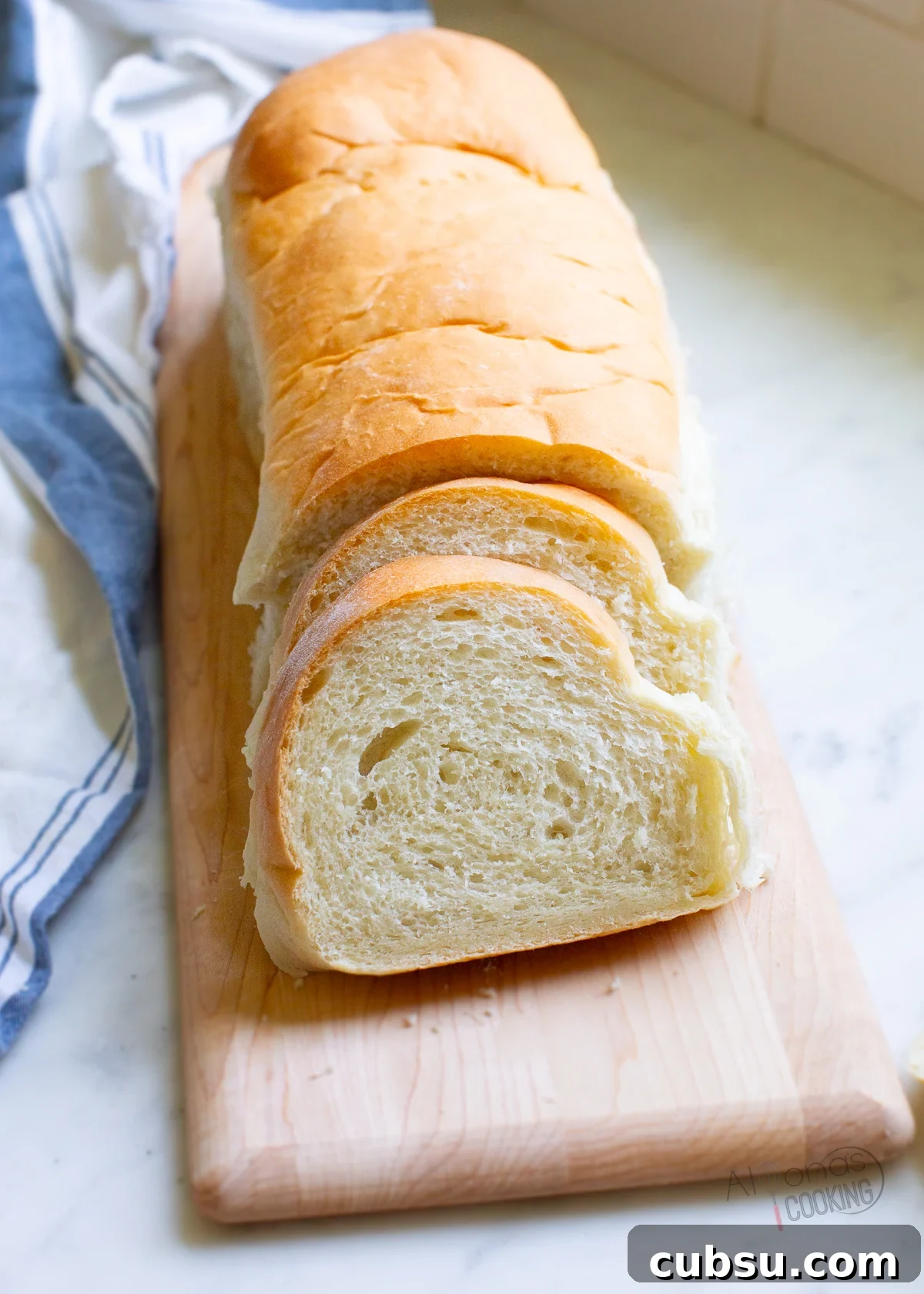
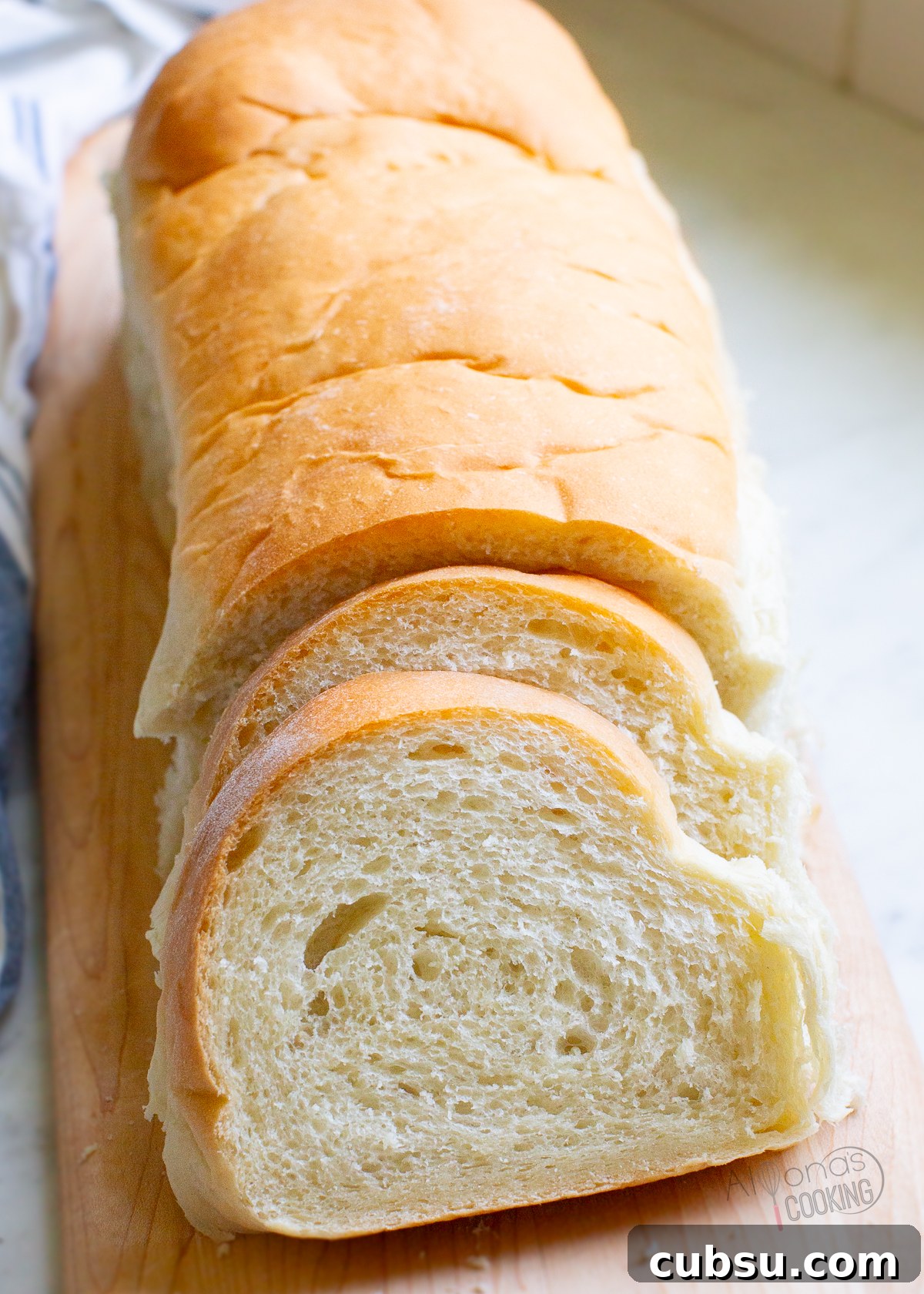
This crispy French bread is tender inside with a light, soft crumb and a golden, flavorful crust. It’s ideal for sandwiches, French toast, garlic bread, and French bread pizza. When it ages, the loaf is great for making croutons or a classic bread stuffing. We especially enjoy slices toasted and topped with butter and jam or served alongside scrambled eggs for a simple meal.
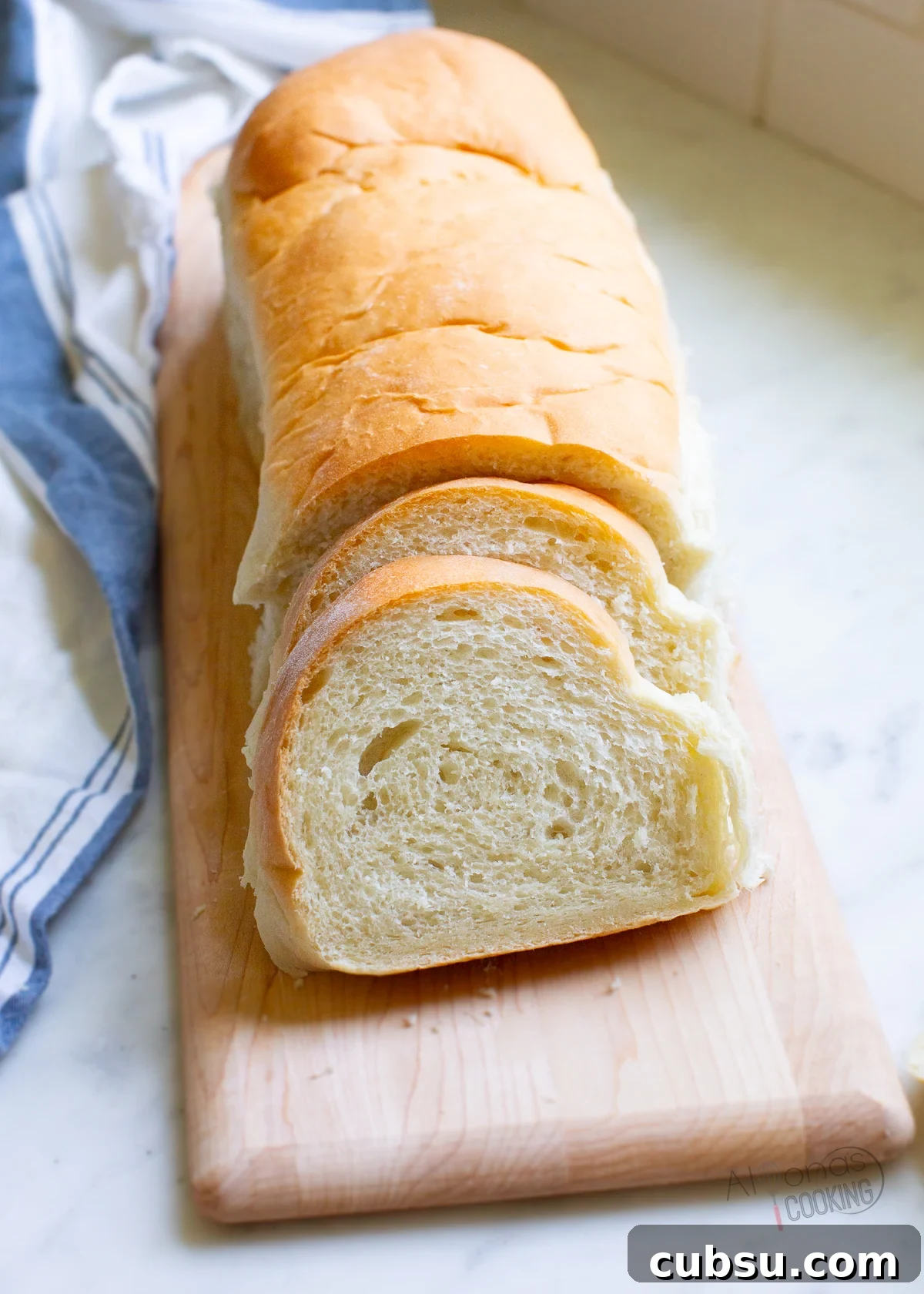
If you prefer a really crusty loaf, try a sourdough baguette or an artisan boule. Sourdough fermentation yields extra crunch and complex flavor, while a no-knead boule produces an impressive crust with minimal hands-on time.
What is French Bread?
French bread typically refers to a long loaf made from white flour with a crisp exterior and a soft interior. Recipes vary in technique and fermentation, but this version is quick, reliable, and beginner-friendly. The dough rises quickly, and the finished loaves are versatile — use them for sandwiches, toast, casseroles, or as a base for pizzas and open-faced toasts.
The crust browns to a pleasant golden color and will soften slightly as the loaf cools. For a crisper exterior, bake at a higher temperature and create steam in the oven: raise the oven temperature to 425°F and introduce steam during the first minutes of baking (for example by spraying water on the loaves or placing a covered vessel in the oven). Baking in a cloche or moving the rack higher will also deepen crust color, but this recipe is perfectly fine baked on a standard sheet pan.
Ingredients
This simple French bread uses basic pantry ingredients:
- Yeast — active dry yeast is the leavening agent; ensure it is fresh and active.
- Fat — a small amount of oil or melted fat helps texture; extra virgin olive oil or a neutral sunflower oil both work well.
- Flour — bread flour (higher gluten) is preferred for structure and chew; all-purpose will also work. You can substitute up to half of the flour with whole wheat if desired.
- Salt — use a good quality sea or kosher salt for flavor.
- Sugar — a small quantity feeds the yeast and assists proofing.
- Warm water — around 90–105°F (comfortably warm) to activate the yeast.
Equipment
You don’t need special tools: an oven, a large sheet pan, and a silicone baking mat or parchment are enough. A large mixing bowl, a dough scraper, and a sharp knife or razor for scoring are helpful. A stand mixer or bread machine can be used if you prefer not to knead by hand.
How to Make French Bread
- Make the dough: Dissolve the yeast in warm water, then add the remaining ingredients and mix. Knead until you have a soft, smooth, slightly tacky dough that holds its shape. Adjust flour by feel — too much makes a dense loaf; too little makes a sticky, unmanageable dough.
- First rise: Place the dough in a lightly greased bowl, cover, and let it rise until doubled in size. This usually takes under an hour in a warm kitchen. For an even lighter crumb, allow the dough to double, punch it down, then let it rise a second time.
- Shape the loaves: Divide the dough into four equal pieces. Pat each into a rectangle and roll jelly-roll style to form loaves. Pinch and seal seams so they don’t open while baking.
- Score and proof: Place loaves seam-side down on a lined sheet pan, spaced a couple of inches apart. Score the tops with diagonal slashes to guide expansion, then let them rise again until nearly doubled.
- Bake: Bake on the middle rack. For a softer crust bake at 350°F; for a deeper golden crust, bake at 425°F. Loaves typically take 25–30 minutes. Bread is done when an instant-read thermometer reads about 190°F in the center.
Can I Use Whole Wheat Flour?
Yes. Whole wheat flour can be used, but because it absorbs more liquid and can make the loaf heavier, start by substituting part of the flour and consider adding a small amount of vital wheat gluten when using a high proportion of whole wheat. Freshly milled whole wheat absorbs water differently, so add flour gradually and adjust by feel.
Freezing and Storing
French bread freezes very well. Cool loaves completely, then slice if desired and place in freezer bags with excess air removed. Freeze the same day you bake for best texture and flavor. Sliced loaves make it easy to remove only the portions you need. Properly stored, frozen bread stays good for about three months.
Serving Ideas
French bread is extremely versatile:
- Serve warm with butter and jam or as a simple toast with eggs.
- Make garlic bread, French toast, or French bread pizza.
- Turn stale loaves into croutons, breadcrumbs, or stuffing.
- Slice thicker for hearty toast or thin for crostini and canapés.
How Long Does Homemade French Bread Last?
Homemade yeast breads are best eaten within a day or two at room temperature. Plan to freeze any remaining loaves to maintain freshness. Reheating briefly in the oven restores texture and flavor for recipes like garlic bread or French toast.
Tips for Success
- Use active, fresh yeast. If proofing shows little activity after 5–10 minutes, the yeast may be expired.
- A soft, slightly tacky dough that holds its shape will give you the best crumb. Add small amounts of flour only as needed while kneading.
- Bread is fully baked when the crust is golden and the internal temperature reaches about 190°F.
- Freeze loaves the same day they’re baked for optimum freshness.
Notes
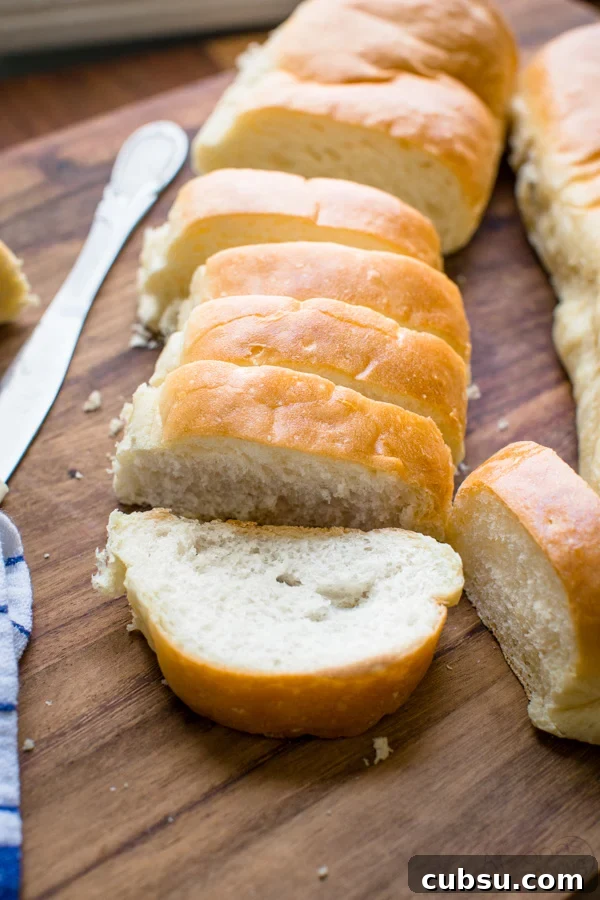
- This recipe yields four 12–13 inch loaves.
- Both bread flour and all-purpose flour will work; bread flour gives a chewier texture.
- To use a stand mixer or bread machine, halve the recipe if necessary to fit your equipment and use the dough setting for kneading.
- Adjust flour and water to account for humidity and altitude — the final dough should be soft, supple, and slightly tacky.