
Making croissants at home is simple with this quick-method dough. It’s an excellent recipe for beginners and well worth the time.
You might also enjoy my Almond Croissants
Post may contain affiliate links. For more information, see my disclosure.

Croissants had been near the top of my to-bake list for ages, but the traditional long method was off-putting. When I discovered a version of a 20-minute quick-method dough inspired by Julia Child (and adapted by bakers like Edd Kimber), I finally had to give it a go. I’ve adjusted the recipe and technique slightly to suit home bakers, but the principles remain the same.
This dough is quick to prepare; the croissants themselves need time to rise, but the flaky, buttery result is worth it. I made two batches over two days and they disappeared quickly.

Croissants Step By Step
Full measurements and printable instructions appear in the recipe card below.
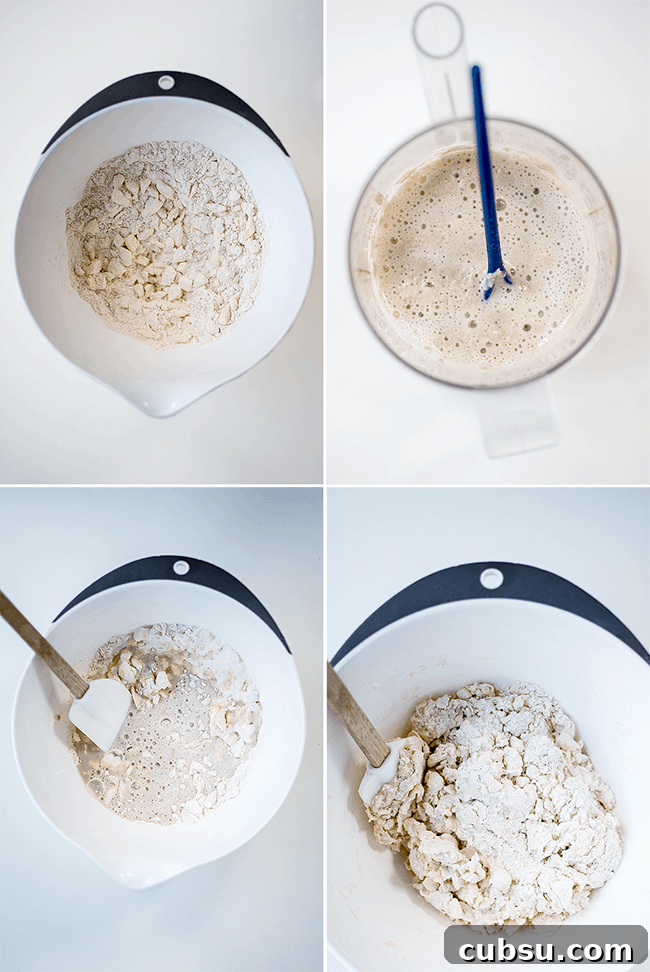
Warm the milk to body temperature, then whisk in the sugar and yeast. Let it stand until the yeast is frothy and the milk has cooled completely—if it’s still warm it will soften the butter too much.
Combine the flour and salt in a food processor fitted with a metal blade. Add the cold, cubed butter and pulse briefly until the mixture resembles chunky breadcrumbs.
Transfer the flour-and-butter mixture to a large bowl and add the milk-and-yeast mixture. Gently combine with a spoon or pastry scraper until the dough just comes together; aim to keep butter in pea-sized pieces rather than fully incorporated.
Turn the dough onto a lightly floured surface and press it together into a square. Wrap in cling film and chill in the freezer for 30 minutes or in the fridge for a couple of hours.
Lightly dust your work surface and rolling pin with flour. Roll the dough into a rectangle roughly two to three times longer than it is wide. The dough may feel brittle at first but will come together as you roll and fold.
Fold the short sides into the centre, rotate the dough a quarter turn, and roll out again. Repeat folding the short ends toward the middle, then flip the dough so the seams are underneath. Repeat this roll-and-fold sequence three more times. The dough will become more elastic as the butter distributes into layers.
If the butter softens too much at any point, cover the dough and chill it briefly in the freezer to firm it up before continuing. When finished, form the dough into a small rectangle, wrap it twice in cling film, and chill in the fridge for a couple of hours or, ideally, overnight.
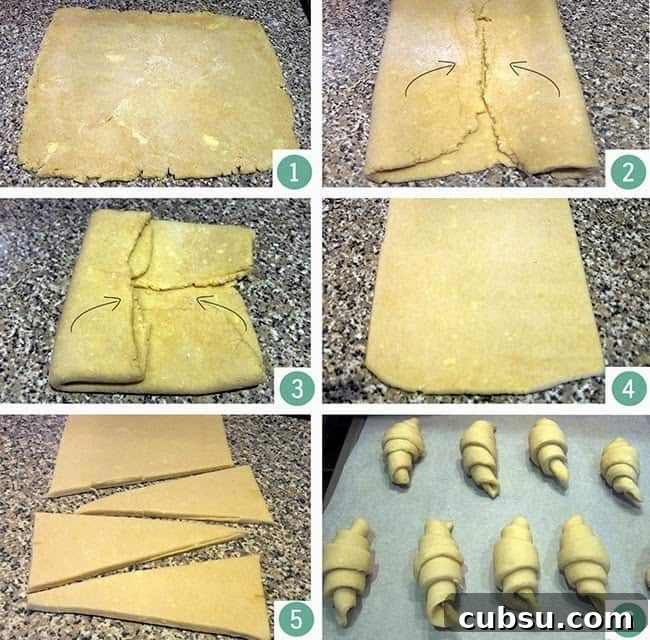
On a floured surface, roll the chilled dough into a rectangle about three times as long as it is wide and at least 4 mm thick. Trim the edges with a pastry scraper for neat layers.
Cut the dough into triangles roughly 30 cm (12 in) long with a base of about 8 cm (3 in). Make a small slit in the centre of each triangle base to help with rolling and shaping.
Gently stretch the corners and tip of each triangle, then roll them up from base to tip, tucking the tip underneath so the croissant holds its shape. Place each croissant, tip side down, on a tray lined with baking paper, spacing them a few inches apart.

Cover the croissants loosely with greased cling film and let them rise at room temperature for 2–3 hours until puffy. There are no shortcuts for this stage—the rise develops the lift and lightness.
Preheat the oven to 230°C (450°F). Brush the croissants with an egg wash (egg yolk beaten with a tablespoon of milk) and bake for 10 minutes. Reduce the oven temperature to 190°C (375°F) and bake another 5–10 minutes, or until deeply golden brown. Cool on a wire rack before serving.
Have you made this recipe? Share a photo on social media with the tag #supergoldenbakes — it always makes my day!

Quick and easy croissants from scratch
Ingredients
- 250 g (2 cups) strong bread flour
- 150 g (2/3 cup) cold unsalted butter, cubed
- 120 ml (1/2 cup) tepid milk
- 3 tbsp sugar
- 7 g (1 sachet) dry active yeast
- 1/2 tsp salt
- 1 egg yolk beaten with 1 tbsp milk, for glazing
Instructions
- Warm the milk to body temperature, whisk in sugar and yeast, and let stand until frothy. Ensure the milk cools completely before combining with butter.
- Process the flour and salt in a food processor. Add the cold cubed butter and pulse until the mixture looks like chunky breadcrumbs.
- Mix the flour-and-butter with the milk-and-yeast until the dough just comes together, leaving pea-sized butter pieces.
- Shape the dough into a square, wrap, and chill in the freezer for 30 minutes or in the fridge for a few hours.
- Roll the dough into a rectangle two to three times longer than it is wide, fold the short sides to the centre, rotate, and repeat the rolling and folding process three more times.
- Chill the dough wrapped in cling film for a couple of hours or overnight for best results.
- Roll the dough to a rectangle three times as long as it is wide and about 4 mm thick. Trim the edges and cut into triangles roughly 30 cm (12 in) long and 8 cm (3 in) at the base.
- Stretch each triangle slightly, roll from base to tip, and place tip-side down on a lined tray. Cover loosely and let rise 2–3 hours until puffy.
- Preheat oven to 230°C (450°F). Brush with egg wash, bake 10 minutes, then lower to 190°C (375°F) and bake another 5–10 minutes until deep golden. Cool on a wire rack before serving.
Nutrition
Calories: 369 kcal | Carbohydrates: 38 g | Protein: 6 g | Fat: 22 g | Saturated Fat: 13 g | Cholesterol: 56 mg | Sodium: 382 mg | Fiber: 1 g | Sugar: 7 g
Nutritional information is approximate and will vary with ingredients and portion sizes.