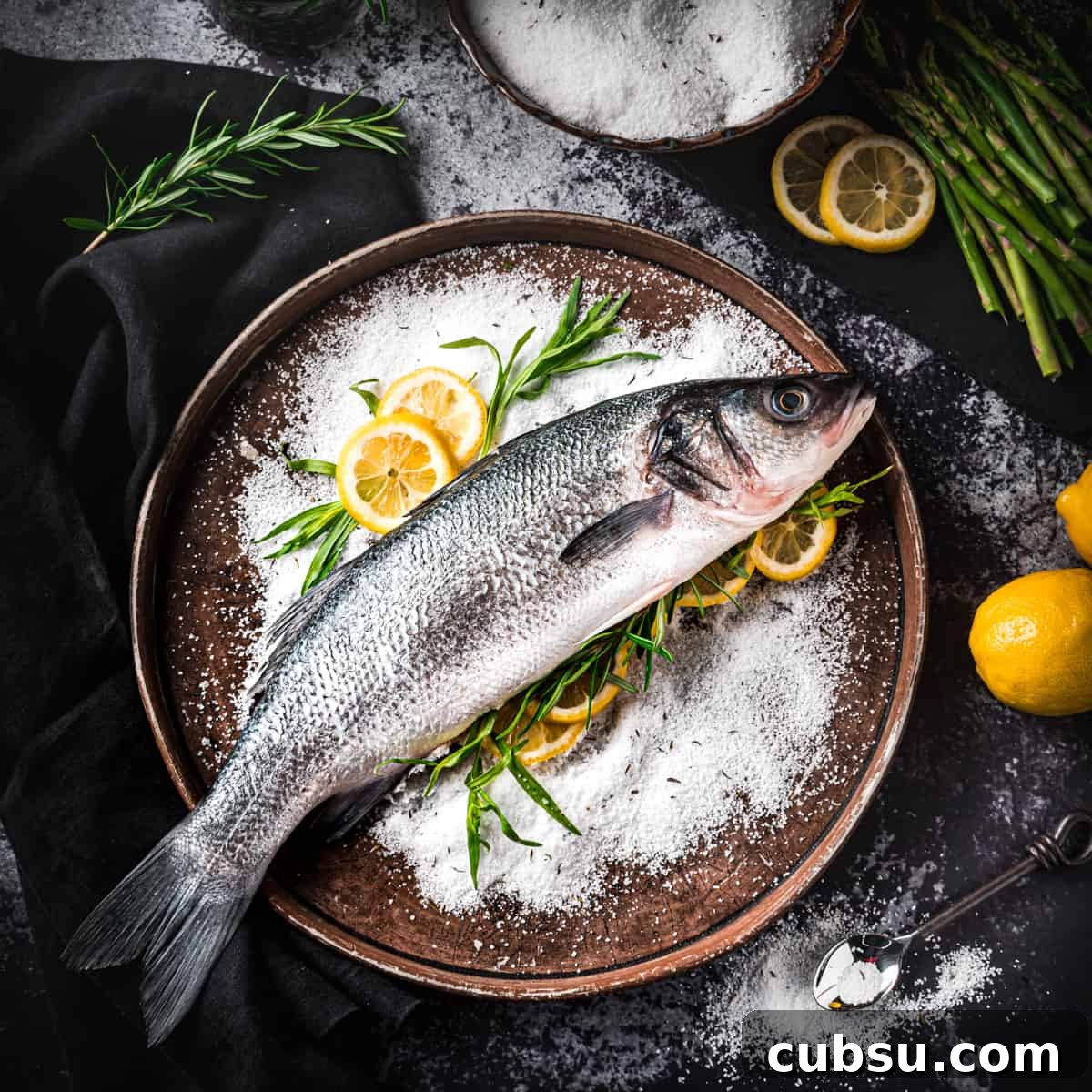
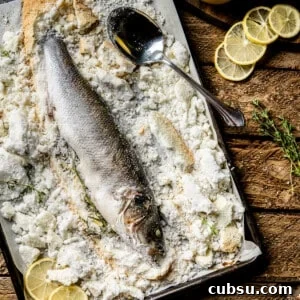
Salt-baked branzino is an elegant, easy way to serve whole sea bass that looks impressive but requires minimal effort. The fish is encased in a salt crust that steams it gently, preserving its silky texture and delicate flavor. When the crust is broken at the table, the fillets lift away cleanly for a dramatic presentation.
What is Branzino?
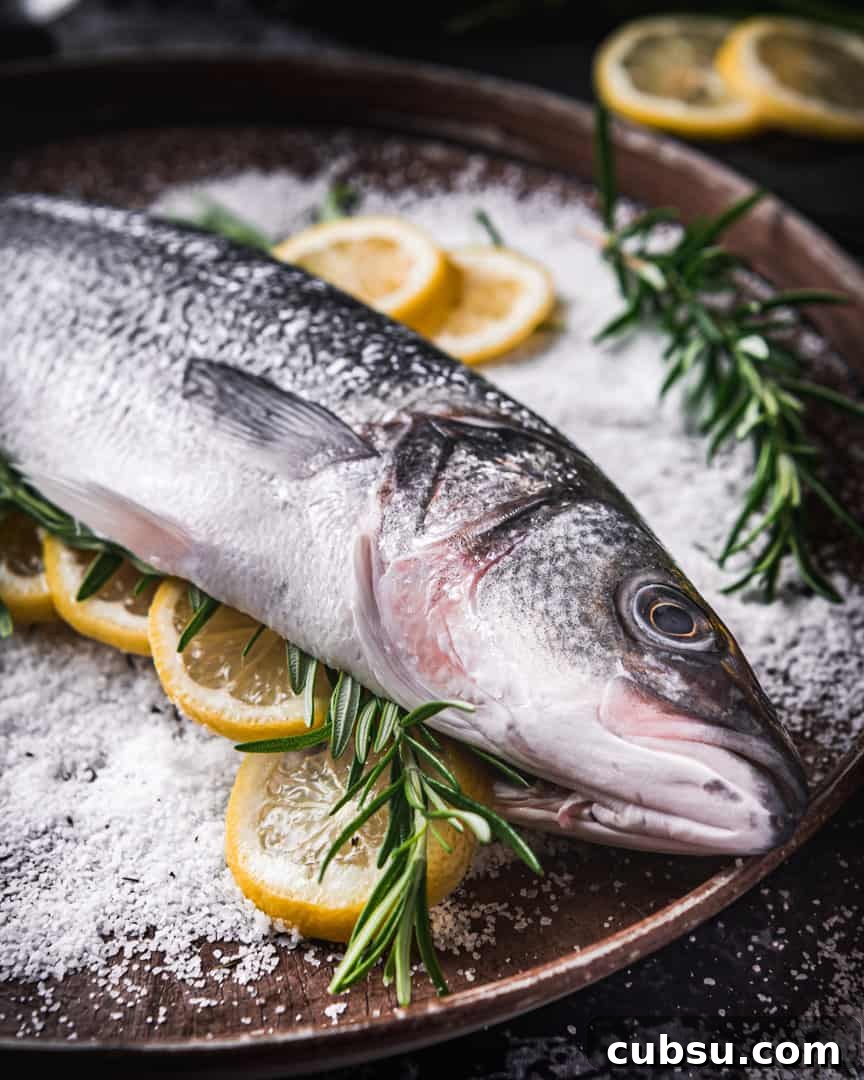
Branzino, also called European bass, is a mild, white, flaky fish prized in Mediterranean cooking. It’s versatile and widely enjoyed across southern Europe. When cooked properly, branzino has a tender, moist texture and a clean flavor that pairs well with citrus, fresh herbs, and light sauces.
Why Salt Bake Branzino?
Salt baking is an easy technique that seals the fish in a protective crust so it steams in its own juices without drying out. The result is moist, flavorful fillets with a refined texture and an impressive table-side reveal. Despite the dramatic presentation, the method is straightforward and forgiving.
The salt crust creates a dry steaming environment that concentrates the fish’s natural juices, producing a silky texture without making the dish overly salty. This technique highlights the fish itself, so you’ll often find the flavor clean and nuanced rather than overtly seasoned.
For the best results use coarse kosher salt for the crust and a sheet pan large enough for the whole fish to lie flat. Parchment paper under the fish makes cleanup easier.
What if I can’t find fresh Branzino?
If fresh branzino isn’t available, other firm white fish such as snapper work well with this method. Freshness matters: choose fish with clear, bright eyes that look lively rather than cloudy or sunken. Fresh fish should smell faintly of the sea, not fishy. Avoid fish with dull, dry eyes or any off odor.
What to Stuff Inside the Branzino
If the fish is extremely fresh, you can bake it plain to enjoy its natural flavor. If you’d like aromatic notes, stuff the cavity sparingly so the aromatics don’t overpower the fish. Popular options include lemon slices with thyme, rosemary and tarragon, or simply lemon alone. Fennel, limes, cilantro, or grapefruit are other options; stuffing also helps the fish retain its shape while cooking.
How to Eat Branzino
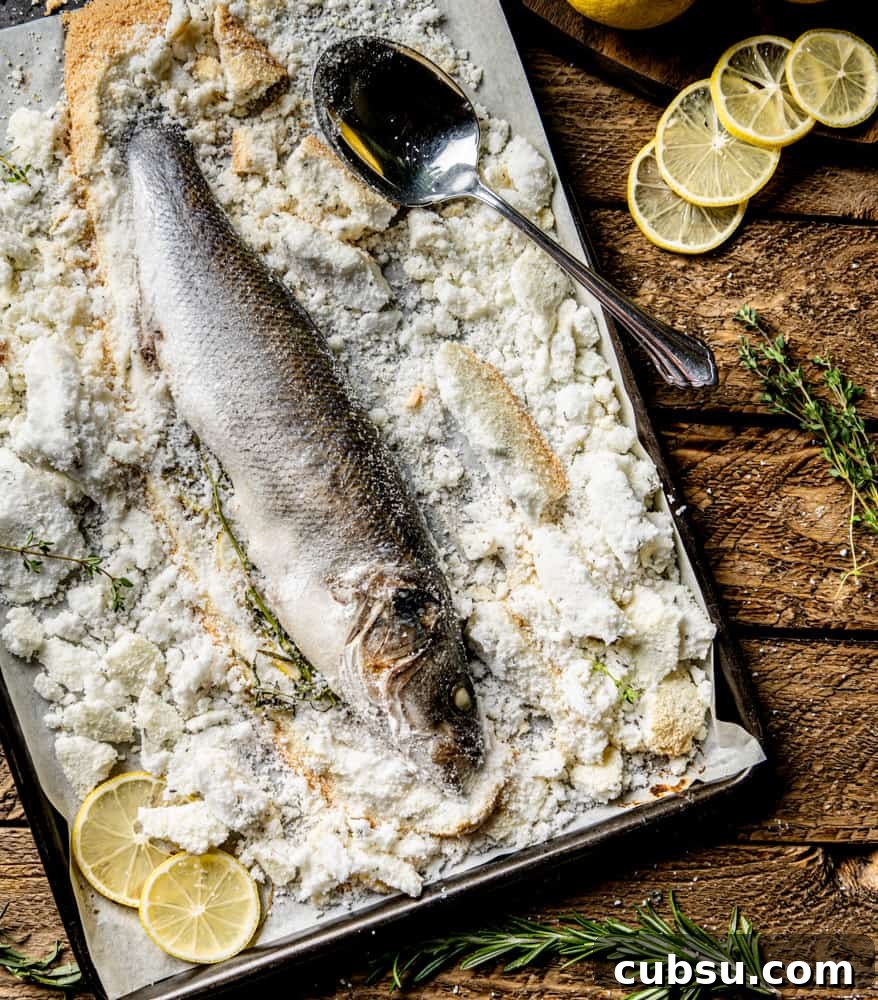
After roasting, crack away the salt dome with a serving spoon and remove the crust. Make a shallow cut through the skin behind the tail to the bone, then peel the skin from tail to head; it should come off easily. Slide a spoon along the spine to lift the fillet to a serving plate, then turn the fish over and repeat for the other side.
Does Salt-Baked Branzino Need a Sauce?
The fish is excellent served simply with a squeeze of lemon, but a light sauce can elevate it. A lemon beurre blanc is a classic option and pairs beautifully with the clean flavor of branzino. Other sauces that complement the fish include lemon-caper cream, mango-lime cream, or a bright citrus salsa. Choose a sauce that enhances without overpowering the delicate flesh.
Branzino Side Dishes
Branzino pairs well with fresh, bright sides. Consider:
- Parmesan herb asparagus with prosciutto and pine nuts
- Lemon risotto
- Creamy pesto pasta
- Sheet-pan chickpea and vegetable medley
Additional Branzino Ideas
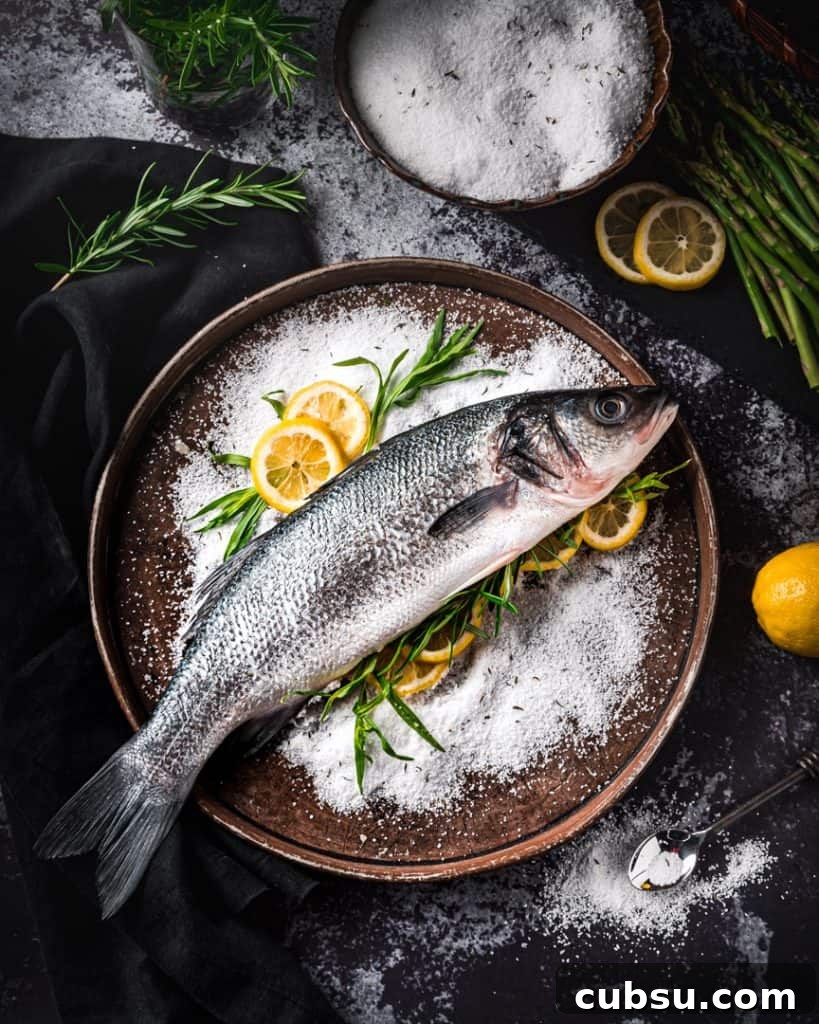
Salt-baked branzino is included in the Mangiamo! cookbook in a version served with a tarragon tomato cream sauce, along with other Italian-inspired recipes. If you try this method, feel free to leave a comment or share your result on social media.
Below is a clear, practical recipe for salt-baked branzino with a lemon beurre blanc that guides you through prep, roasting, and serving.
📖 Recipe
Salt Baked Branzino
Ingredients
- 1 whole branzino (2–3 lbs), scaled and cleaned
- 3 cups kosher salt
- 2 tbs dried thyme
- 3 egg whites
- 1 lemon, sliced
- 2 sprigs fresh tarragon
- 1 sprig fresh rosemary
Lemon Beurre Blanc
- ½ cup dry white wine (Sauvignon Blanc or Pinot Grigio)
- 6 black peppercorns
- 1 small shallot, chopped
- 2 tablespoon lemon juice
- 8 tbs (¼ lb) cold unsalted butter, cut into 8–10 pieces
Instructions
PREPARE THE PAN AND SALT
-
Preheat oven to 400°F (205°C).
-
Line a large roasting pan or sheet pan with parchment paper; it should be wider than the fish.
-
Combine the kosher salt, dried thyme, and egg whites in a bowl and mix with your hands until the mixture becomes a chunky paste. It should be slightly tacky but not wet.
PREPARE THE FISH
-
If needed, scale, gut, and remove the gills. Ask your fishmonger to do this if you prefer.
-
Trim any spiny fins that might be unpleasant when eating.
-
Stuff the cavity with lemon slices, tarragon, and rosemary. Place the fish on the parchment-lined pan.
CRUST THE FISH
-
Pack the salt mixture over and around the fish to form a tight seal about ¼ inch thick. Ensure there are no gaps and the fish is completely covered.
ROAST THE FISH
-
Bake in the preheated oven for 20 minutes. The salt dome will harden and may take on a light brown color where it browns slightly.
PREPARE THE SAUCE
-
While the fish roasts, combine the white wine, peppercorns, and chopped shallot in a small saucepan over medium heat. Bring to a gentle boil and reduce by half.
-
Strain the mixture, return the liquid to the pan, add lemon juice, and reduce until about 2 tablespoons remain. Keep warm on low.
-
When the fish is done, remove it from the oven and set aside while you finish the sauce.
-
Take the pan off the heat and let it cool slightly so it’s warm but not hot. Whisk in the cold butter pieces one at a time, emulsifying the sauce. If needed, briefly warm the pan on very low for a few seconds, but avoid overheating to prevent breaking the sauce.
-
Once the butter is incorporated, keep the sauce warm until ready to serve.
SERVE
-
Use a serving spoon to crack and remove the salt crust. Slice through the skin at the tail to the backbone and peel the skin from tail to head; it should come away easily.
-
Slide a spoon along the spine to lift the fillet to a clean plate, then flip the fish to remove the second fillet. Serve with lemon beurre blanc spooned over the fillets and extra on the side.