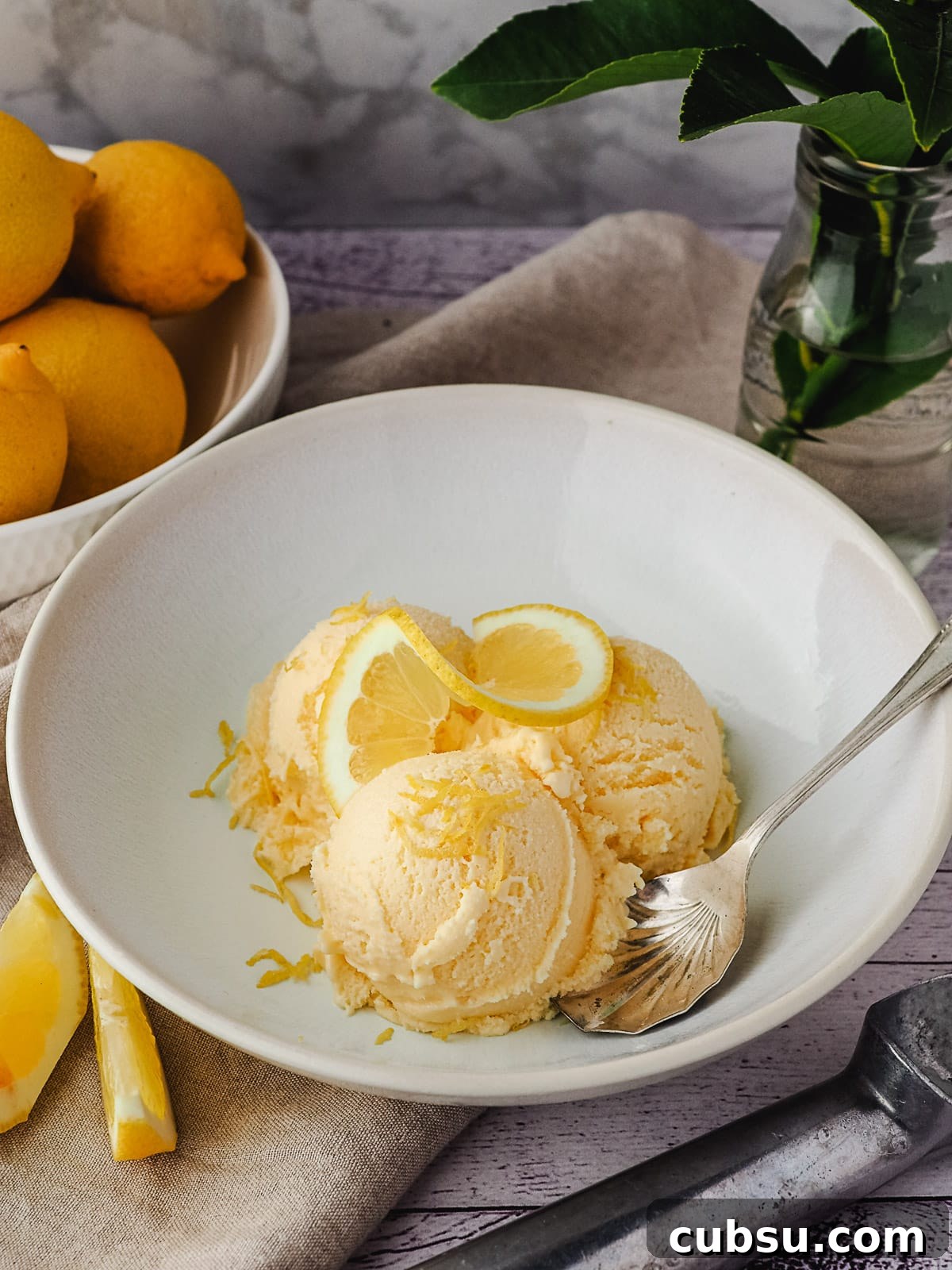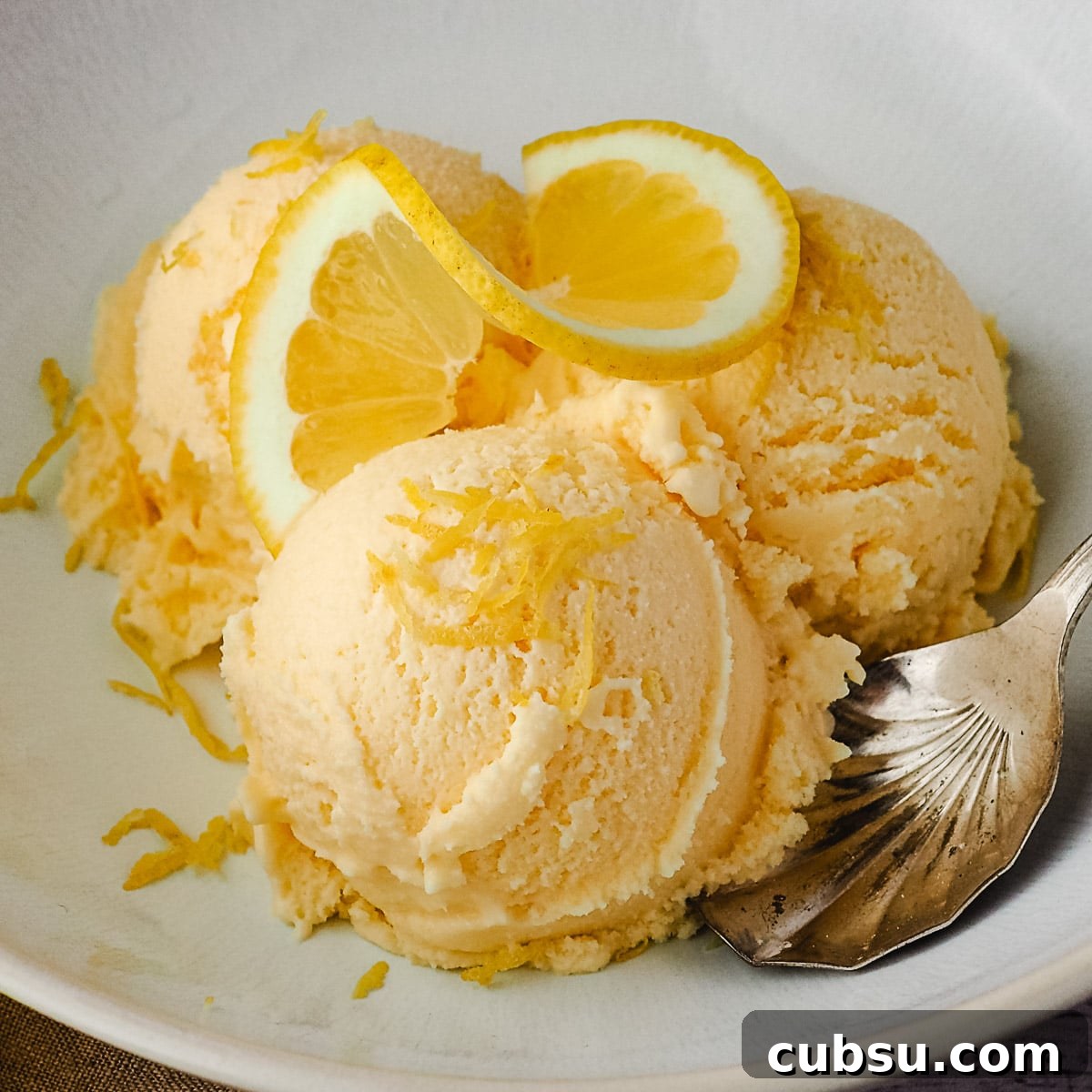
This homemade lemon ice cream is made from a classic custard base for a smooth, velvety texture and bright, juicy lemon flavor.
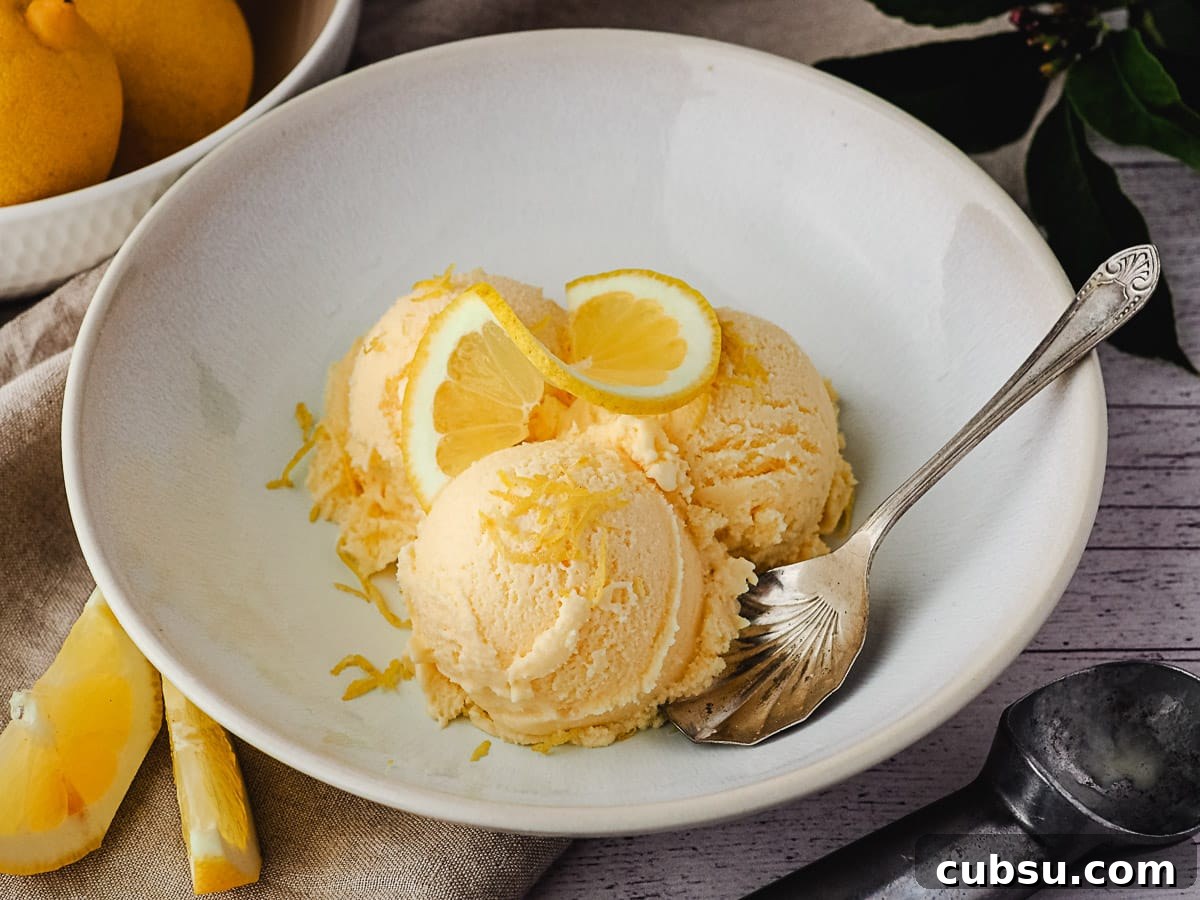
This lemon custard ice cream uses a French-style custard base combined with fresh lemon juice and zest, producing a creamy, tangy dessert that’s both refreshing and indulgent.
Recipe tips and frequently asked questions
What is lemon ice cream made of?
My version is made with fresh lemon juice and zest, egg yolks, cream, milk and sugar. Store-bought varieties may include stabilizers or other additives, so always check the label if you buy it ready-made.
What sort of lemons can I use?
Eureka and Lisbon lemons are common choices and work perfectly. Meyer lemons are sweeter and give a softer, fruitier note if you prefer a less sharp lemon flavor.
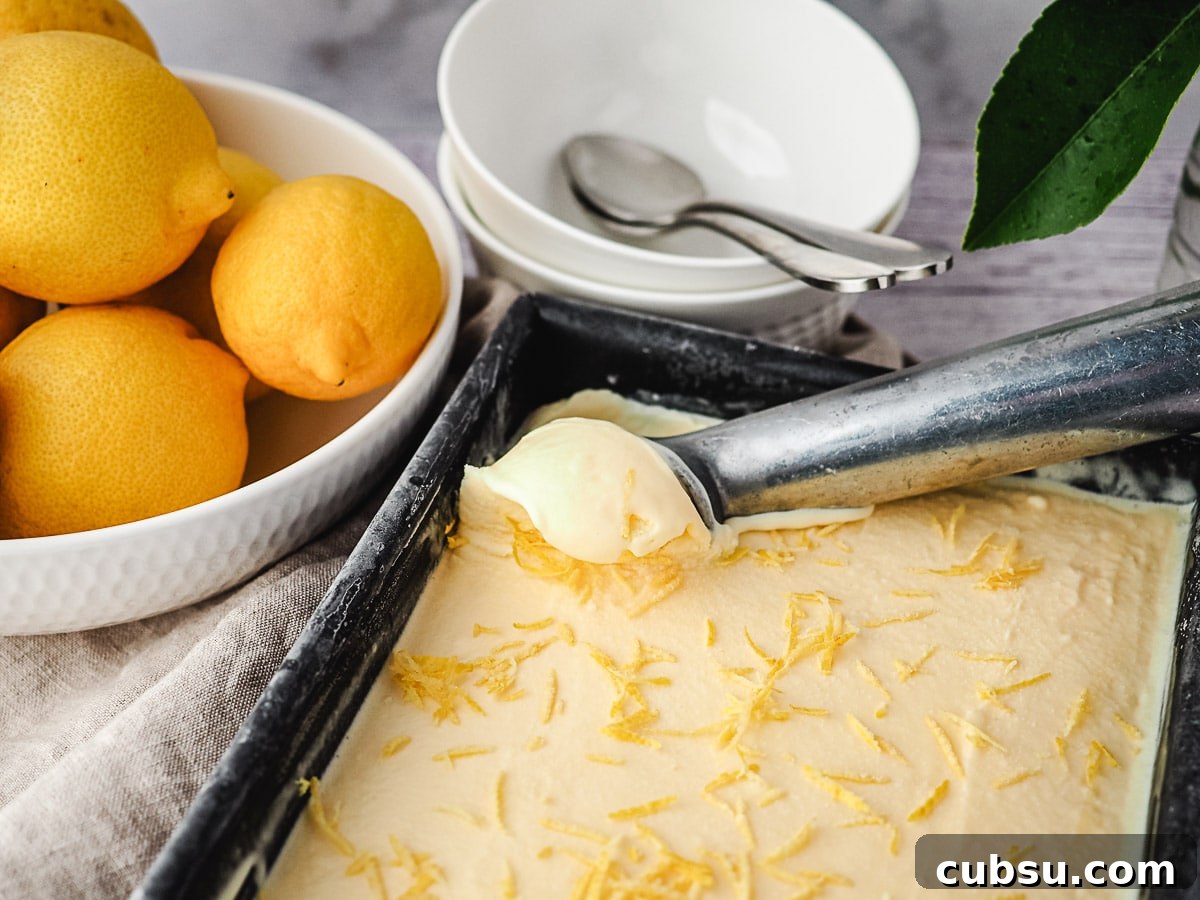
What to serve with this ice cream
This old-fashioned homemade lemon ice cream is delightful on its own. It also pairs well with:
- Another scoop of pistachio for contrast
- A bright drizzle of passion fruit curd or raspberry compote
- A warm apple and plum crumble
- Sweet, buttery strawberry rhubarb tartlets
- A slice of San Sebastian cheesecake for a decadent pairing
Can I make this without an ice cream maker?
Yes. Follow the recipe through the custard stage, then pour the chilled base into a frozen, chilled container. Freeze for one hour, remove and whisk vigorously (scraping the edges). Repeat every hour for two to three rounds until the texture resembles soft-serve, then freeze until firm.
Ingredients
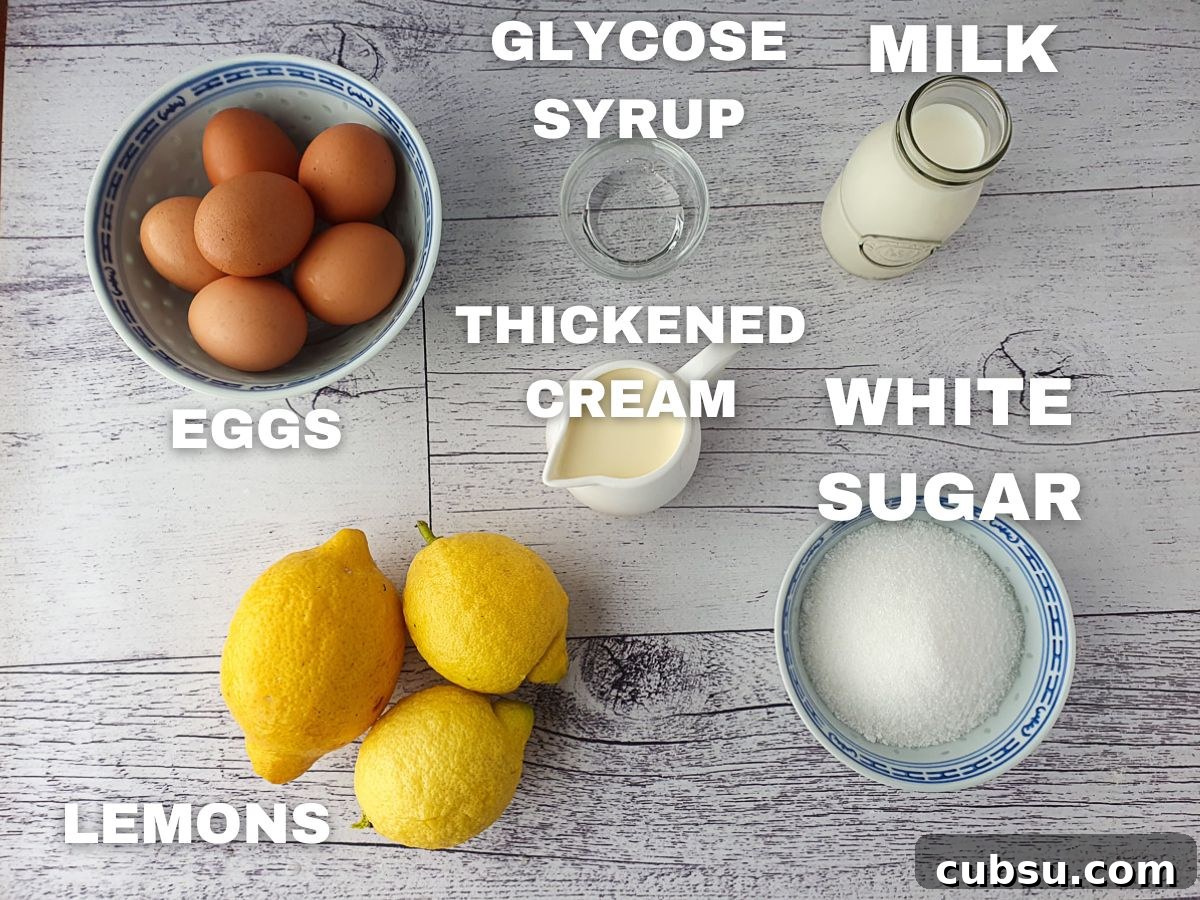
Lemons: You’ll use both juice and zest. Choose fruit that feels heavy for its size and is unwaxed if possible.
Egg yolks: Use large eggs and reserve the whites for another recipe.
Thickened cream: Around 34% fat. Heavy cream or whipping cream are suitable substitutes.
Milk: Full-fat milk (about 3.5% fat) gives the best texture.
Sugar: Regular white sugar works best; castor sugar is fine. Brown sugar will add caramel notes if you want to experiment.
Vanilla extract: Adds depth—use real vanilla or an extract to taste.
Glucose syrup: Also called confectioner’s glucose. A small amount improves scoopability by lowering the freezing point. Substitute light corn syrup or powdered dextrose if needed, but measure carefully.
How to make lemon ice cream
See the recipe card below for exact ingredient measures and full instructions.
Zest the lemons, then juice and strain them. If using a double boiler, bring the water to a simmer so the top pan won’t touch the boiling base.
Combine the milk, cream and lemon zest in a small saucepan and warm gently until just simmering.
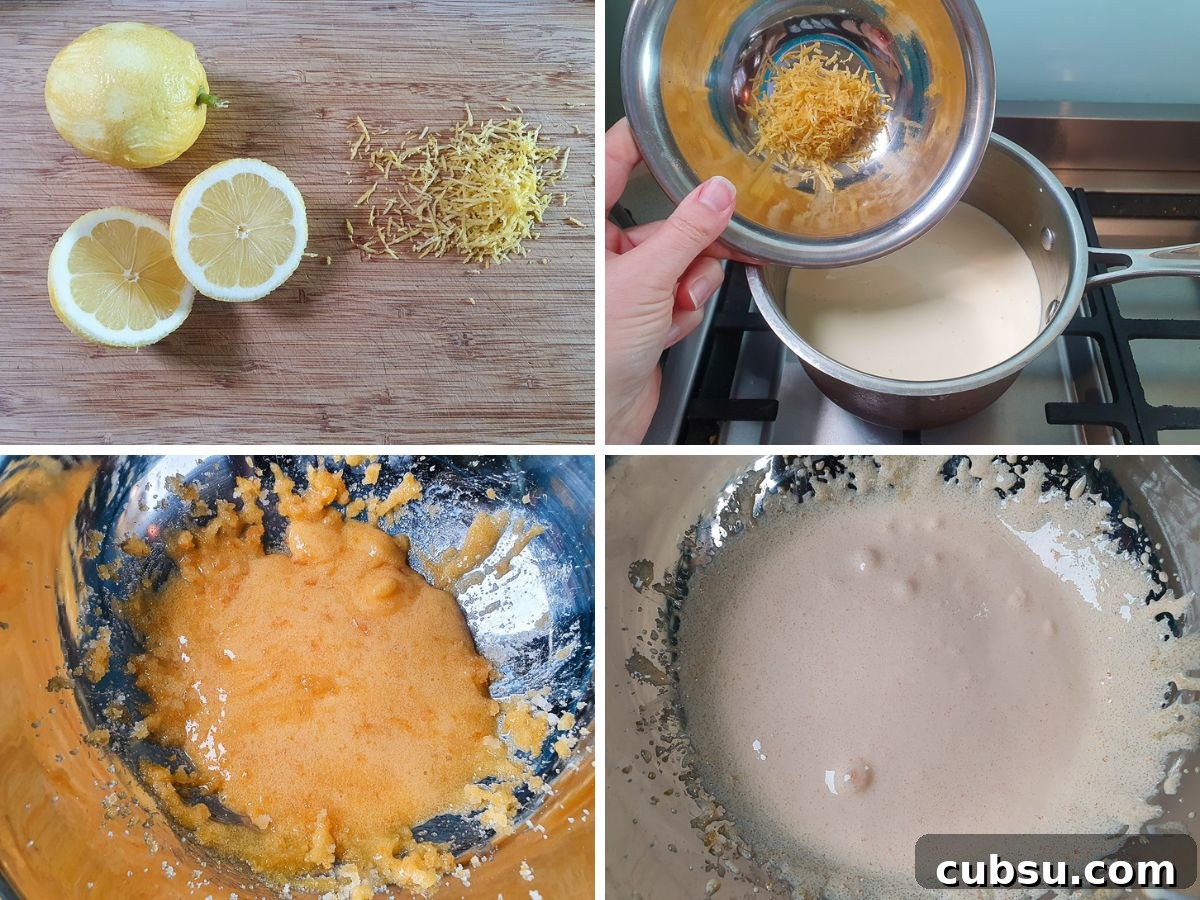
Whisk the egg yolks and sugar until pale and slightly thickened. Temper the yolks by slowly adding some of the warm milk-and-cream mixture a little at a time, whisking constantly to prevent curdling.
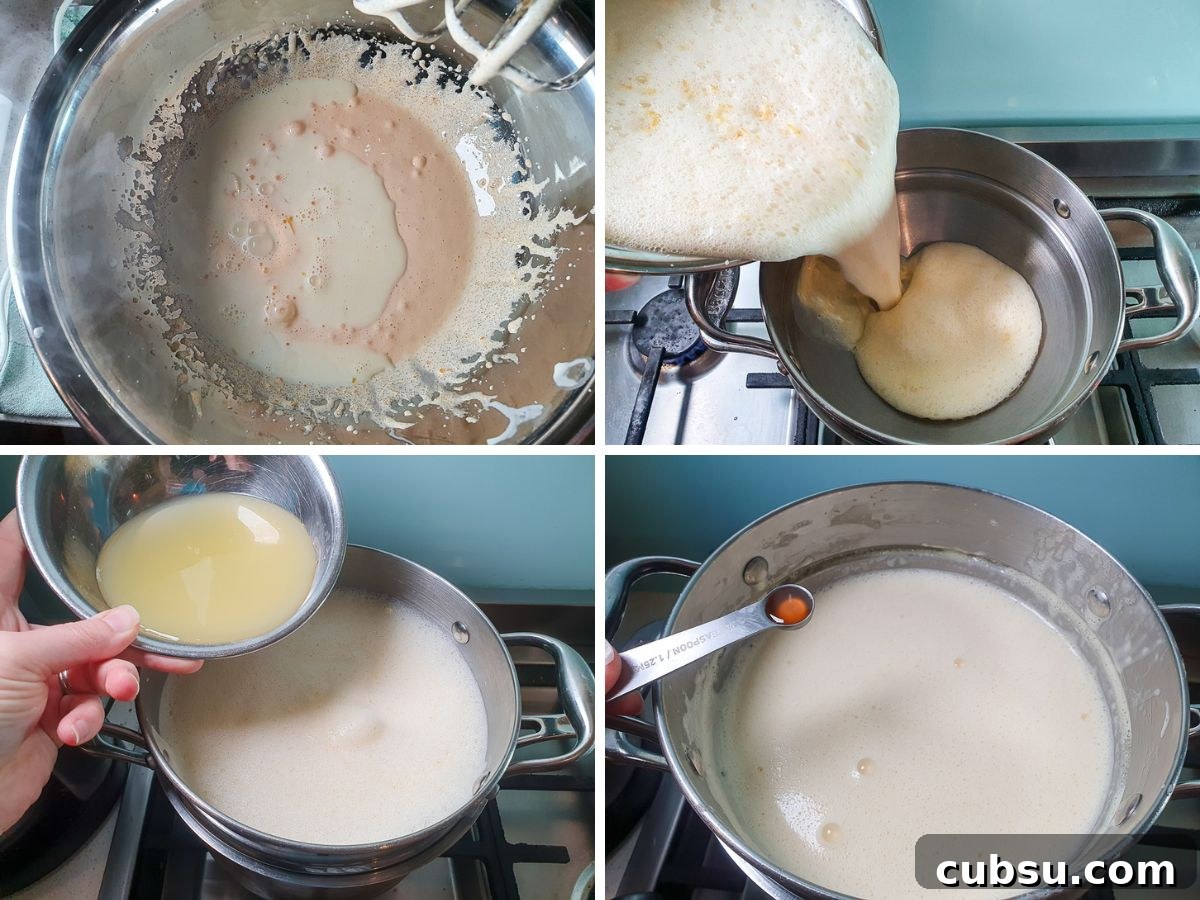
Once combined, return the mixture to the double boiler. Stir in the strained lemon juice and glucose syrup. Cook gently over low heat, stirring frequently and scraping the edges, until the custard thickens and coats the back of a spoon—this usually takes 5–15 minutes. If it heats too quickly or begins to bubble, remove from heat and cool slightly before continuing to avoid scrambling the eggs.
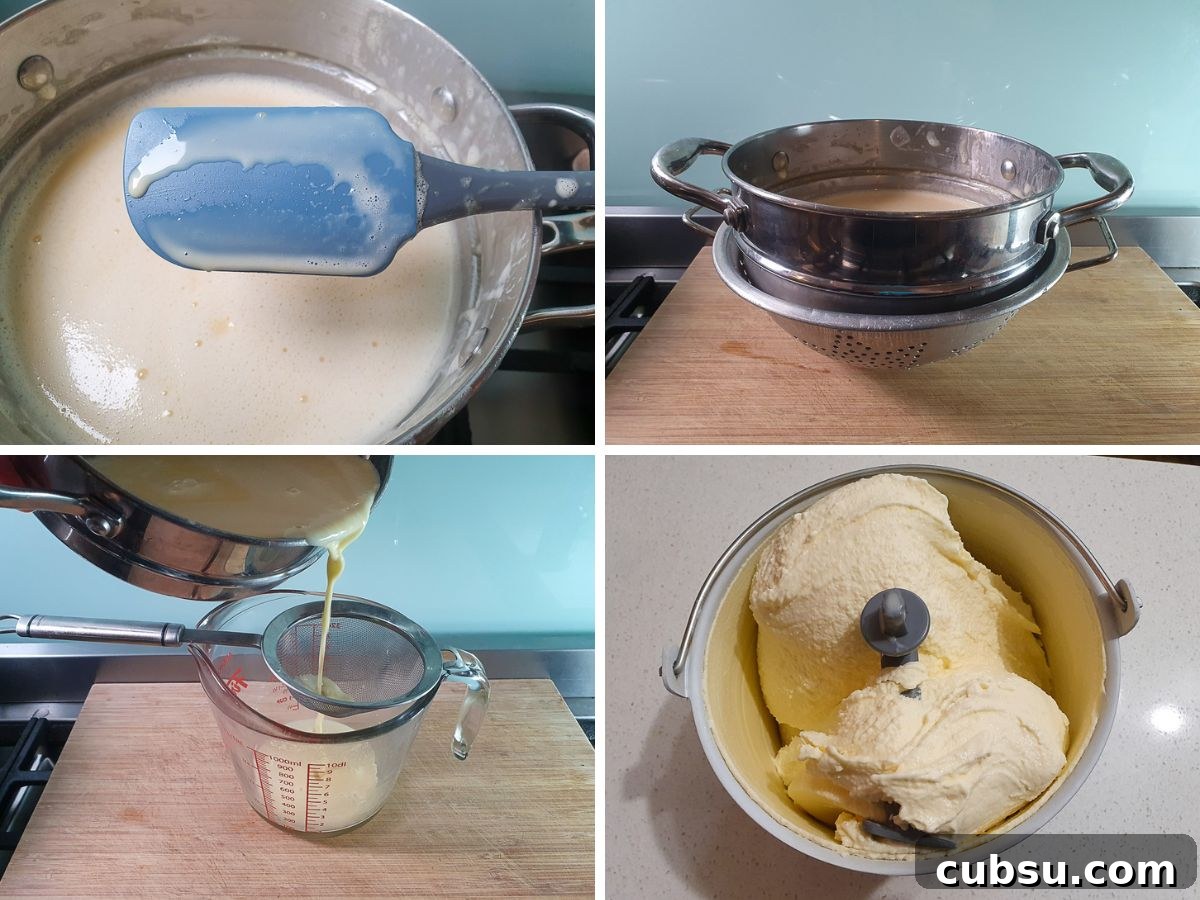
Hot tip: once the custard is cooked, remove the top pan and set it in a colander to cool quickly without further cooking.
Strain the custard through a fine sieve into a heat-proof container to remove zest and any solids. Chill the base thoroughly—at least four hours or preferably overnight.
Churn the chilled mixture in an ice cream maker until it reaches a soft-serve consistency, then transfer to a chilled, airtight container and freeze until firm (about four hours).
How to serve
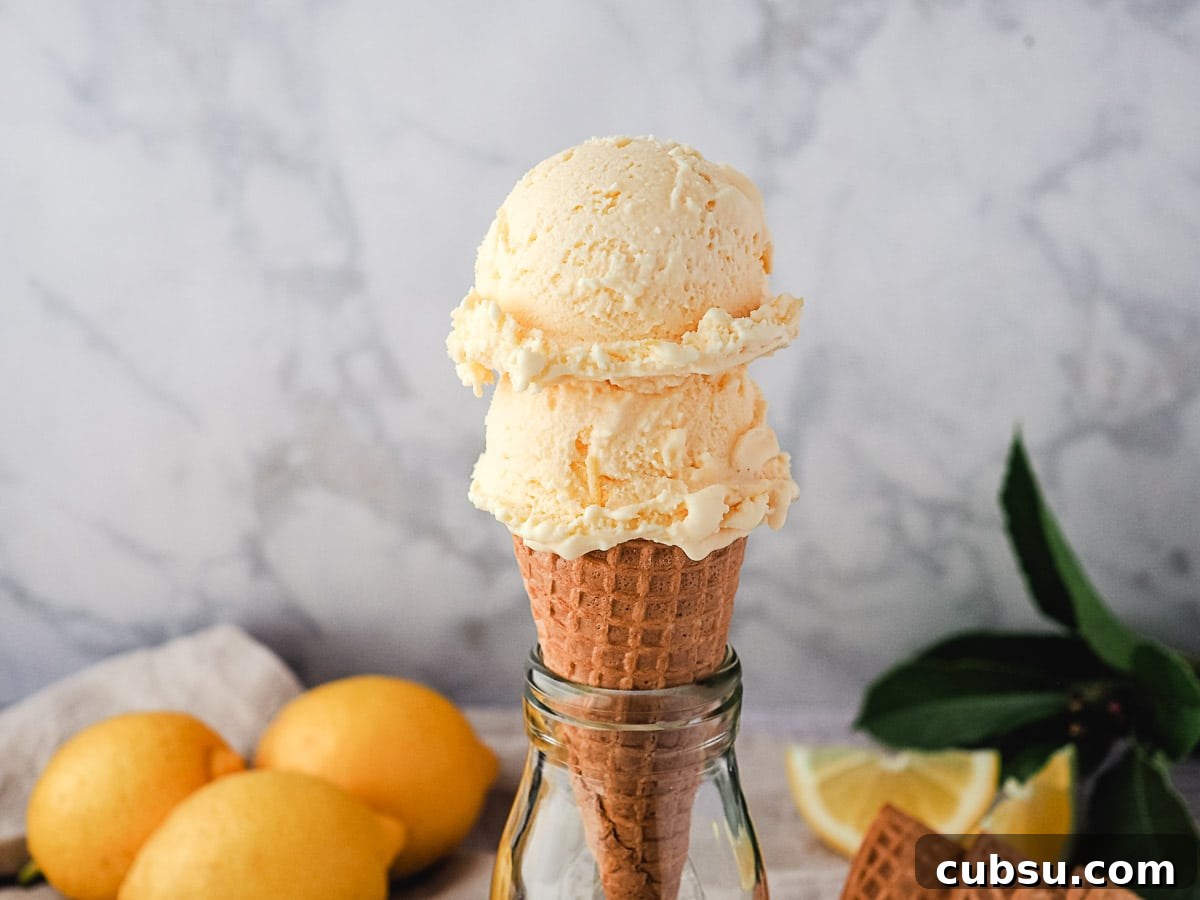
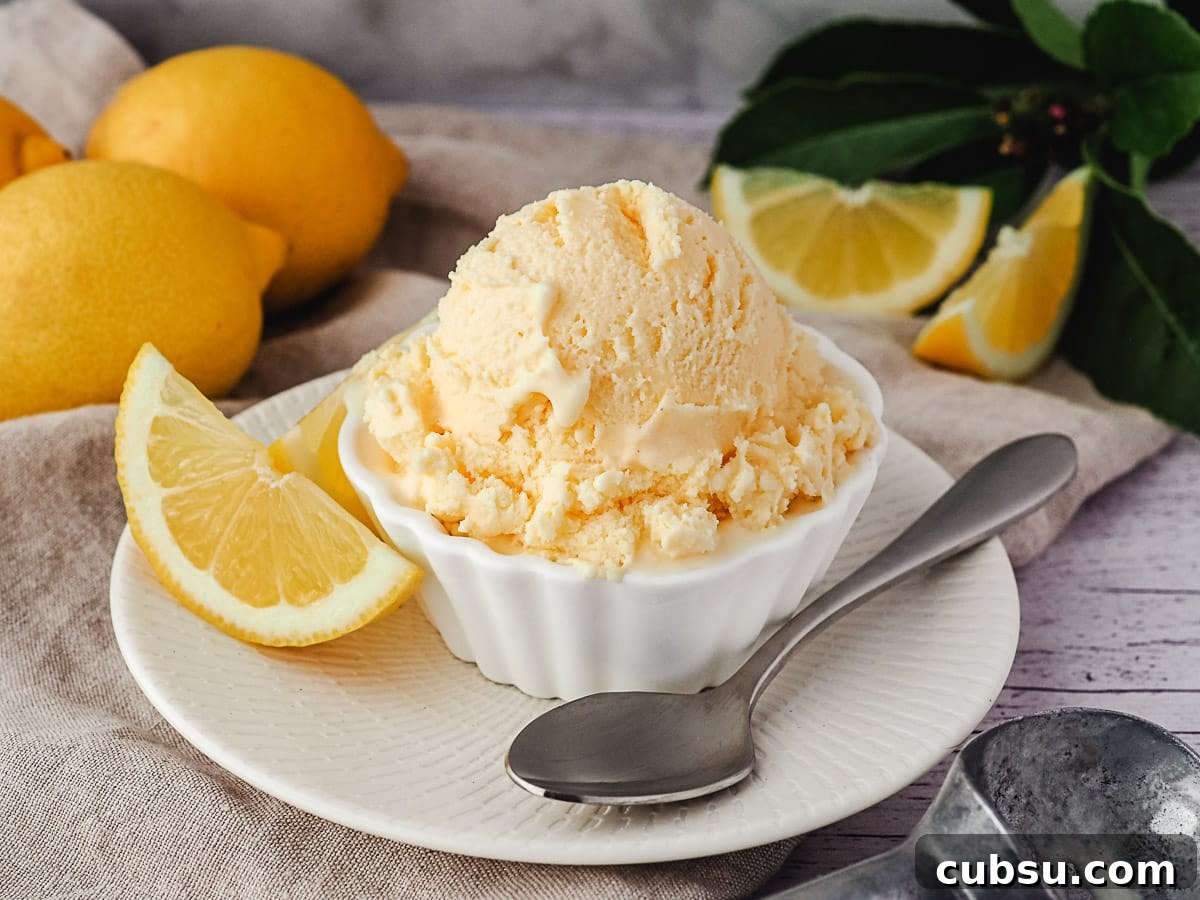
To serve, scoop directly from the freezer. The ice cream is excellent on its own or topped with a little extra lemon zest. It also complements fruit compotes or warm crumbles beautifully.
How to store
Keep the lemon ice cream in a sealed, airtight container in the freezer for up to two weeks. After that it may begin to develop ice crystals but will still taste good.
Looking for more ice cream recipes?
Try other custard-style flavors like raspberry, strawberry, pumpkin spice or pistachio to expand your homemade ice cream repertoire.
📋 Recipe
Lemon Ice Cream
Equipment
- ice cream maker or churner
Ingredients
- 2/3 cup (145 g) sugar
- 4 large egg yolks
- 3/4 cup (185 ml) milk
- 2 cups (500 ml) thickened cream
- 3/4 cup (185 ml) strained lemon juice
- 1/2 tablespoon (15 g) glucose syrup
Instructions
- Zest and juice the lemons; strain the juice.
- If using a double boiler, bring water to a simmer so the top pan heats gently.
- Heat milk, cream and lemon zest over medium-low until just simmering.
- Beat egg yolks with sugar until pale. Temper the yolks by adding warmed milk a little at a time, whisking constantly.
- Return the combined mixture to the double boiler, add lemon juice and glucose syrup, and mix well. If you don’t have a double boiler, cook very gently in a saucepan and stir constantly to avoid curdling.
- Cook over low heat, stirring and scraping the edges, until the custard thickens and coats the back of a spoon (5–15 minutes).
- If it steams or bubbles too much, remove from heat and cool slightly before continuing to avoid scrambling the eggs.
- Remove from heat, set the top pan in a colander to cool briefly, then strain into a heat-proof container to remove zest and any solids. Chill the custard for at least four hours or overnight.
- Churn the chilled base in an ice cream maker until it reaches soft-serve consistency. Quickly transfer to a chilled, airtight container and freeze until firm.
- To serve, scoop and enjoy. Sprinkle extra lemon zest if you like.
Notes
- Eureka, Lisbon or Meyer lemons all work well—Meyer lemons are sweeter and more delicate.
- Glucose syrup improves texture and scoopability. If omitted, the ice cream will set firmer and may need a few minutes at room temperature to soften before serving.
- For a stronger lemon punch, you can replace up to 1/4 of the milk with additional lemon juice; this intensifies the flavor but may not suit all tastes.
Nutrition
Calories: 438 kcal; Carbohydrates: 34 g; Protein: 5 g; Fat: 33 g; Saturated Fat: 20 g; Sugar: 31 g; Vitamin C: 12 mg. (Estimates only—calculate using your ingredient brands for accuracy.)
Join the community!
Pin it for later!