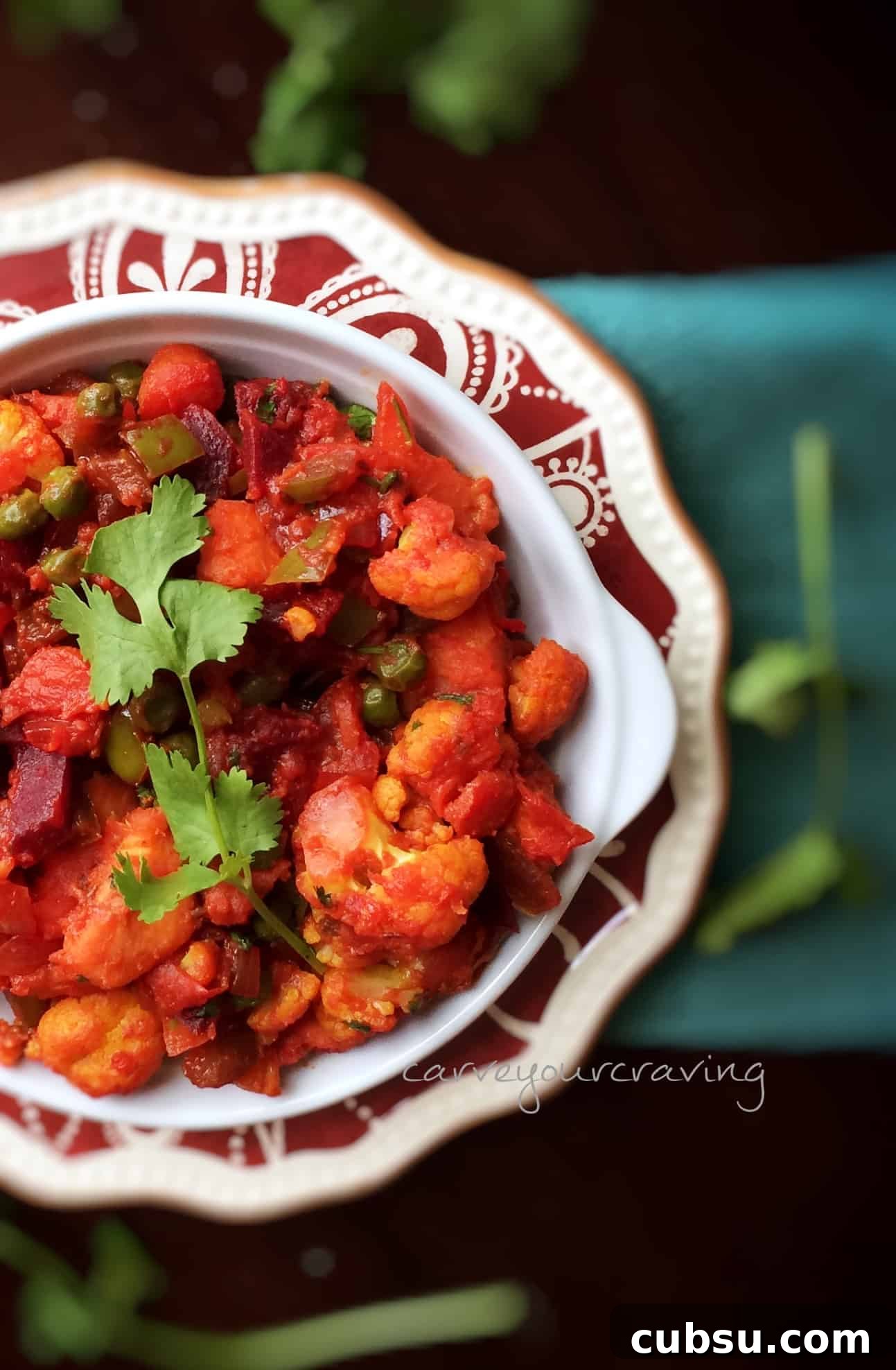
Let’s talk about daily meals. Many readers have asked for simple, everyday subzi ideas—thank you for the requests. Today I’m sharing one of our household favorites: a healthy mixed vegetable subzi with a beetroot boost.
Until recently, beetroot rarely appeared in our meals—perhaps once a month or two. Now I make a point of buying a bunch every two weeks and using it in different ways.
Beetroot is a powerful, nutrient-dense vegetable. It’s rich in iron, potassium, antioxidants, folate and essential vitamins, and contains no fat. It helps build stamina, supports hemoglobin levels, aids immunity, helps stabilize blood pressure and supports detoxification, among other benefits.
I try to include hearty, wholesome vegetables in our family meals. Beetroot used to be an occasional soup ingredient or a sandwich slice, but now it features regularly. Besides adding a lovely red or pink hue to dishes, it contributes valuable nutrients.
Mixed vegetables are a versatile way to include many vegetables in one meal and a perfect use for leftovers. This particular mix vegetable subzi is a regular at our table. I love how the beetroot gives the curry a pretty red tint without relying on heavy spices like paprika—my child especially enjoys it.
What vegetables I used
Beetroot, potatoes, onions, cauliflower, carrots, peas, zucchini. Use as many or as few vegetables as you like—adapt to what you have on hand.
For this version I used Indian spices and a small optional addition: mustard sauce. It may sound unusual, but a dash of mustard sauce adds a pleasant tang to several subzis I make. It’s completely optional—don’t buy it just for this recipe if you don’t already have it. I often use mayonnaise and mustard beyond sandwiches; they work well in a variety of dishes.
This is a mostly dry mix veg subzi; sometimes I add tomatoes for extra flavor.
There’s no single right way to make mixed vegetables—many versions exist. The key is the order in which you add and cook the vegetables so everything cooks evenly.
Highlights
Vegan
Gluten free
Nutritious
Looks vibrant without many spices
Ideal for everyday meals
If you enjoy beetroot, you might also like these recipes using beetroot found on the blog.
Here is a short step-by-step pictorial followed by the recipe.
The result is a delicious, healthy mixed vegetable subzi with a beetroot boost. We enjoyed it with boondi raita and lachcha paratha.

Print recipe
healthy mix vegetable subzi with beetroot boost
Ingredients
- 400 grams desired assorted vegetables, diced*
- (I used cauliflower, peas, carrots, zucchini)
- 1 large beetroot, peeled and diced
- 1 onion, chopped
- 2 small potatoes, diced
- 3 tablespoons cooking oil
- ¼ teaspoon turmeric powder
- 1 teaspoon coriander powder
- 2 teaspoons grated ginger
- 3-4 garlic cloves, grated
- 1 teaspoon chili powder*
- 1 teaspoon garam masala*
- 2 teaspoons ground peanut powder
- 2 teaspoons mustard sauce* (optional)
- 1 teaspoon crushed kasoori methi
- Salt to taste
- ¼ cup water (adjust as needed)
Instructions
-
Heat oil in a heavy-bottomed or nonstick pan. When warm, add the diced potatoes with a pinch of salt and cook until they begin to soften, about 2 minutes.
-
Add the chopped onions and cook for 30 seconds. Stir in the grated ginger and garlic and cook another 30 seconds. Add turmeric and coriander powder, chili powder and garam masala.
-
Add the diced beetroot and cook for about 3 minutes so it starts to soften and release color.
-
Add cauliflower, carrots and the ground peanut powder. Mix well to combine.
-
Add a little water as needed, then cover and cook for 2 minutes.
-
Uncover and add the zucchini and peas. Add more water if required to prevent sticking.
-
Stir in the mustard sauce if using, then cover and cook for another minute until vegetables are tender but still hold their shape.
-
Sprinkle crushed kasoori methi, give a final mix and adjust salt to taste.
-
Serve this healthy, nutritious subzi hot with roti, rice, quinoa or any grain of your choice.
Notes
Use any vegetables you prefer or have available.
Skip the mustard sauce if you don’t have it; you can substitute half the quantity with kasundi paste if desired.
Increase ingredient quantities to scale the recipe for more servings.
Nutrition
Enjoy this subzi in sandwiches, wraps, or with roti, rice, quinoa or any grain—it’s versatile and adaptable to your preferences.
A question for you
Is there a vegetable you’ve wanted to include more often in meals but haven’t managed to? Which vegetable have you overlooked and what would help you add it to your routine? Share your thoughts so we can inspire one another to cook healthy, hearty meals. Leave queries, suggestions or requests in the comments or send a message on the Facebook page.
I hope you try this recipe—I’d love to hear your feedback. If you make any of my recipes, please share photos and a few words about your experience.
Happy cooking!
Please share the recipe, and if you do, kindly link back to the original post instead of reproducing text or images without permission.