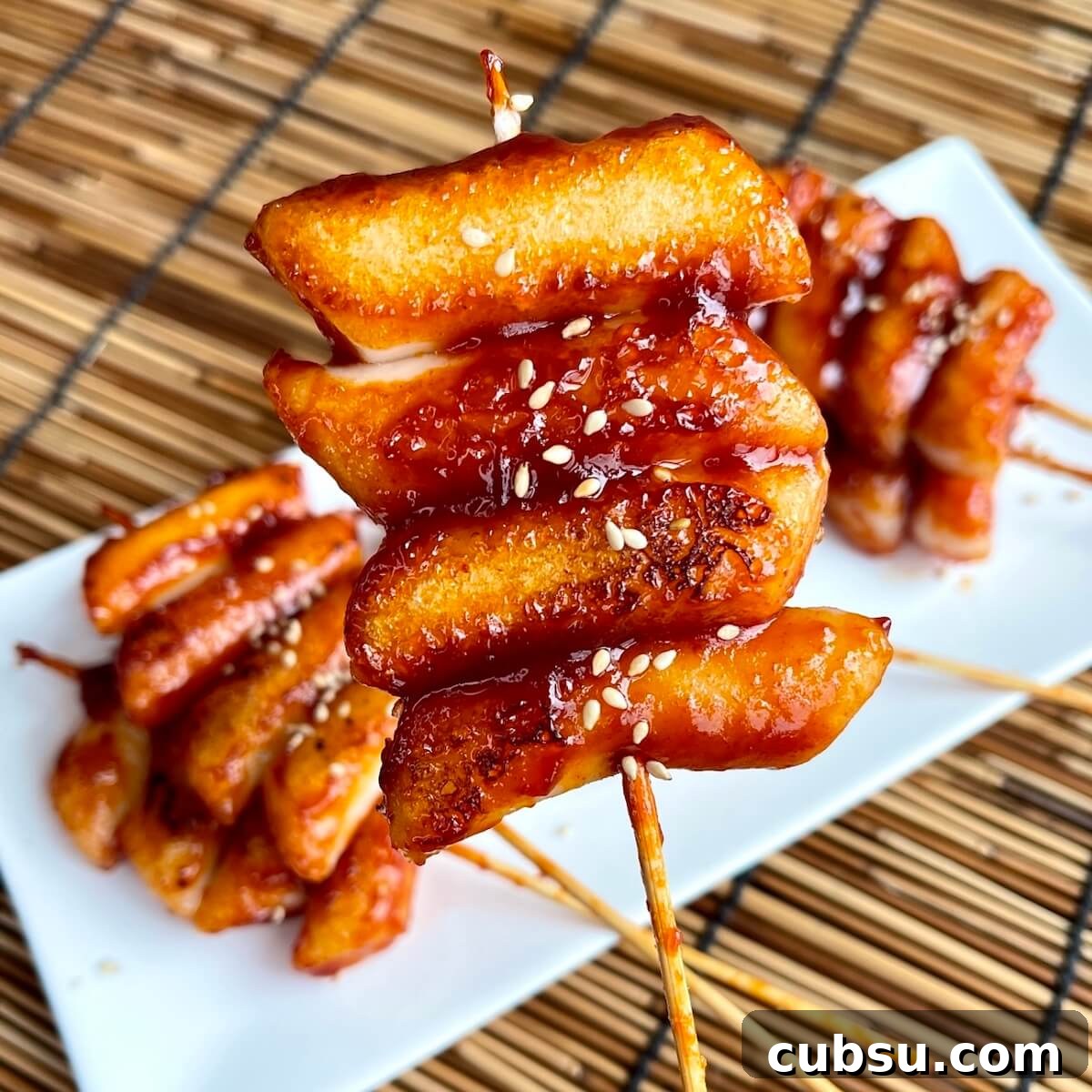
These rice cake skewers are an irresistible Korean street snack that come together quickly. They balance crisp edges and a tender interior with chewy rice cake texture, and a glaze that is at once sweet, salty and mildly spicy — all the best contrasts in one bite.
Korean street food
Rice cake skewers, known as tteok kochi (떡꼬치), are a common sight across Seoul’s streets. Vendors sell them as convenient grab-and-go snacks that are filling, satisfying and inexpensive. The skewers are perfect for a quick bite when you’re short on time, and they also make a great party snack or appetizer.
Making tteok kochi at home is easy and rewarding. The recipe uses a handful of staple Korean ingredients and can be adjusted to your taste — if you prefer more heat, add extra gochujang or gochugaru; if you want sweeter, increase the rice syrup or sugar slightly. Preparing them yourself also gives you control over texture, sauce thickness and garnish.
Buying rice cakes
Fresh rice cakes are ideal and often available at Korean markets or specialist stores. If fresh ones aren’t an option, refrigerated rice cakes are a good alternative and typically have a pleasant texture after brief boiling. Avoid frozen rice cakes when possible, as freezing can cause cracking and a chewier, tougher bite. If you’re unable to find rice cakes locally, many grocery sources and markets stock them seasonally or in the refrigerated section.
How to prepare
Before cooking, rice cakes sometimes have a light coating of starchy residue. If they are not fresh, rinse them quickly in cold water to remove any powdery starch, then drain. Boil in water for 1–2 minutes until they soften slightly — take care not to overcook, which can make them gummy. After boiling, rinse with cold water and drain well.
Thread the rice cakes onto bamboo skewers, typically four pieces per skewer. Laying the rice cakes out on a cutting board and guiding the skewer through helps keep them evenly spaced and prevents splitting. Allowing the skewers to air-dry a bit reduces oil splatter when frying.
Heat a pan with 1–2 tablespoons of neutral oil over medium-high heat. Fry the skewers, turning occasionally, until the outside develops a crisp, golden surface and the cakes are warmed through. Remove the skewers and set them aside while you make the sauce in the same pan.
Sauce ingredients:
- soy sauce
- ketchup
- water
- rice syrup
- gochujang (Korean red pepper paste)
- gochugaru (Korean red pepper flakes)
- sugar
- toasted sesame seeds & scallions for garnish
To make the glaze, remove most of the oil from the pan, leaving just a few drops. Add the sauce ingredients and cook over low heat, stirring frequently until the mixture thickens and becomes glossy. Return the skewers to the pan and brush the sauce generously onto each skewer, letting them simmer briefly so the glaze clings and caramelizes slightly. If you prefer, cook the sauce to a thicker consistency and serve it on the side as a dip.
Finish with a sprinkle of toasted sesame seeds and finely sliced scallions for texture and brightness. Serve the skewers hot — they taste best when freshly glazed and still a little sticky on the outside with a soft chew inside.
Tips and variations
- For extra crispiness, dry the boiled rice cakes well before frying, and use a hot pan so they brown quickly without absorbing excess oil.
- Adjust the heat by varying the gochujang and gochugaru amounts. A milder glaze can be achieved by reducing those ingredients and adding more ketchup or rice syrup.
- Add sesame oil to the sauce for a nutty aroma, or a splash of rice vinegar for a hint of acidity if you like a tangy contrast.
- Try alternative garnishes such as toasted crushed peanuts, thinly sliced nori, or a drizzle of mayonnaise for a fusion twist.
Recipe details
- Author: Jasmine and Tea
- Total time: 15 minutes (prep 5 minutes, cook 10 minutes)
- Yield: about 6 skewers (roughly 4 rice cakes per skewer)
- Cuisine: Korean