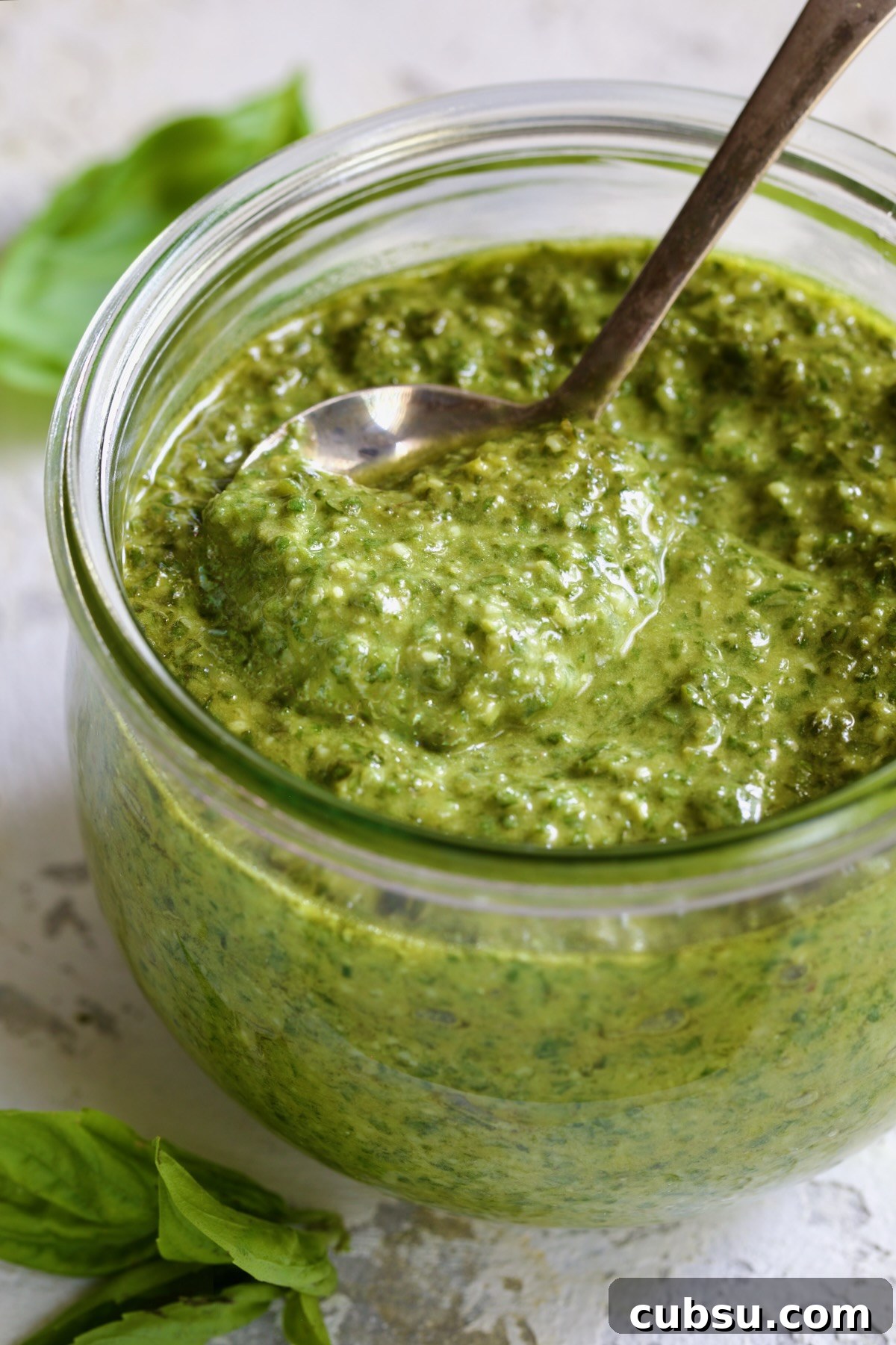
Pesto Genovese is an Italian classic that celebrates fresh summer basil. It’s the ideal way to use a bounty of basil while creating a bright, flavorful sauce. Below are clear tips and a straightforward method for making traditional basil pesto with a food processor. For a similar summery condiment, try a peach chutney when peaches are in season.
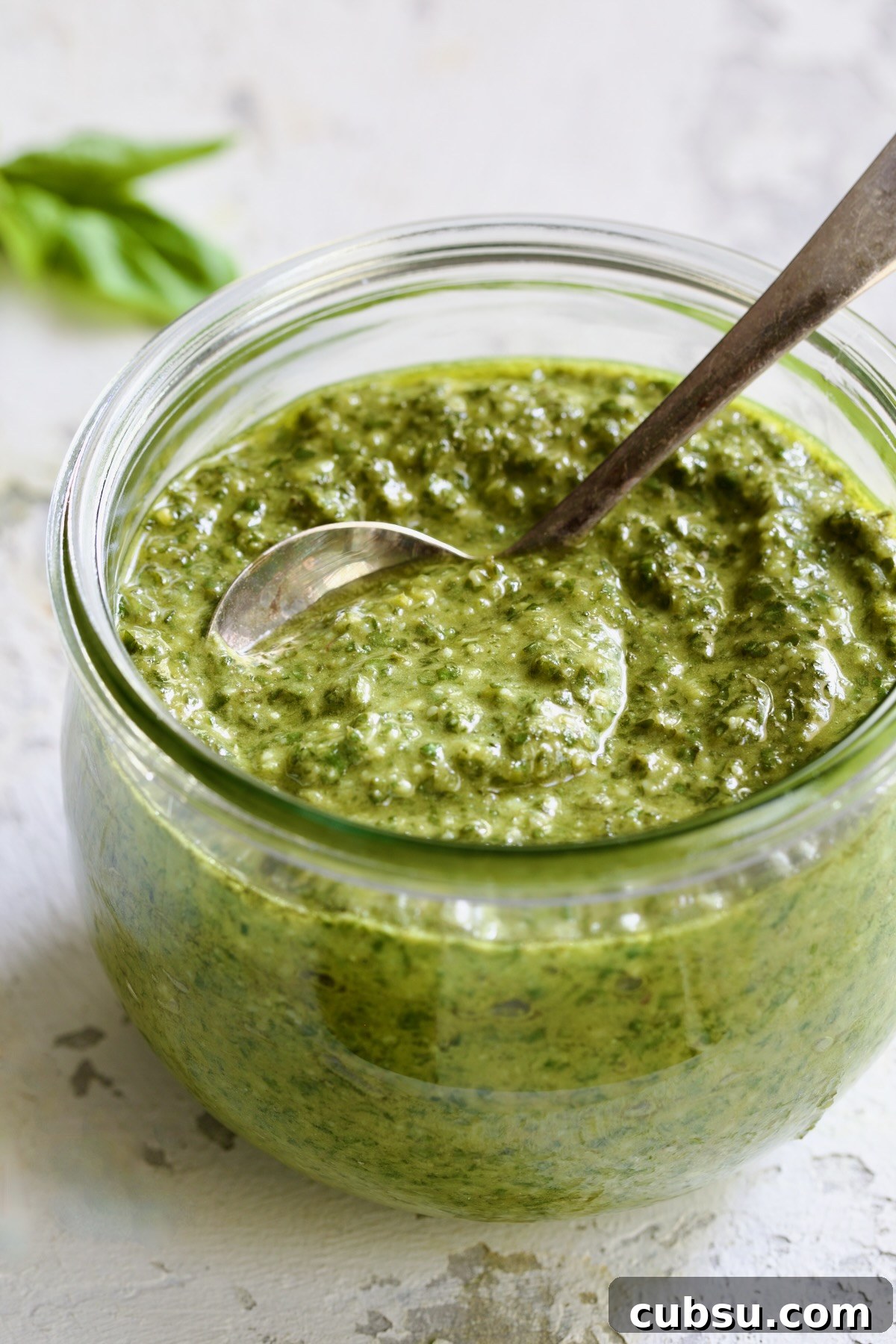
Why This Recipe is a Keeper!
While you can make pesto from many greens, Pesto Genovese made with fresh basil is the quintessential version. The classic recipe balances basil leaves, pine nuts, two cheeses, garlic, and extra-virgin olive oil to create a smooth, emulsified sauce.
Traditionally pesto is made in a mortar and pestle, but a food processor delivers an effortless, creamy result in much less time. Use it tossed with pasta, spread on crusty bread, stirred into soups, or layered in lasagna for an instant flavor boost.
This classic basil pesto is:
- Easy — made quickly in a food processor.
- Balanced and flavorful — the cheeses, nuts, garlic, and basil should sing together.
- Versatile — great on pasta, sandwiches, roasted vegetables, or stirred into soups and sauces.
- Freezer-friendly — freeze portions to enjoy the taste of summer year-round.
Let’s make it!
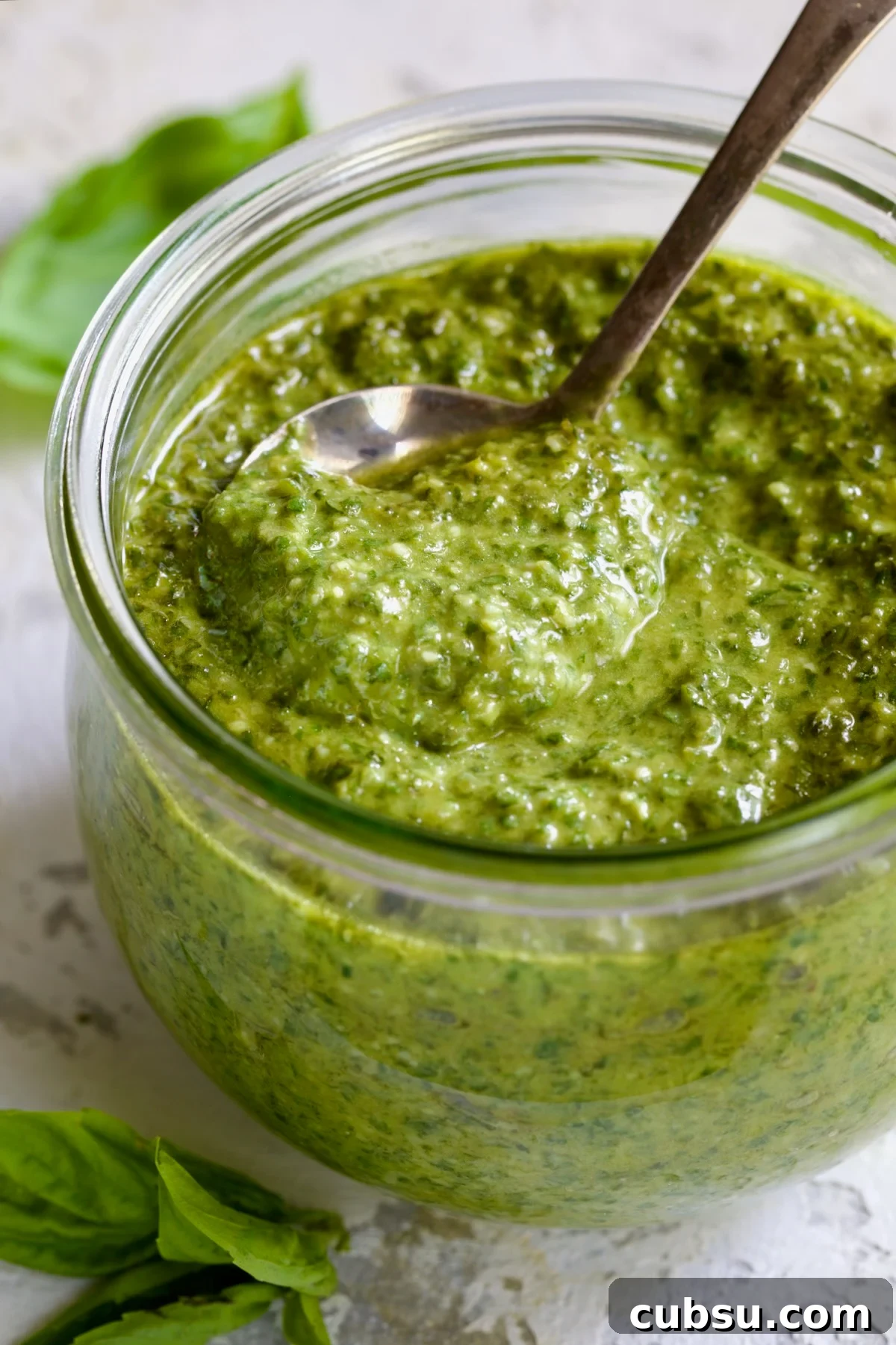
What is Pesto Genovese?
Pesto Genovese is a raw herb sauce built around fresh basil and a few potent ingredients: olive oil, cheese, garlic, and pine nuts. The name “pesto” comes from the Genoese verb “pestare,” meaning “to crush,” a nod to the traditional mortar-and-pestle method. Making it with minimal, high-quality ingredients yields the bright, aromatic pesto everyone loves.
How to Make Pesto Genovese:
Recipe Ingredients:
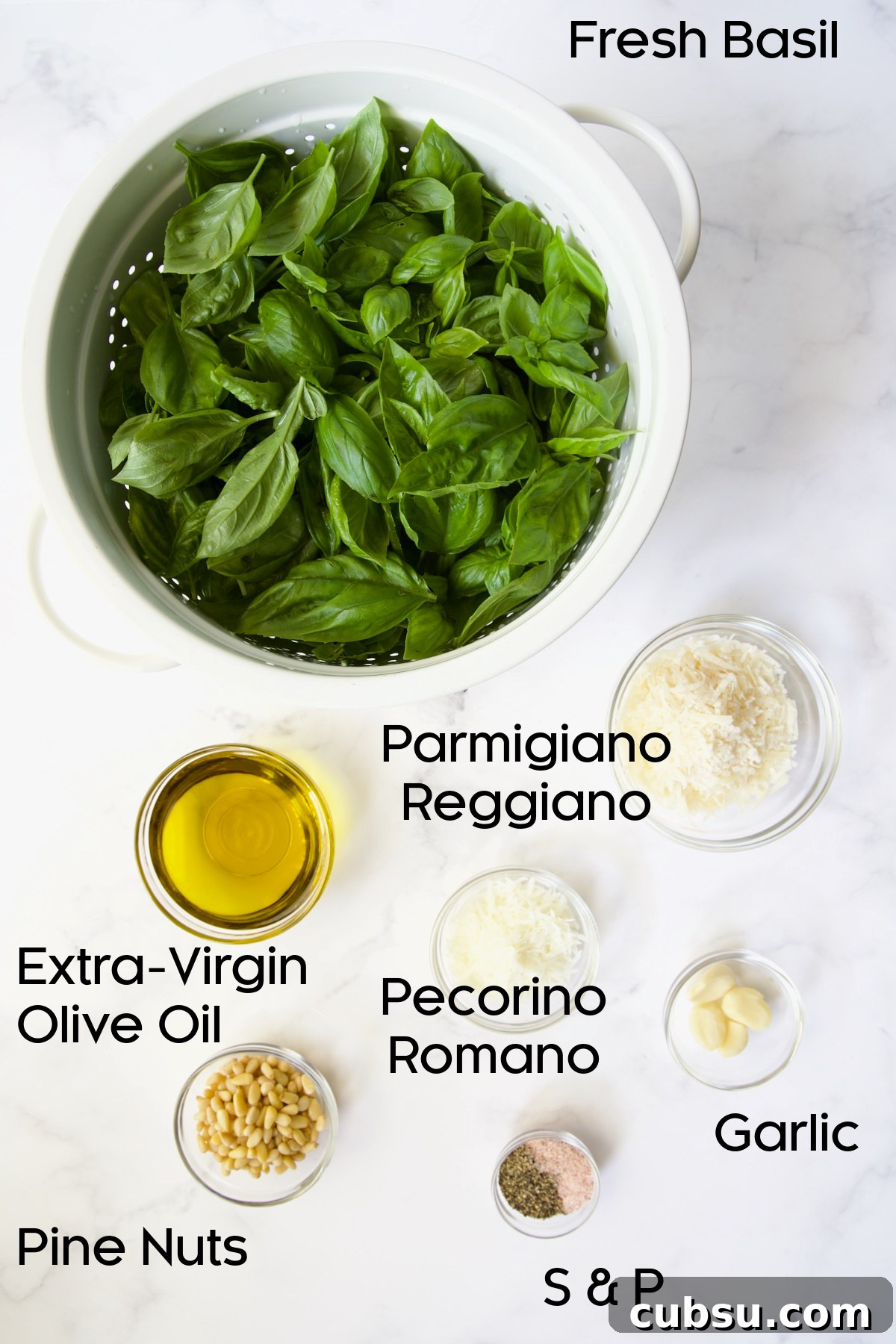
Below are the components you’ll need. Exact quantities are presented in the recipe section further down.
Ingredient Notes and Substitutions:
- Basil: Choose fresh, aromatic basil. Basil is delicate and bruises easily; handle gently. If its flavor is too assertive, replace half the basil with spinach or parsley.
- Parmigiano-Reggiano: This aged Italian cheese adds nutty, savory depth. Domestic Parmesan works if you prefer. For vegetarian or vegan versions, use a rennet-free or plant-based cheese substitute.
- Pecorino Romano: A salty sheep’s milk cheese traditionally used in pesto. Because it’s quite salty, taste before adding extra salt.
- Extra-Virgin Olive Oil: A mild extra-virgin olive oil keeps the pesto fresh-tasting; choose one you enjoy.
- Pine Nuts: Also called pignoli, they lend a buttery richness. Substitute walnuts or almonds to reduce cost or for a different flavor profile.
- Garlic: Adjust the amount to taste.
Step-By-Step Instructions:
- Gather and prep all ingredients.
- Chill the food processor bowl in the freezer for about 30 minutes to help keep the pesto bright green.
- You’ll need roughly four cups of fresh basil leaves (packed). I usually eyeball it—one good handful is about a cup for me.
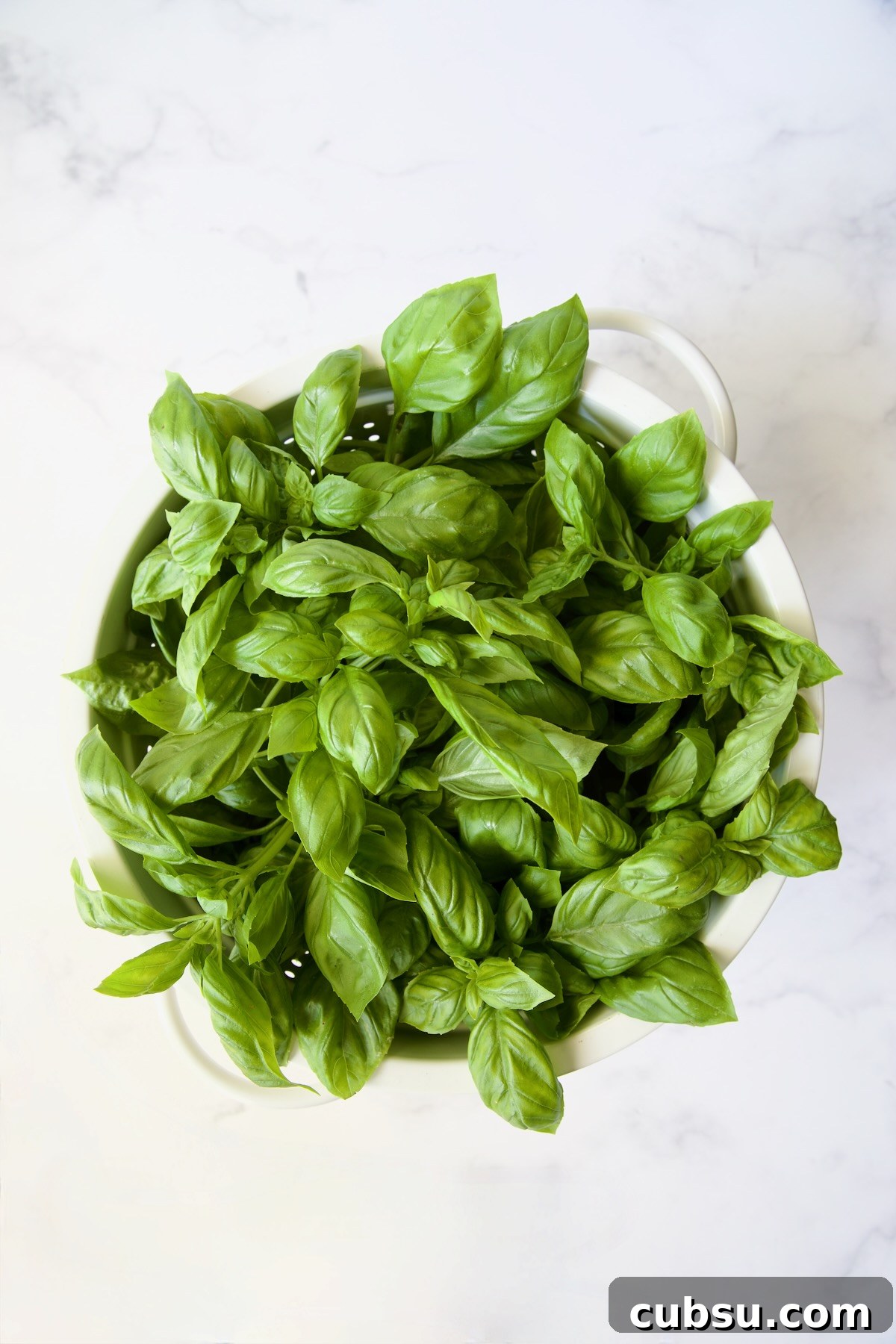
- Wash the basil leaves gently. Submerge stems and leaves briefly in water to dislodge any dirt or insects, then lift them out so sediments remain in the sink or bowl.
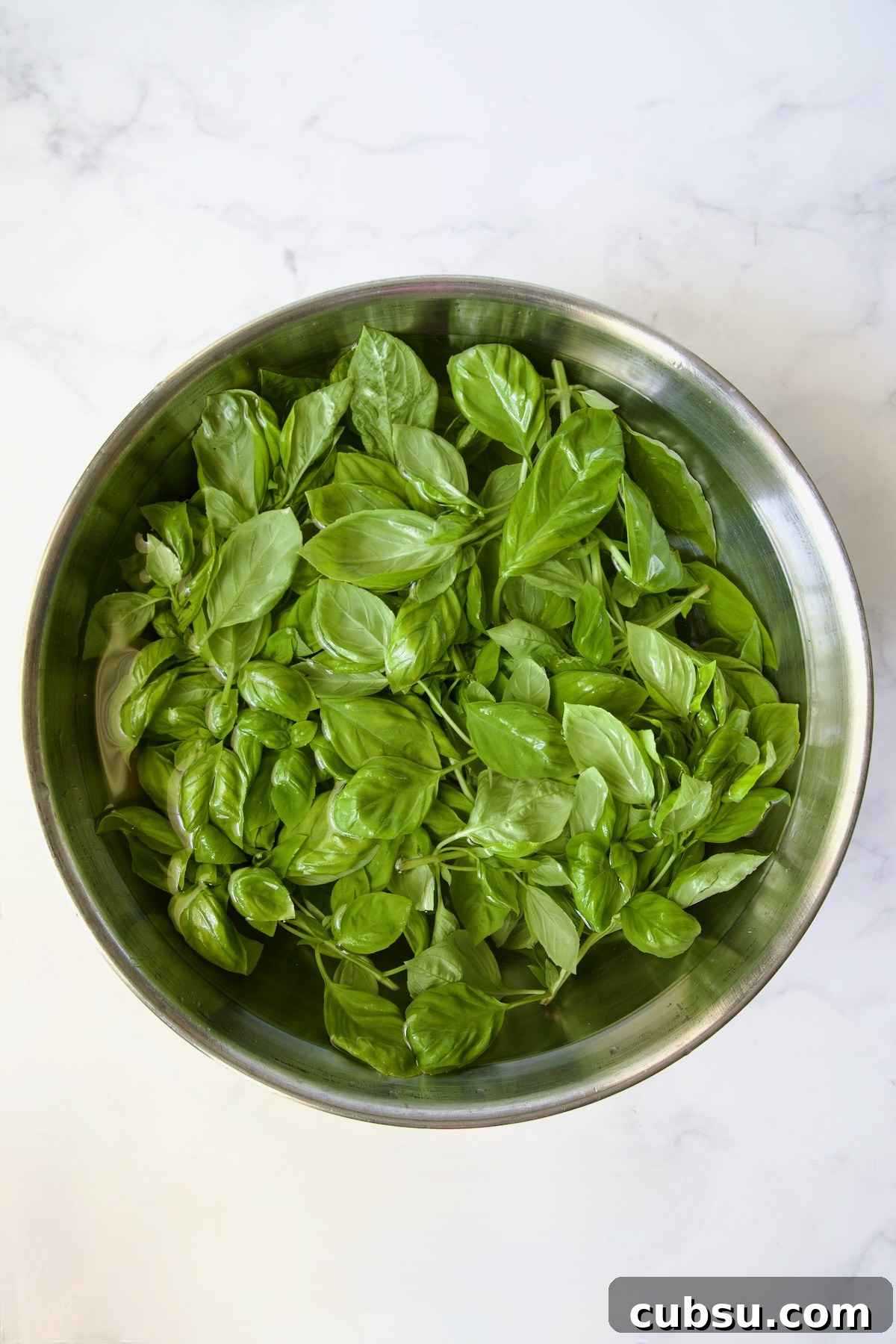
- Strip the leaves from the stems and compost the stems and any flower tips.
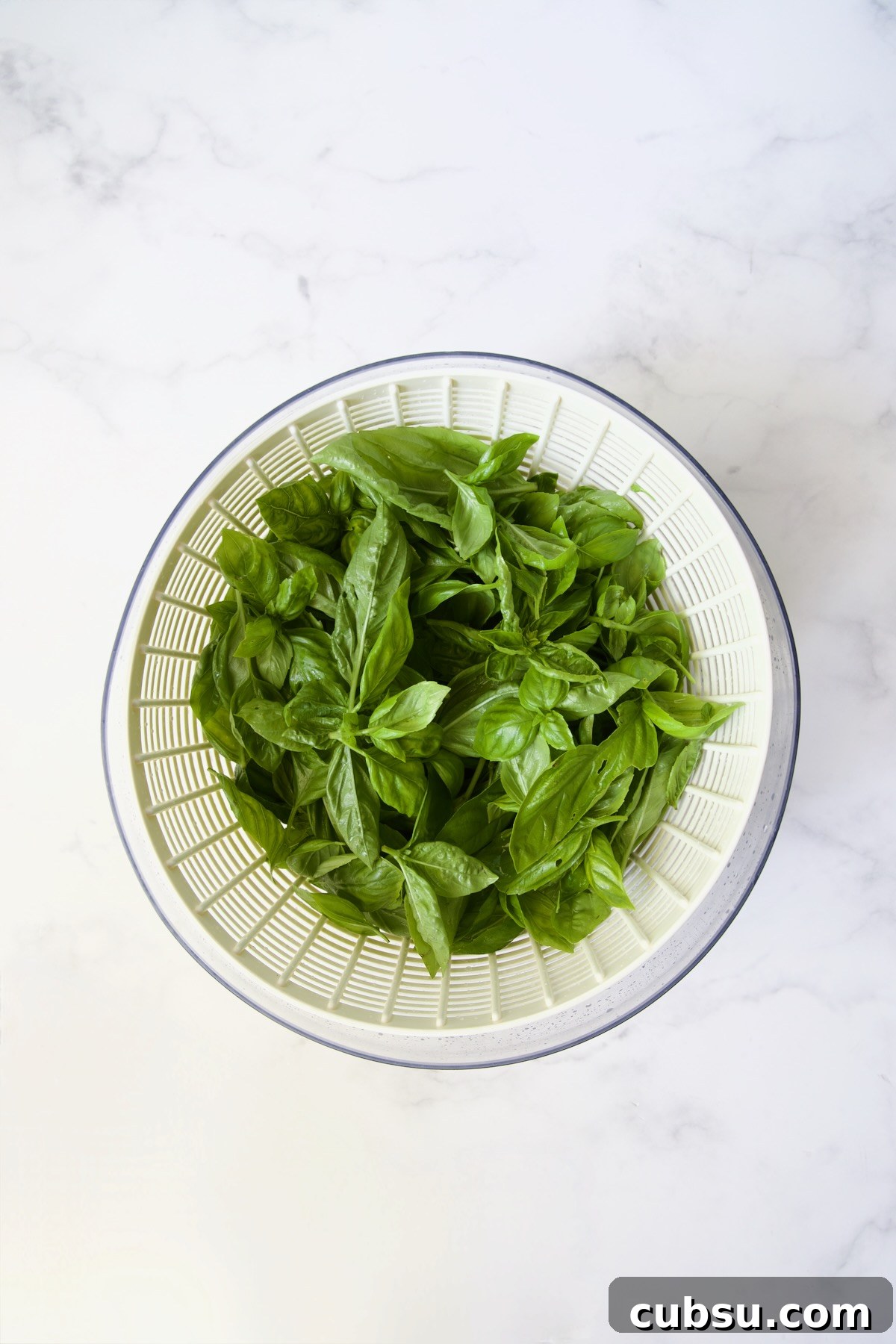
- Wash leaves two or three times and dry them in a salad spinner. Avoid long soaking, which can leach flavor.
- After spinning, lay the leaves on a clean, lint-free towel to air-dry briefly. Excess water dilutes the oil and can dull the sauce.
- Combine the basil leaves, pine nuts, garlic, and both cheeses in the chilled food processor bowl—do not add the oil yet.
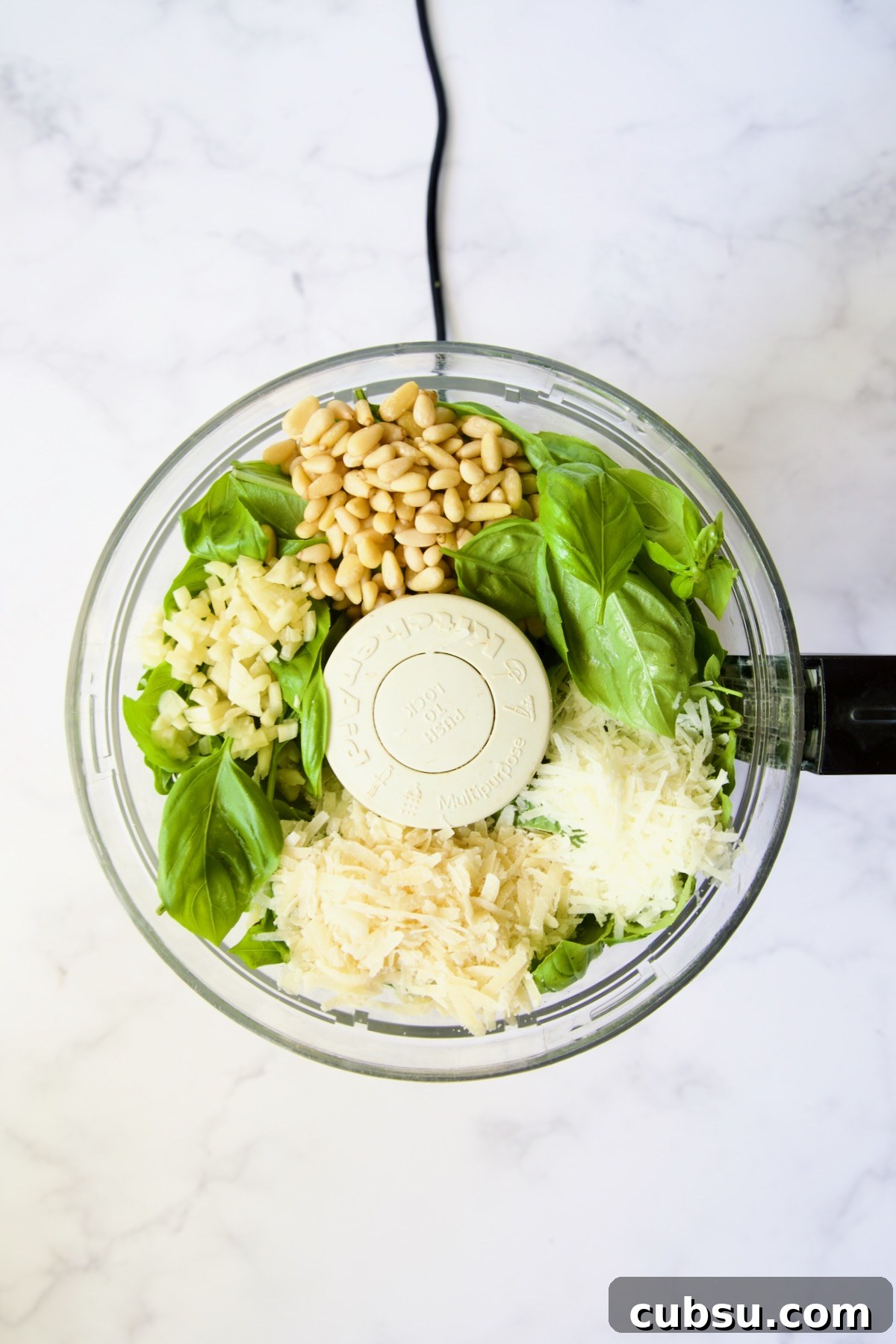
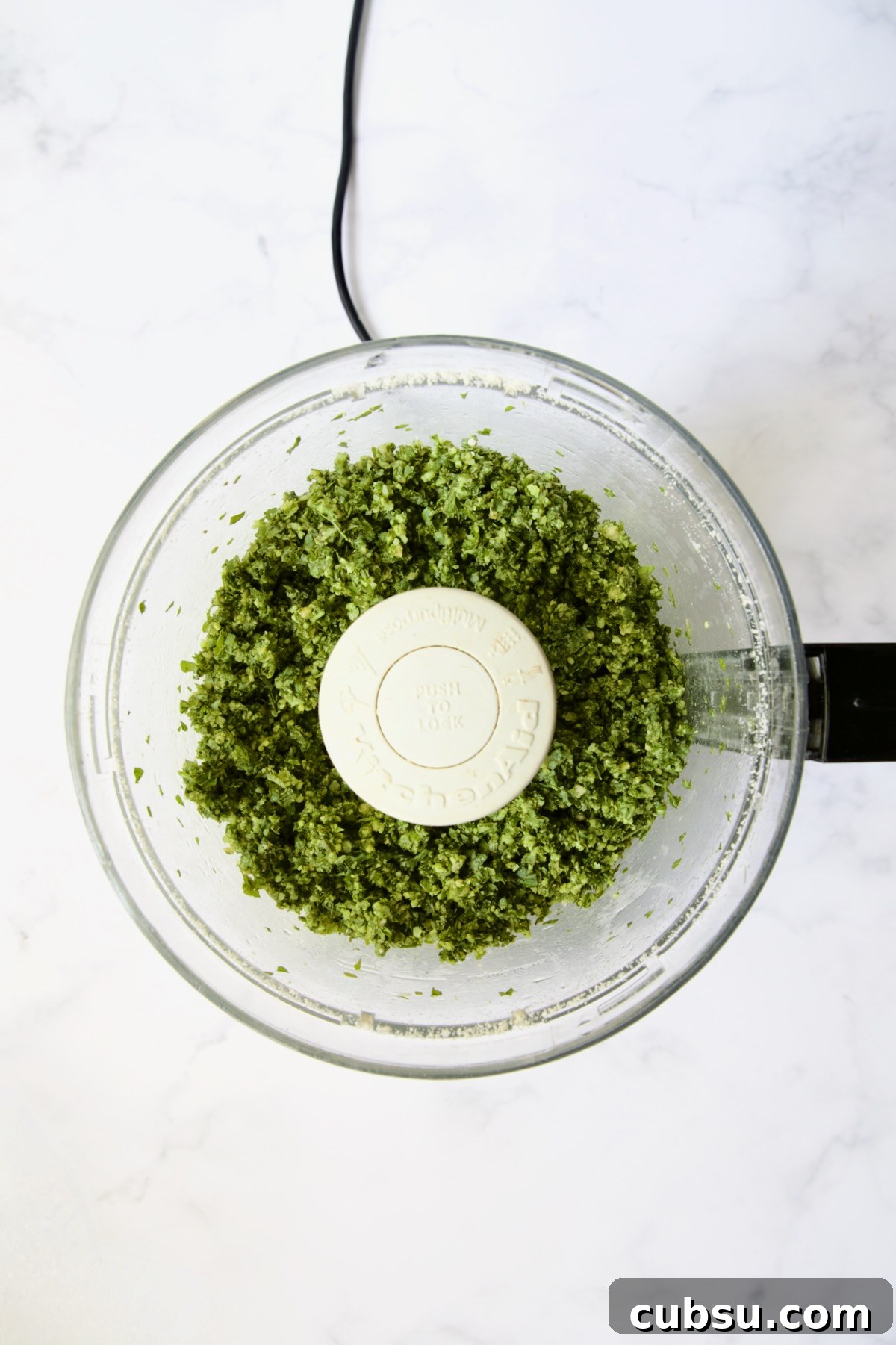
- Process on high until the mixture is finely chopped.
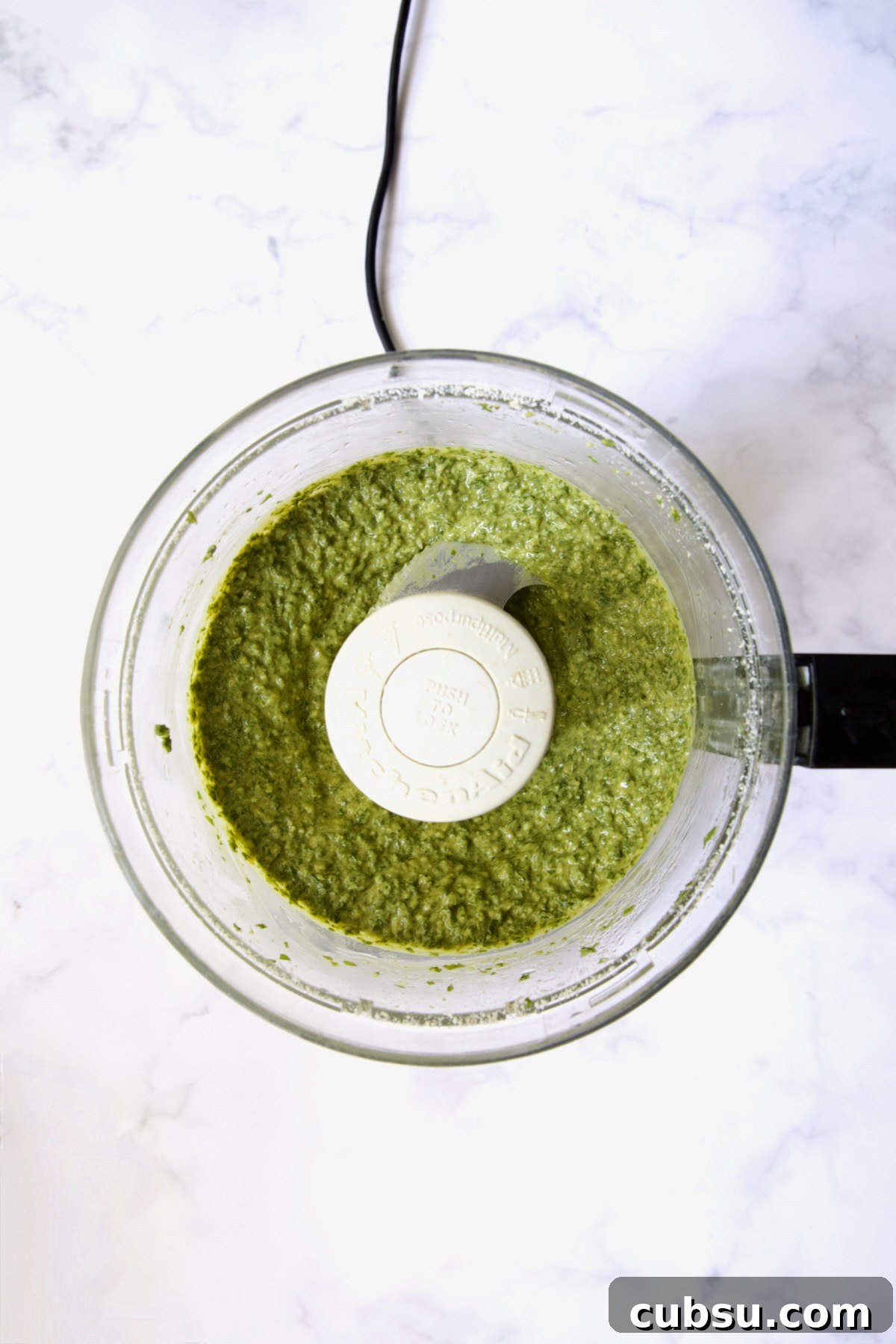
- With the processor running, slowly drizzle in the olive oil, as you would when making mayonnaise. This gradual addition helps form a creamy, emulsified pesto.
- Taste and adjust seasoning with salt, freshly ground black pepper, or additional garlic. If you used Pecorino Romano, you may not need much extra salt.
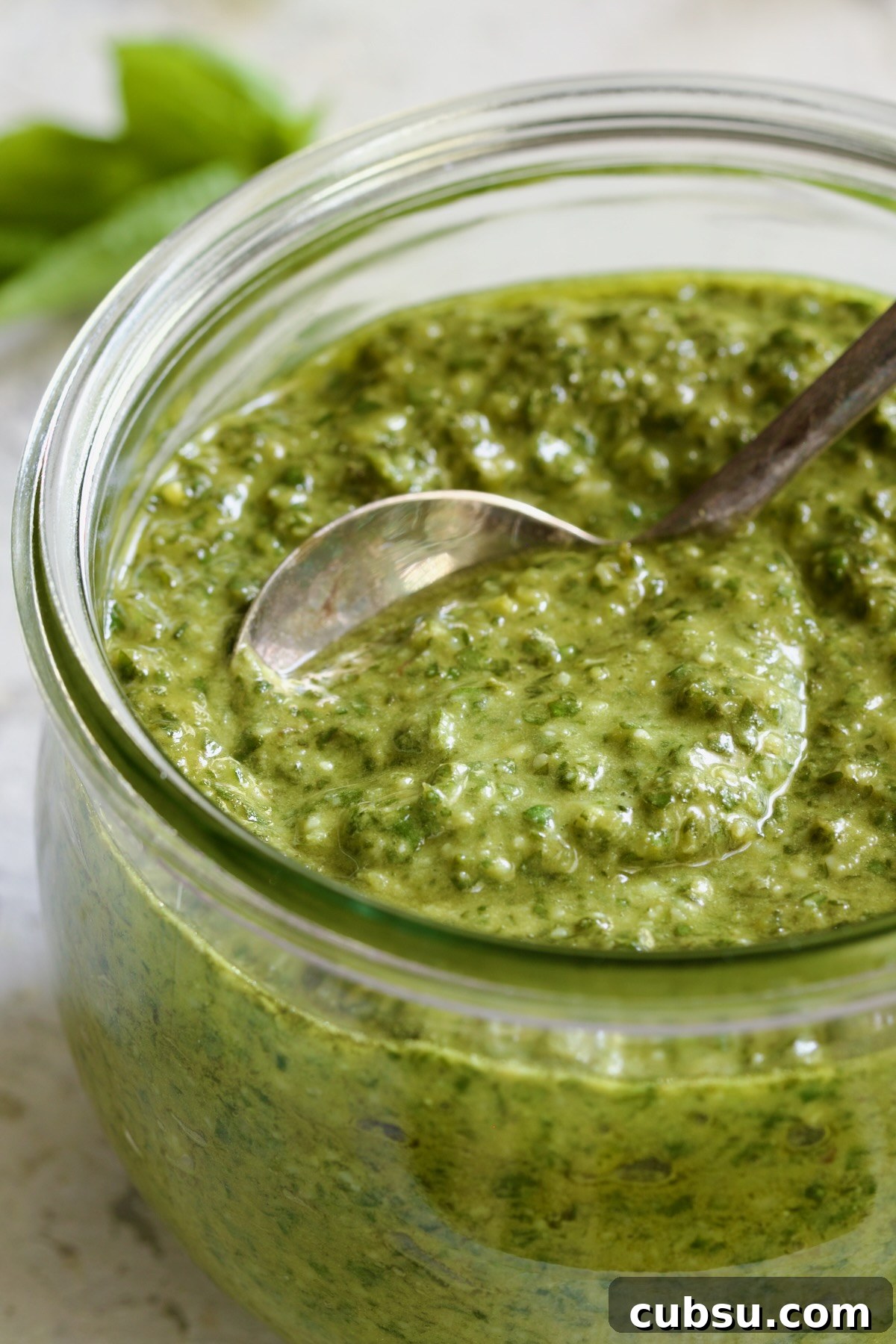
That’s it — classic basil pesto made right. To serve immediately, toss with drained pasta off the heat and add a splash of reserved pasta cooking water to bind and smooth the sauce.
Chef Tips and Tricks:
- Keep the food processor bowl cold to preserve the pesto’s bright green color; chilling the bowl in the freezer for 30 minutes helps.
- Dry the basil thoroughly after washing. Oil and water don’t mix, and excess moisture will thin the sauce and mute the flavor.
Frequently Asked Questions:
Genovese basil, a sweet basil variety, is the traditional and preferred choice for Pesto Genovese.
Avoid the thicker stems; they can be tough and slightly bitter. Use the leaves and compost the stems.
Yes. Freeze pesto in ice cube trays for small portions, or store in airtight containers for up to six months for best quality.
Storage:
- To serve later: Transfer pesto to a jar, drizzle a thin layer of olive oil over the surface, and refrigerate. It will keep for up to five days.
- To freeze: Store in airtight containers or freeze in portions for up to six months for the best flavor.
How to Use Pesto:
- Toss with pasta
- Spread on sandwiches or bruschetta
- Stir into soups or grain bowls
- Use as a finishing sauce for roasted fish or chicken
- Mix into mashed potatoes or roasted vegetables
More great green sauce recipes you’ll love!
- Radish greens pesto
- Kale pesto
- Carrot top salsa verde
- Purslane chimichurri
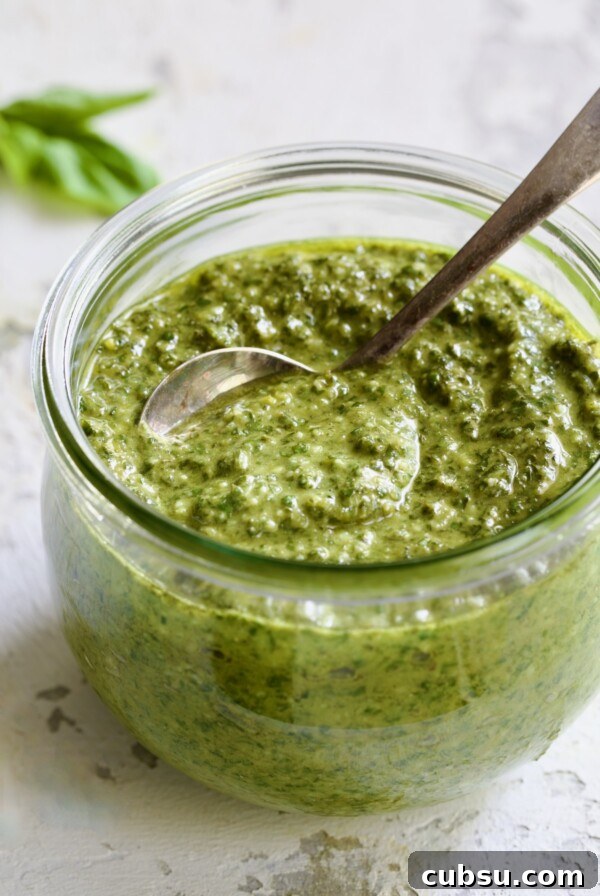
Pesto Genovese (Classic Basil Pesto)
Equipment
- Salad spinner
- Food processor
- Chef’s knife
- Cutting board
Ingredients
- 4 cups fresh basil leaves, packed (washed and dried)
- 2/3 cup extra-virgin olive oil, or as needed
- 4 cloves garlic, coarsely chopped
- 1/2 cup finely grated Parmigiano-Reggiano
- 3 tablespoons finely grated Pecorino Romano
- 1/4 cup pine nuts
- Salt and freshly ground black pepper, to taste
Instructions
- Place the bowl of your food processor in the freezer for 30 minutes.
- Combine the basil leaves, pine nuts, garlic, and the two cheeses in the food processor—do not add the oil yet.
- Process on high until everything is finely chopped.
- With the processor running, slowly drizzle in the olive oil until you have a smooth, emulsified sauce.
- Taste and season with salt and black pepper as needed.
Notes
- Replace half the basil with spinach or parsley if basil is too strong.
- Use walnuts or almonds instead of pine nuts if desired.
Tips:
- Chilling the processor bowl helps keep the pesto green.
- Dry basil thoroughly after washing; excess water weakens the sauce.
To serve immediately:
- Toss with drained pasta off the heat and add a small amount of reserved pasta water to bind the sauce.
To serve later:
- Transfer to a jar and drizzle a thin layer of olive oil on top. Refrigerate for up to five days.
To freeze:
- Transfer to an airtight container and freeze for up to six months for best quality.
Nutrition
Nutritional values are estimates and may vary based on ingredients and portion sizes. Adjust as needed for dietary needs.
 Like this? Leave a comment below!