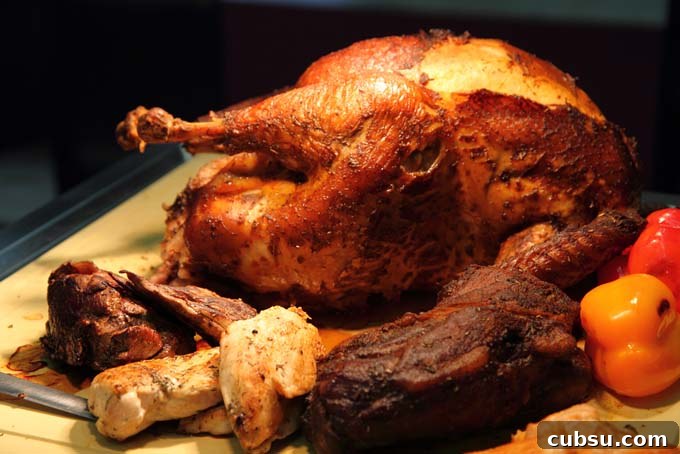
Thanksgiving always excites me. Weeks before the holiday I pull together my recipes and plan an indulgent meal, and the dish I focus on improving every year is the turkey.
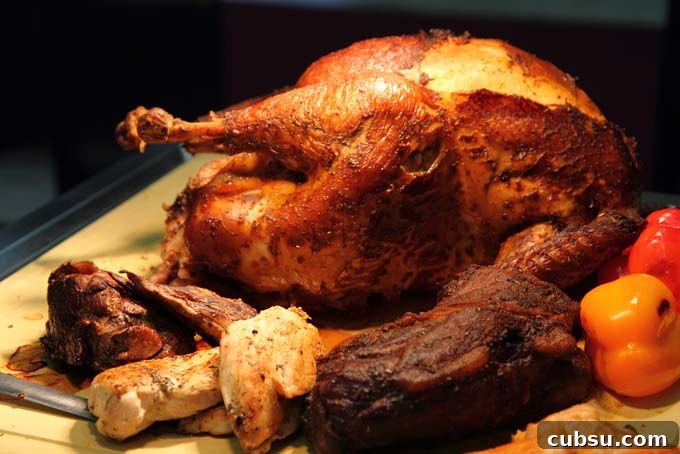
Each year I try to produce a bird that is more flavorful and moist than the last. Below is my reliable approach that combines brining and slow roasting for a juicy, aromatic turkey.
A few years back I watched a chef on TV explain brining: by soaking the bird in a solution of salt, sugar and water, the meat absorbs seasoning and retains moisture during cooking.
Wet Brining
To wet-brine a turkey you need a container large enough to fully cover the bird. If refrigerator space is tight, you can place the turkey and liquid inside a heavy-duty food-safe bag, seal it, and submerge the bag in a roasting pan to keep the bird fully covered.
Leave the turkey in the brine for about 24 hours.
A Simple Brine Recipe:
- 4 quarts water
- 1 cup sugar
- 1 ½ cups kosher salt
Stir until the sugar and salt dissolve. For more flavor I often add several crushed garlic cloves, whole peppercorns, chopped onion, and fresh herbs such as rosemary, sage, and thyme. Adjust the aromatics to suit your taste.
Rinse the turkey under cold water and remove the innards before brining; you can reserve them for gravy or discard them. Pat the bird dry, place it in your container, and pour the brine over it so it is completely submerged. When the brining time is up, discard the used brine — it will be too salty to reuse.
Rinse the turkey again under cold water and pat it dry. The brine’s flavor remains in the meat, so this rinsing simply removes excess surface salt.
If you’re working with pieces rather than a whole turkey, vacuum sealing or other methods can speed the process and ensure good contact between brine and meat.
There is also a dry-brine technique that uses salt and aromatics rubbed directly onto the skin and left to rest, which can be an excellent alternative if you prefer not to use liquid.
Roasting
Before roasting I coat the entire bird with a garlic butter mixture. I melt about a cup of butter and stir in minced garlic, black pepper, and herbs such as thyme, basil, and rosemary, then rub the mixture inside and out.
Because I roast slowly at a low temperature, I don’t use traditional stuffing inside the cavity. Low-and-slow cooking can leave stuffing undercooked, so instead I tuck in roughly chopped onion, a few garlic cloves, carrots, and a bundle of fresh herbs like rosemary, thyme, sage, basil, and parsley to infuse the turkey with aroma without risking food-safety issues.
Tie the legs together with kitchen twine and place the bird in a roasting pan. Add about a half-cup of water to the pan to maintain moisture during cooking, replenishing if it evaporates.
My roasting routine starts with a high-heat sear: I put the turkey in a very hot oven (about 500°F) for 10–15 minutes, uncovered, to brown and tighten the skin. Then I reduce the oven temperature to around 200°F, cover the turkey tightly with aluminum foil, and continue cooking slowly. This low temperature and tight covering keep moisture locked in and yield tender meat.
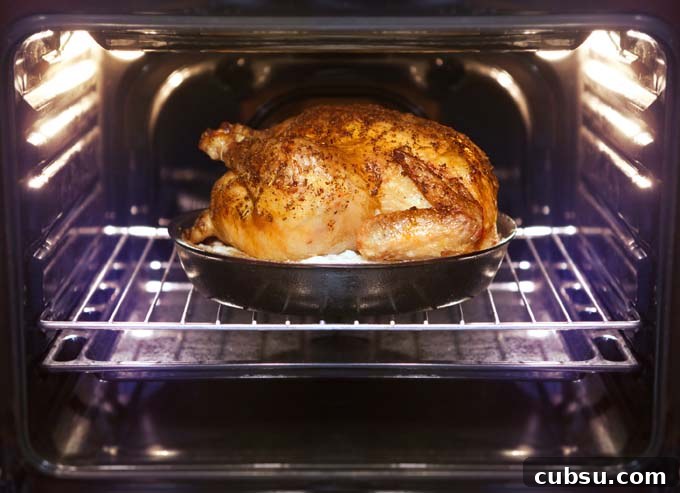
Because the skin is seared and the bird is brined, I rarely need to baste repeatedly. Keeping the foil on preserves the internal moisture and frees me up to finish other dishes.
This method takes longer, but the combination of brining, herb butter, and slow roasting produces a consistently moist, flavorful turkey. Since adopting this approach I haven’t ended up with a dry bird.
Cook until the thigh (dark meat) reaches 180°F and the breast (white meat) reaches 165°F. Remove the turkey from the oven and let it rest wrapped in foil for about 20 minutes on a cutting board with a juice channel; this allows the juices to redistribute back into the meat.
Any juices collected in the pan will be richly flavored from the brine, butter, and herbs. To make gravy, whisk in a small amount of flour and simmer until it thickens to your desired consistency.
Finally, carve and enjoy.
If you have leftovers, turn the meat into a comforting turkey and white bean chili or other dishes that make the most of those savory flavors.
Photo credit: Shutterstock.