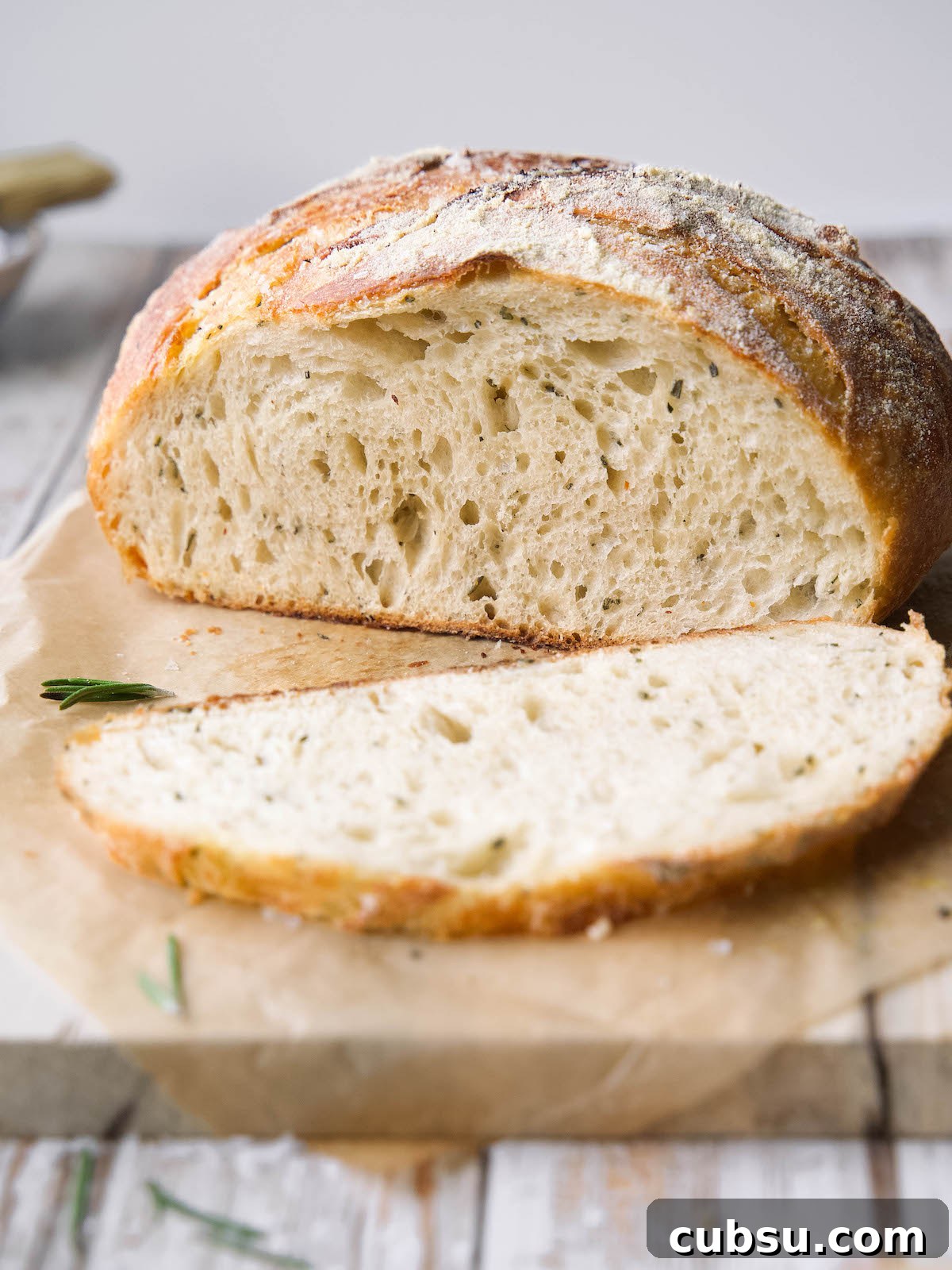
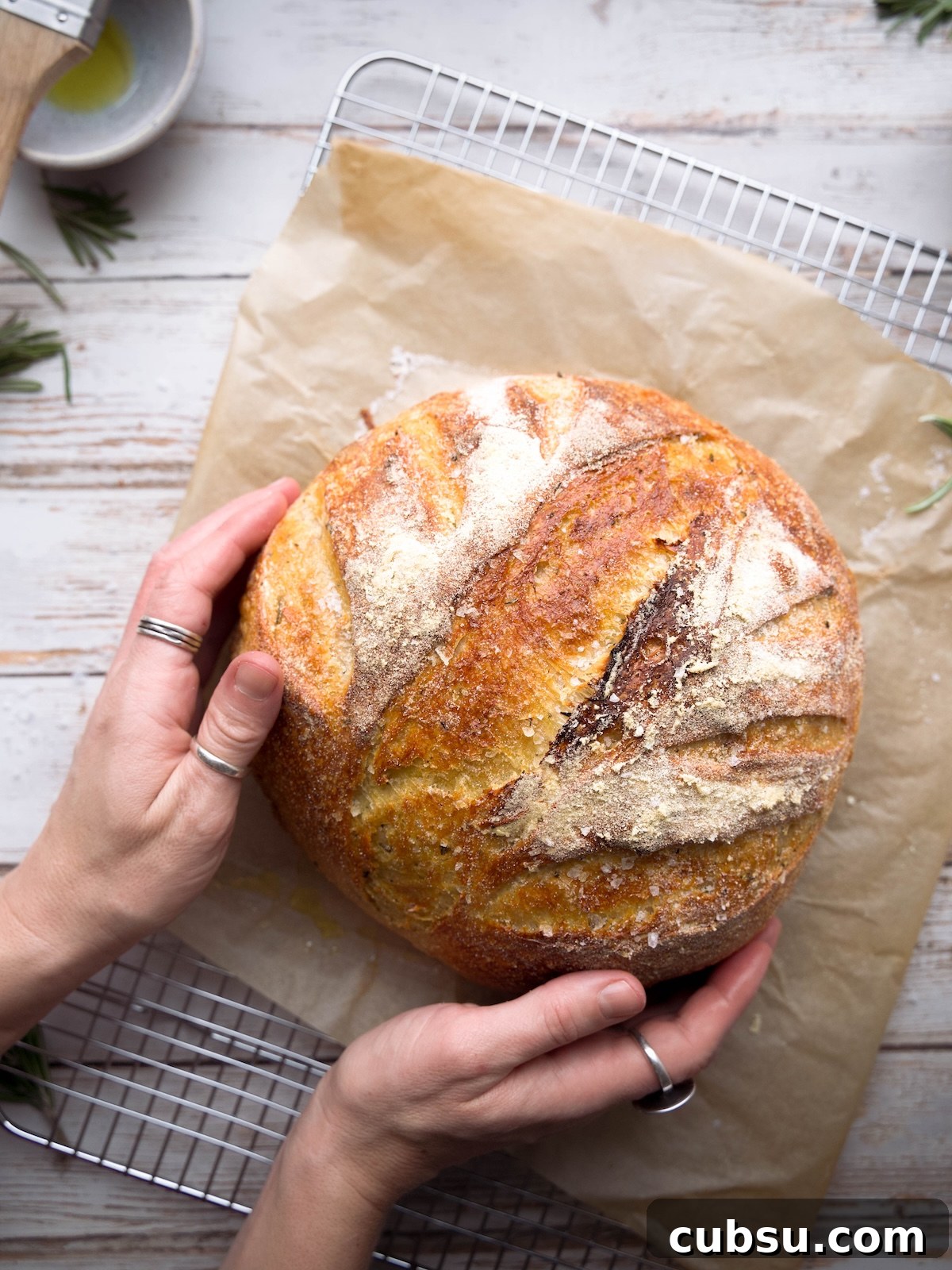
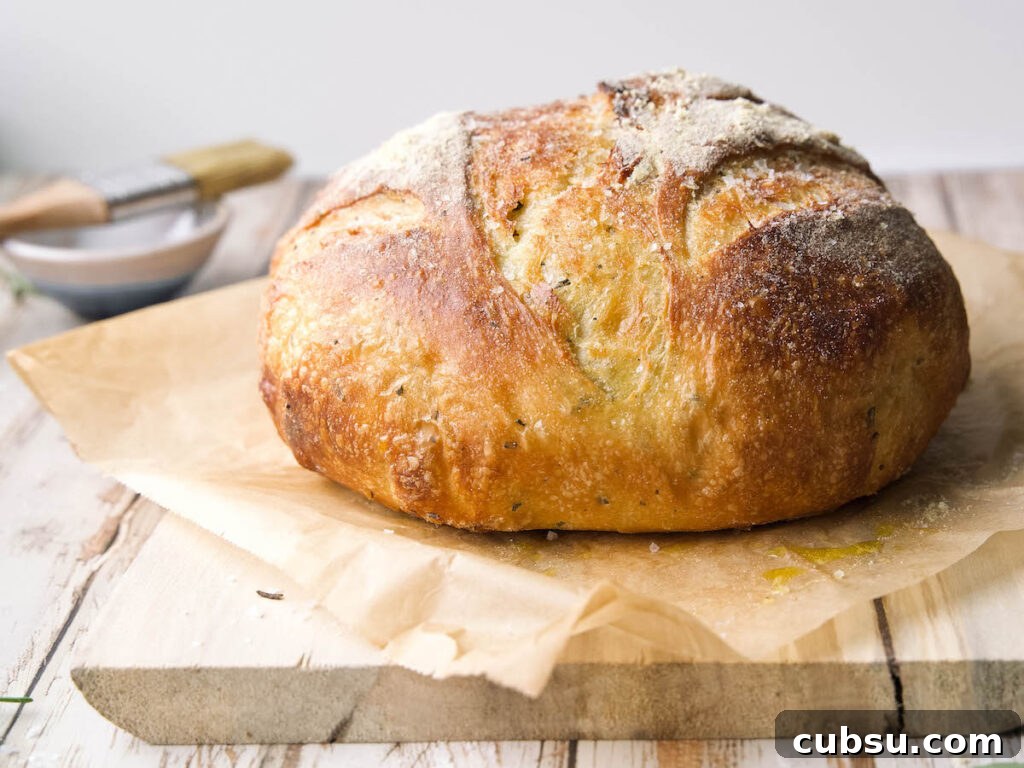
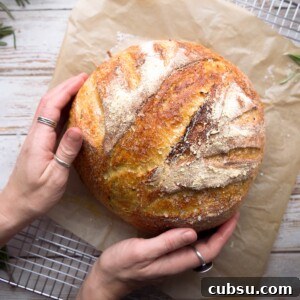
This rosemary sourdough is fragrant, chewy, and bright with a pleasant tang. Brushed with olive oil and finished with crunchy sea salt, it’s an easy loaf that builds structure through stretch-and-folds and benefits from a slow overnight ferment.
This is my favorite sourdough loaf—fresh rosemary folded into the dough, a crisp, golden crust, and the classic sourdough flavor and texture. It’s savory, aromatic, and satisfying.
Why you’ll love this bread
- Packed with flavor. Fresh rosemary, olive oil, and sea salt combine with sourdough tang for a bold, aromatic loaf.
- Beginner-friendly. No kneading or machines required—just simple stretch-and-folds and mostly hands-off time.
- Flexible timing. Options for overnight cold fermentation or a same-day bake let you adapt the process to your schedule.
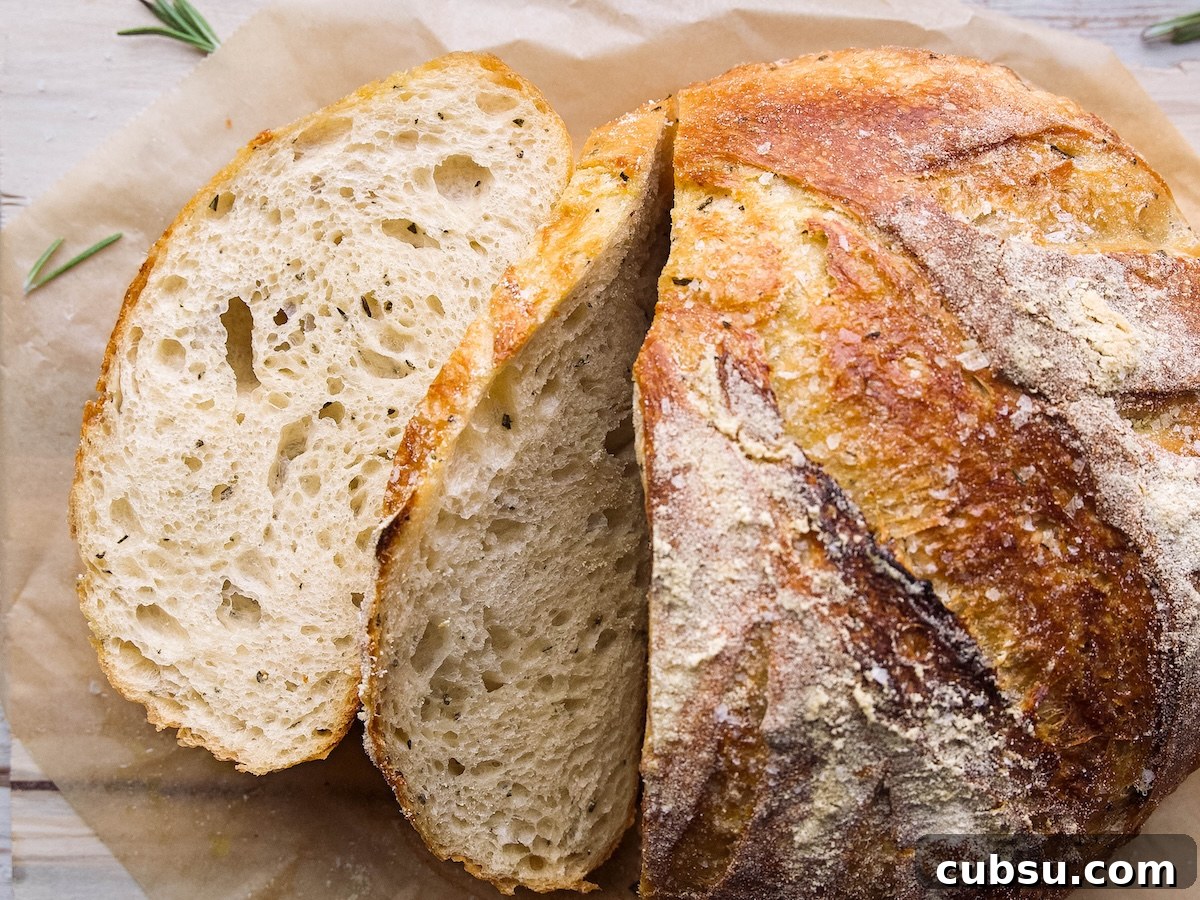
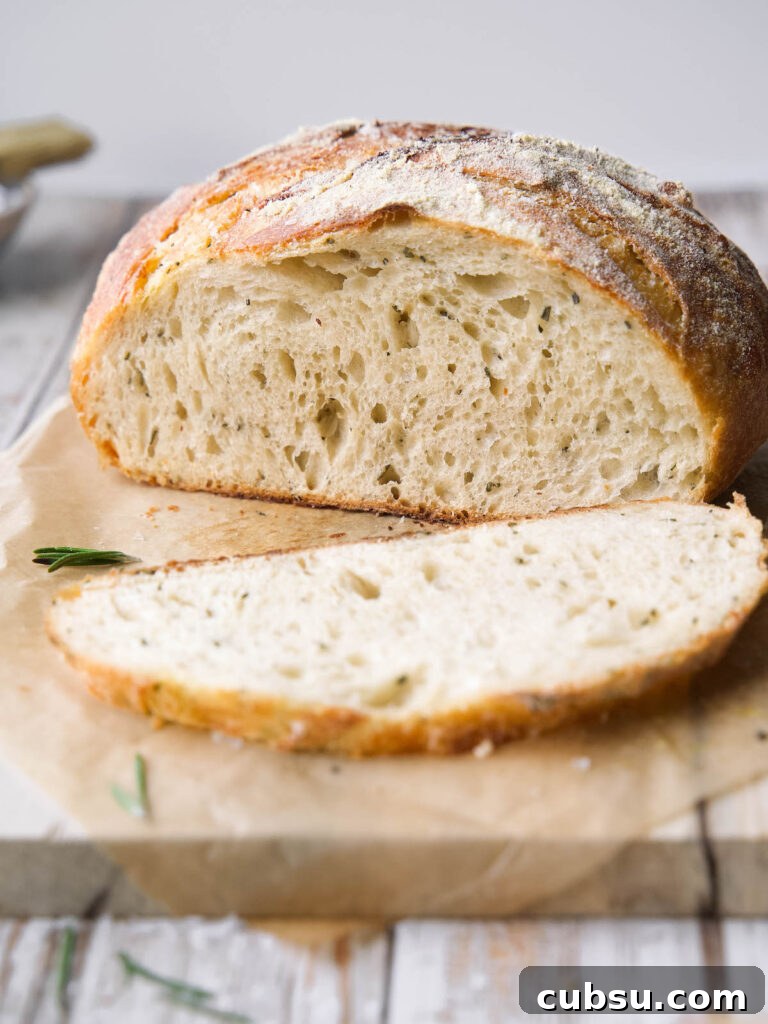
- Great texture. Baked in a hot Dutch oven for a crunchy crust and soft, open crumb.
- Forgiving recipe. Tolerant of small timing or temperature variations, so you can make it your way.
Recipe overview
Prep: 10 min active
Bulk ferment: ~4 hr (room temp) + overnight in fridge
Final proof: 1–2 hr (varies)
Bake: 45–55 min
⏱️ Total: 12–14 hr (mostly hands-off)
🥖 Yield: 1 loaf
💪 Skill level: Intermediate
😋 Flavor profile: Savory rosemary, olive oil, and sea salt with a golden crust and chewy interior. Pairs well with olive oil, soups, soft cheeses, sandwiches, and dips.
If you enjoy savory sourdoughs, try other herb-forward loaves such as garlic-herb or roasted-garlic-parmesan sourdough.
Tools & equipment needed
You don’t need specialty gear—just a large mixing bowl and a baking surface will work. A few tools make the process easier:
- 5–6 quart Dutch oven with lid (optional but helpful)
- Bread lame or very sharp knife for scoring
- Mixing bowls
- Kitchen towel or plastic wrap
- Instant-read thermometer (recommended)
How to make rosemary sea salt sourdough
I recommend planning this over two days: feed your starter and mix the dough on day one, then shape and bake on day two. The overnight chill in the fridge improves flavor and handling.
Full ingredient amounts and step-by-step instructions are in the recipe card below.
Quick overview:
Day before baking
- Feed starter. Ensure it’s active and bubbly.
- Mix dough. Combine ingredients and begin bulk fermentation.
- Stretch & fold. Do about four sets, 30–45 minutes apart.
- Chill overnight. Refrigerate after bulk ferment to develop flavor.
Baking day
- Shape. Form the dough into a boule.
- Final proof. Let rest 1–2 hours until puffy.
- Bake. Score and bake covered, then finish uncovered.
- Finish. Brush with olive oil and sprinkle sea salt while warm.
Step-by-step instructions
1. Mix the dough
- Combine sourdough starter, warm water, olive oil, and rosemary salt (fresh rosemary mixed with fine and coarse sea salt).
- Add bread flour and mix until a rough, shaggy dough forms. Cover and rest 30–45 minutes (autolyse).
2. Stretch & fold (bulk ferment)
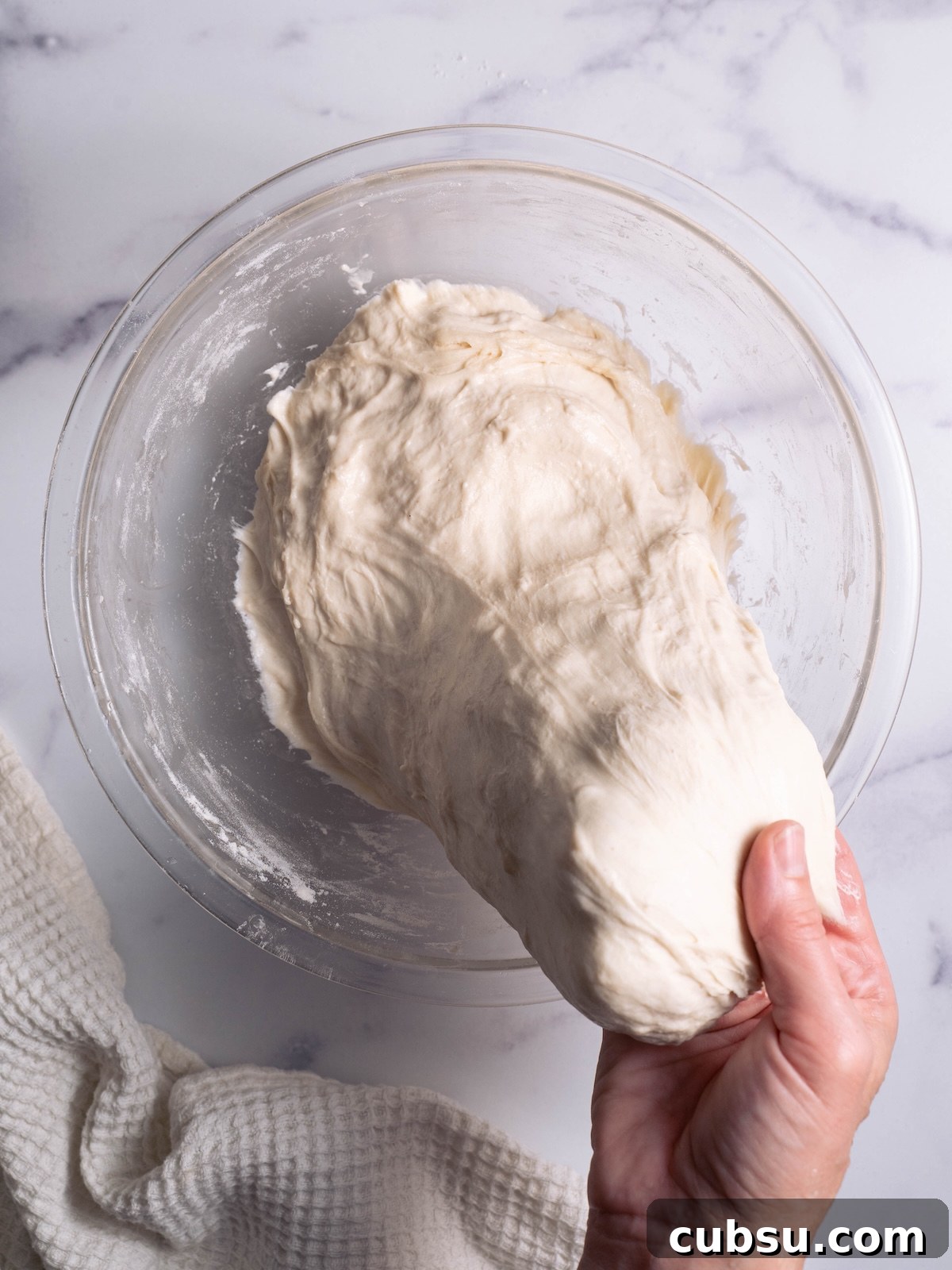
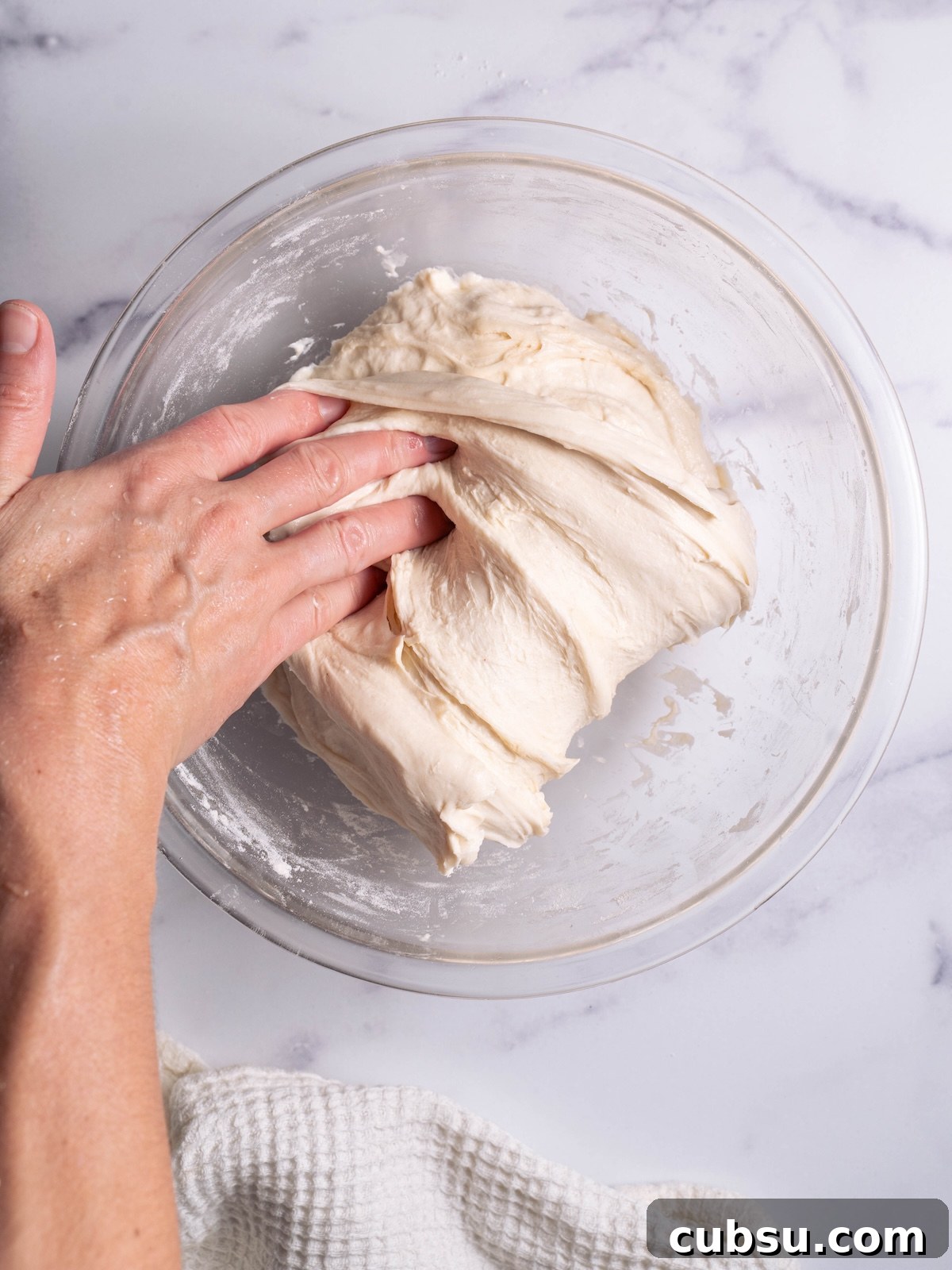
Over 2–4 hours perform four stretch-and-fold cycles about every 30–45 minutes until the dough develops tension. To stretch and fold: pull a portion of dough up and fold it toward the center, rotate the bowl and repeat on each side, then cover and rest.
3. Cold fermentation
After the final stretch-and-fold, cover the dough and refrigerate overnight. The slow chill enhances flavor and makes shaping easier.
4. Shape & final proof
- Remove dough from the fridge, shape into a boule, and place seam-side up in a floured bowl or banneton.
- Cover and proof 1–2 hours at room temperature until puffy.
5. Bake
- Preheat oven to 450°F with a Dutch oven (lid on) inside.
- Turn the dough onto parchment, score deeply, and place into the hot Dutch oven.
- Bake covered 25 minutes, then uncovered 18–25 minutes until crust is golden and internal temp reaches 205–215°F.
- Brush with olive oil and sprinkle with coarse salt once out of the oven.
- Cool at least 1 hour before slicing to complete the crumb set.
Alternative baking schedules
Shape on day 1: You can shape before the overnight chill—shape after your stretch-and-folds, refrigerate, and bake directly from the fridge in the morning.
Same-day bake: If you must bake in one day, begin early and ensure your starter is active. Expect shorter fermentation windows and adjust times based on dough activity.
Example same-day schedule:
Night before, 8:00 PM — feed starter.
Day, 8:00 AM — mix dough and rest 30 min.
8:30 AM — bulk ferment ~3–4 hr with folds.
12:30 PM — shape and final proof 1–2 hr, then bake at 450°F.
Example overnight schedule:
Day 1, 8:00 AM — feed starter and keep warm until active.
12:00–2:00 PM — mix dough and begin bulk ferment with folds in the afternoon.
Evening — refrigerate overnight (shaped or unshaped).
Day 2 — shape & proof 1–2 hours or bake from cold if already shaped; bake at 450°F in a Dutch oven.
How to prepare rosemary for bread
For the best rosemary flavor, make a rosemary salt by finely chopping fresh rosemary and mixing it with both fine and coarse sea salt. Finely chopped rosemary distributes evenly, and salt helps release the herb’s oils and prevents clumping.
Pro sourdough tips
Key tips for success:
Know when the dough is ready: Use the “finger dent” test—gently press a floured fingertip into the dough. Properly proofed dough will spring back slowly and hold a slight indentation.
Score the loaf: Scoring directs oven expansion and prevents random splitting while creating an attractive appearance. Use a lame or a very sharp knife.
Use an instant-read thermometer: Bake until the internal temperature reaches 205–215°F for a fully cooked crumb.
Wait to slice: Let the bread cool at least an hour to avoid a gummy interior.
If you want more practice with sourdough basics, try a simple basic sourdough recipe first.
Variations
Herb swaps: Replace some rosemary with thyme or sage.
Add-ins: Fold in chopped olives or grated parmesan during stretch-and-folds.
Garlic-rosemary: Add roasted garlic for deeper savory flavor.
Extra rosemary oil: Warm 2 tbsp olive oil with a few rosemary sprigs over low heat for 2–3 minutes, strain, and brush on the loaf after baking for more herb aroma.
Troubleshooting & FAQ
Gummy crumb usually means underbaked, sliced too soon, or underproofed. Use an instant-read thermometer and allow the loaf to cool fully before slicing.
Yes—use about half the amount if substituting dried. Fresh rosemary yields the best flavor.
Yes. A banneton gives a nicer shape, but a floured tea towel in a bowl works well too.
Sourdough rarely doubles like yeasted loaves. Aim for a 30–50% increase and a puffy, slightly jiggly dough with visible bubbles. Use the finger dent test to confirm readiness.
Serving suggestions
This rosemary sea salt sourdough is delicious on its own or paired with many dishes. Try it:
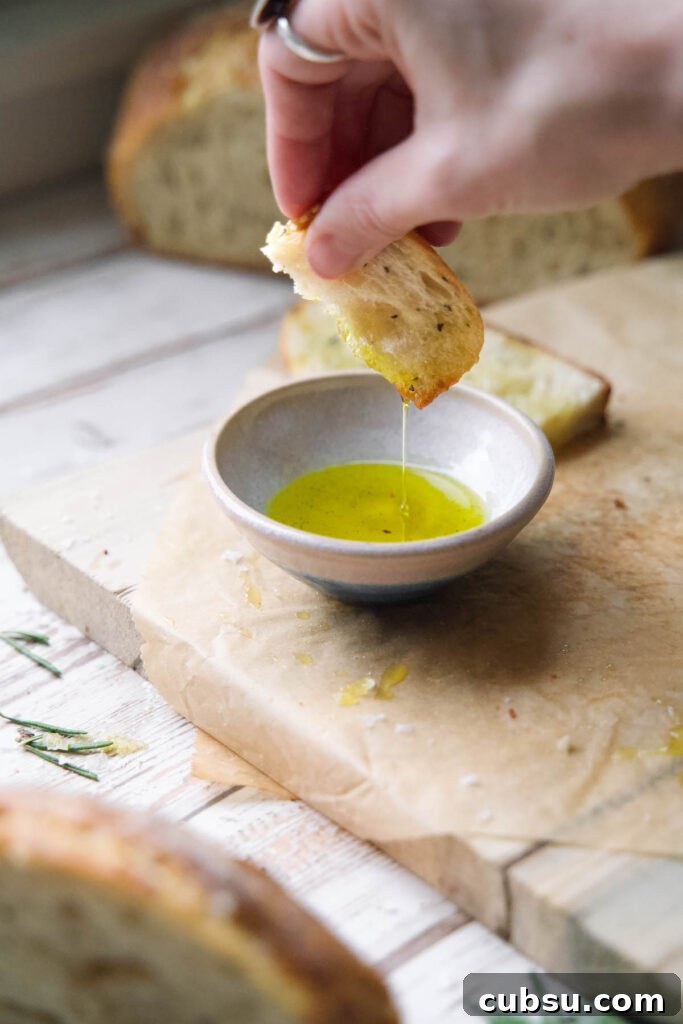
- Dipped in olive oil to mop up sauces
- Slathered with butter and flaky salt
- With olive oil and balsamic for dipping
- As a base for avocado toast
- Alongside soups like tomato basil or butternut squash
- In sandwiches with goat cheese and roasted vegetables
- For BLTs or hearty breakfast sandwiches
Storing & reheating sourdough bread
Room temperature: Keep in a paper bag or bread box for up to 5 days.
Freezing: Wrap whole or sliced loaf airtight and freeze up to 3 months.
Reheating: Toast slices or warm a whole loaf in a 350°F oven for 10–15 minutes to refresh the crust.
More savory sourdough recipes:
- Jalapeño Cheddar Sourdough
- Roasted Garlic Parmesan Sourdough
- Sourdough Scones with Bacon & Cheddar
- Garlic Herb Sourdough
If you make this Rosemary Sourdough, please leave a rating and a comment — I’d love to hear how it turns out.
Rosemary Sea Salt Sourdough
Equipment
-
Dutch oven with lid optional but recommended
Ingredients
- 2 tablespoons fresh rosemary, chopped fine
- 8 grams fine sea salt
- 3 grams Maldon flakes or other high-quality coarse sea salt
- 150 grams active, bubbly sourdough starter
- 310 grams warm water
- 25 grams high-quality olive oil
- 500 grams bread flour
- Extra olive oil and coarse sea salt, for after baking
Instructions
To make the rosemary sourdough:
-
Mix 2 tbsp chopped rosemary with 8 g fine salt & 3 g coarse sea salt. Combine 150 g sourdough starter, 310 g water, and 25 g olive oil with the rosemary salt and whisk to combine.
-
Stir 500 g bread flour into the starter mixture.
-
Finish mixing by hand, folding until a rough ball forms. Cover and rest 30–45 minutes.
-
Over the next few hours, perform a stretch & fold approximately every 45 minutes for a total of four sets. To stretch, pull a side of the dough up, fold to the middle, rotate, and repeat on all sides.
-
After the final stretch, refrigerate the dough overnight.
The next day:
-
Remove dough from the fridge. Line a large bowl with a floured tea towel or use a banneton. Shape the dough into a ball, tucking the seams on the bottom, and place seam-side up in the bowl.
-
Cover and let rise 1–3 hours until puffy (time depends on temperature and starter activity).
-
Preheat oven to 450°F with a Dutch oven inside. When hot, turn the dough onto parchment, seam side down, and score the top.
-
Lift the parchment with the dough into the preheated Dutch oven. Bake covered for 25 minutes.
-
Remove the lid and bake another 18–25 minutes until golden and fully cooked (205–215°F internal).
-
Remove the loaf, cool 5–10 minutes, then brush with olive oil and sprinkle coarse sea salt.
-
Allow the loaf to cool completely—at least an hour—before slicing to avoid a gummy crumb.
Did you try this recipe?
Be sure to leave a comment below!